Lockheed Employees Gave $59,500 Before Appropriator Backed 83 F-35s
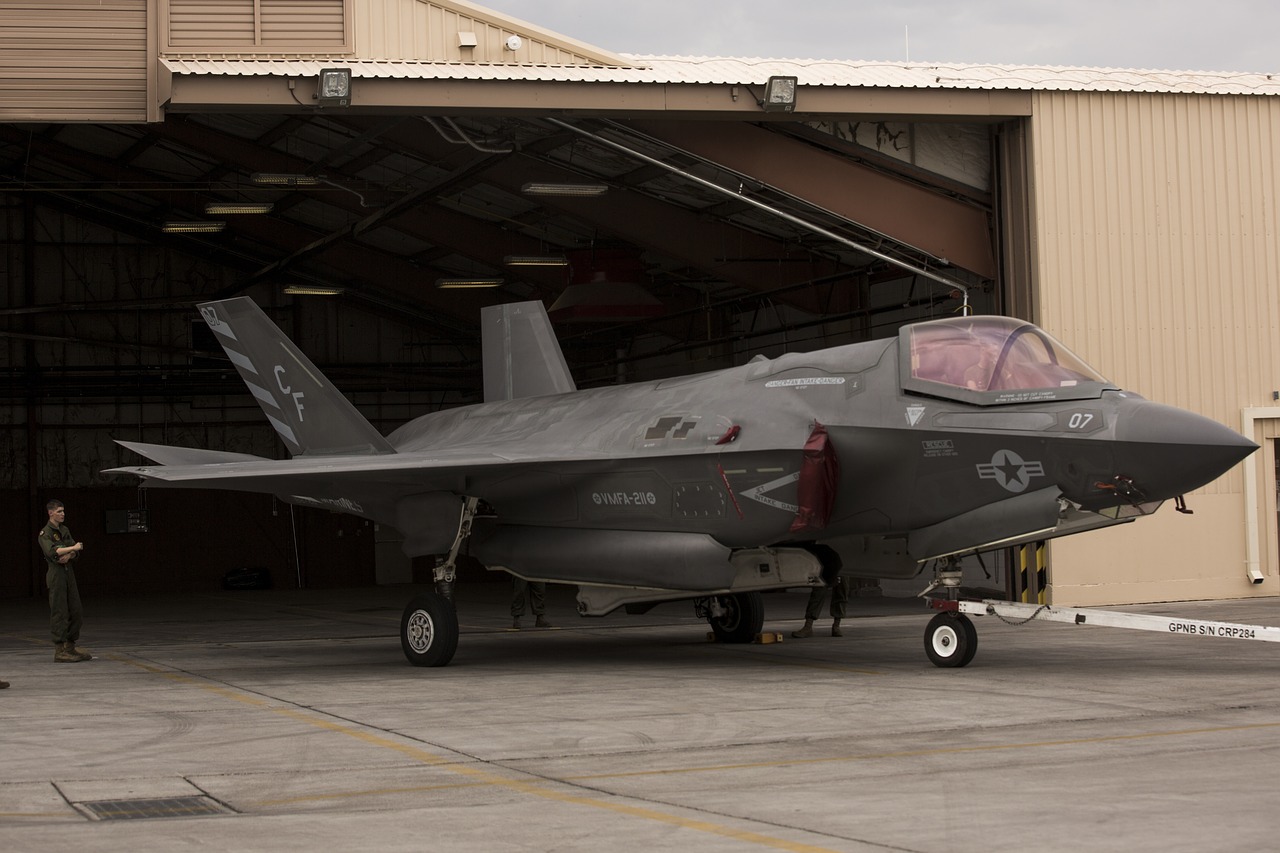
Lockheed Martin employees and senior executives contributed $59,500 to Sen. Susan Collins’s campaign committee during May and June 2023, when Collins was the ranking member of the Senate Defense Appropriations Subcommittee and Congress was preparing its next F-35 funding decision. In July, she supported appropriations for 83 of the Lockheed-built fighters.

The timing and concentration raise a procurement-transparency question, but they do not establish that the money influenced Collins or prove any wrongdoing by her or the donors. A Senate Appropriations Committee spokesperson said Collins had supported the F-35 for years and that her position was unrelated to contributions from Lockheed or other companies.
An October 2026 analysis of Federal Election Commission data by The Intercept found that 56 of the 60 contributions of at least $1,000 made by Lockheed employees during those two months went to Collins. Their $59,500 represented one-quarter of all contributions received by Collins for Senator in that period and more than 10% of Lockheed employees’ contributions across federal campaigns.
The individual contributions were not Lockheed corporate funds. Separately, lobbyists working for the company gave Collins another $5,000, while political action committees associated with Lockheed lobbying firms contributed a combined $5,500. A Lockheed spokesperson described the company’s employee political-action program as bipartisan engagement supporting its business interests but did not specifically explain the concentration of individual donations to Collins.
Why the funding cycle needed unusually clear oversight
The money arrived during a consequential period for the F-35, a program described at the time as roughly a decade late and nearly $200 billion above its original estimate. Lockheed is the aircraft’s prime contractor, and congressional appropriators determine how much money is available to buy new jets and continue modernization.
That combination makes disclosure important even without evidence of a quid pro quo. Defense procurement concentrates technical information among the Pentagon and contractors, while lawmakers must weigh military requirements, program performance, industrial employment and costs that can extend for decades. Campaign contributions add another relationship for taxpayers to evaluate, especially when they are clustered around a lawmaker with direct budget authority.
The central engineering issue in 2023 was not simply how many aircraft to purchase. The F-35 also needed propulsion and thermal-management improvements to support more demanding computing, sensors and other modernization. A Government Accountability Office review criticized the Pentagon for grouping planned engine and cooling upgrades with broader aircraft procurement, warning that the approach could reduce Congress’s visibility into cost increases.
That distinction matters because buying an airframe and modernizing its supporting systems create different cost and schedule risks. More aircraft expand the fleet, but computing growth also increases electrical and heat-removal demands. The current cooling system has been described as having a 32-kilowatt limit, while future configurations may require cooling for systems drawing 62 to 80 kilowatts. Those needs are driving separate engine-core and thermal-management work beyond the basic aircraft purchase.
When upgrade costs are folded into a larger procurement line, lawmakers and the public can have more difficulty identifying which part of the program is growing and why. Clear separation does not prevent overruns, but it makes comparisons between planned and actual spending easier and gives appropriators a better basis for challenging schedule or technical assumptions.
Jobs complicate an aircraft-only assessment
The F-35 has broad support among lawmakers from states containing participating facilities and suppliers. Collins highlighted expected economic benefits for Maine after the final military budget became law later in 2023. Those benefits are legitimate considerations for elected officials, but they can also blur the boundary between evaluating a national defense requirement and protecting work distributed across congressional districts and states.
For taxpayers, the tradeoff is not simply jobs versus aircraft. A geographically broad production and maintenance network can preserve specialized skills, supplier capacity and long-term support for a large fleet. It can also make procurement harder to reassess when costs rise or schedules slip because changing the program affects employers across much of the country.
Collins’s documented history of supporting the F-35 weakens any claim that the 2023 contributions created her position, and the program’s bipartisan backing further cautions against reducing the vote to campaign money. The records instead show a structural transparency problem: employees tied to the prime contractor concentrated contributions on an appropriator while Congress was deciding how many aircraft to fund and how clearly to account for related modernization costs.
The unresolved question is therefore not whether the donations caused the vote; the available facts do not show that. It is whether existing campaign disclosures and Pentagon budget structures give the public enough visibility to judge procurement decisions involving 83 aircraft and an already delayed, over-budget program.
| More aerospace and engineering stories, right in your MSN feed. Follow AMI on MSN |
By David Whitaker — Associate editor for AMI’s aerospace and drone systems desk, translating flight systems, aircraft programs, spaceflight, and UAV developments into accessible technical stories.