


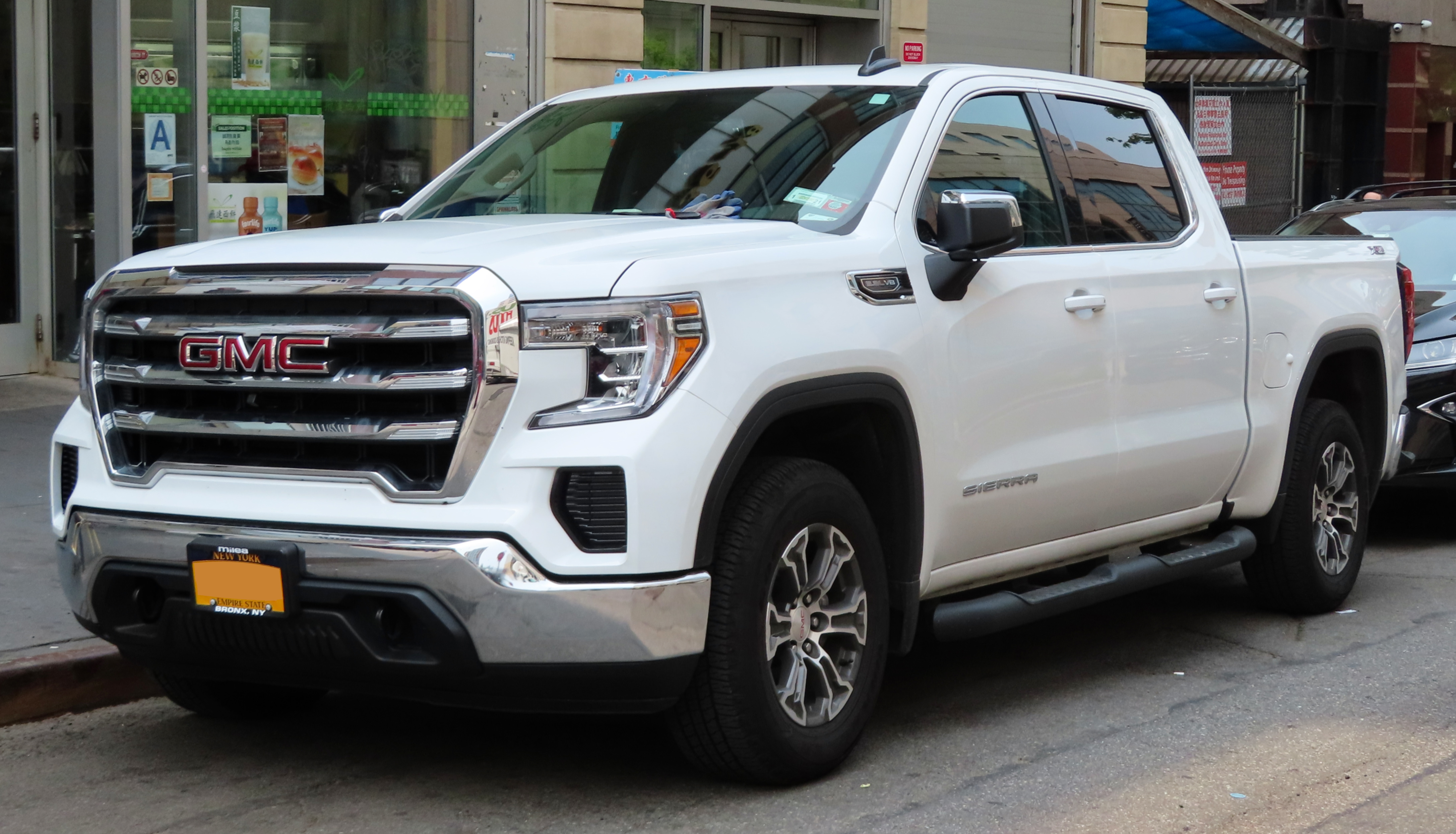
Regulators Investigate 535,639 GMC Sierras After 21 Post-Repair Grille Complaints
Federal regulators are investigating an estimated 535,639 GMC Sierra 1500 pickups after receiving complaints that upper grille pieces detached during normal driving. The review has an added concern: 21 of the complaints involve trucks that had already received an earlier recall repair intended to reinforce the part’s attachment.

The National Highway Traffic Safety Administration opened recall query RQ26003 on October 9, 2026. It covers Sierra 1500 trucks from model years 2022 through 2024, but that does not mean all 535,639 trucks have been recalled or contain a confirmed defect. The agency is evaluating the potential problem, the population that could be affected and whether the previous remedy was adequate.
Why 21 post-repair complaints matter
NHTSA has logged 118 complaints involving upper grille deflectors separating from Sierra pickups. Some reports describe the component coming loose while the truck was moving. Reported consequences include cracked windshields and motorists swerving or braking to avoid detached parts.
No crash, injury or death has been associated with the complaints under review. The investigation also has not established that every covered truck is affected, that the earlier repair has officially failed or that another recall is required.
Even with those boundaries, complaints involving 21 previously repaired trucks give investigators a specific engineering question to examine. A recall remedy is supposed to control the identified failure mechanism across the affected population under normal service conditions. Reports of the same component detaching after that work do not by themselves prove the remedy was inadequate, but they provide a reason to examine repair effectiveness, consistency and durability.
The earlier campaign, recall 25V-060, covered certain 2022 Sierra trucks equipped with chrome grille deflectors and built from November 9, 2021, through September 29, 2022. Dealers were instructed to reinforce attachment tension points. The newly opened query is broader, extending the evaluation through the 2024 model year.
The investigation is broader than the earlier recall
That difference in scope is important. Regulators are not simply counting repeat complaints from the original recall population. They are also assessing whether the earlier campaign included the appropriate vehicles and whether the prescribed reinforcement adequately prevents separation.
The inquiry focuses on chrome upper grille deflectors associated with the Sierra’s 2022 model-year update. Non-chrome grilles use a different design and have not produced the same complaint pattern. That distinction can help investigators define the relevant vehicle population without treating every Sierra grille as mechanically identical.
From a mechanical-systems perspective, the review turns on more than whether a decorative-looking part can remain attached while a truck is parked. Exterior components must tolerate airflow, vibration, road inputs, temperature changes and repeated service exposure. The open query will determine whether the attachment arrangement presents a safety defect and whether reinforcing its tension points provides a sufficient long-term remedy. NHTSA has not yet published either conclusion.
For owners, the uncertainty is practical. A component reportedly separating in traffic is concerning even without a documented injury, particularly for people whose trucks already received the earlier repair. Used-truck buyers may also wonder whether a 2022 through 2024 Sierra could face another dealer visit or a future recall. At present, however, an additional repair campaign remains possible rather than confirmed.
GM spokesperson Bill Grotz said safety and customer satisfaction are the company’s highest priorities and that the automaker is cooperating with NHTSA’s evaluation. Owners and prospective buyers can check an individual vehicle identification number through NHTSA’s recall lookup or contact a GMC dealer to determine whether a truck has an open recall.
An investigation spanning more than half a million pickups makes the issue harder to dismiss as an isolated complaint, but its final reach is still unresolved. The next consequential step will be NHTSA’s determination of whether a defect exists, whether the original recall population was too narrow or whether the reinforcement remedy needs to change.
| More aerospace and engineering stories, right in your MSN feed. Follow AMI on MSN |
By Robert McKinney — Editor-in-Chief for AMI’s automotive and mobility coverage, with a mechanical engineering background and a decade reporting on powertrain systems, EV innovation, and global vehicle manufacturing.


