


California Court Dismisses Challenge to San Jose’s Warrantless Plate Searches
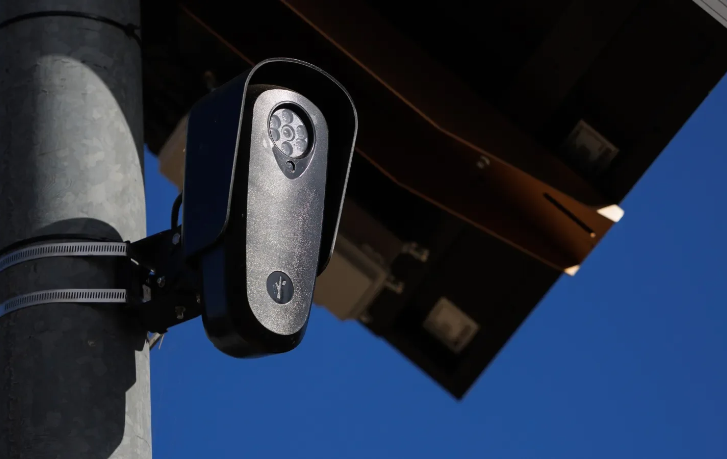
A California trial court has dismissed a constitutional challenge to warrantless police searches of San Jose’s automated license-plate database. The city’s network uses nearly 500 cameras to photograph passing vehicles and retains the resulting records for a month or longer. The Electronic Frontier Foundation and ACLU of Northern California, representing SIREN and CAIR California, plan to appeal.
One day before the California ruling, a federal district court in Oklahoma reached the opposite conclusion in a separate case. It found that an officer’s warrantless search of at least 30 days of vehicle-location records spanning at least three states violated the Fourth Amendment. The two trial-level decisions leave no uniform national rule for when an isolated roadside observation becomes a search of a person’s travel history.
One camera image versus a networked history
The technical distinction begins with what the system stores. An automated license-plate reader captures an image of a passing vehicle and associates its plate number with a location and time. A single record resembles what an officer or bystander could observe from a public place. Hundreds of cameras, persistent storage and a search interface change the scale: an authorized user can enter a plate and retrospectively retrieve multiple sightings without having followed the vehicle when those sightings occurred.
San Jose’s system therefore has two operational identities. It is a distributed group of roadside sensors, but it is also a database capable of organizing separate observations into a longitudinal record. Camera density determines how often a vehicle may appear; geographic coverage determines which parts of a journey are visible; retention controls how far back a search can reach; and sharing determines whether the record extends beyond one jurisdiction.
The California court focused on the public nature of driving. It relied on a state appellate decision involving individual streetlight cameras and concluded that drivers lack a reasonable expectation of privacy on public roads. The plaintiffs’ position, advanced by EFF, is that this reasoning does not adequately account for aggregation the ability to map movements and infer patterns from many observations collected over time.
The Oklahoma court focused more directly on that accumulated record. According to the order, an officer followed a vehicle with California plates “for no apparent reason” other than its out-of-state registration, then queried Flock’s system. The search produced at least a month of records across at least three states. The court described automated plate-reader systems as a type of indiscriminate mass surveillance and treated the historical database query as a constitutional search.
Scale and access may define the legal boundary
The Oklahoma ruling does not establish that every plate query requires a warrant. The court acknowledged that plate-reader records are less precise and less comprehensive than cellphone-location data, and its analysis reflected the capabilities documented in that case: more than 50 observations, roughly 30 days of history and multistate coverage. Other federal courts have upheld plate-reader systems when they concluded the available records did not reconstruct the whole of a vehicle’s movements.
That makes system configuration central to both policy and legal analysis. A narrowly retained local record may reveal less than a monthlong, cross-jurisdictional archive. A real-time comparison against a list of stolen vehicles also presents a different privacy tradeoff from searching stored records to reconstruct where a vehicle traveled weeks earlier. Both functions may use the same cameras, but they expose different amounts of information about people who are not suspected of wrongdoing.
The public-safety benefits are concrete. Agencies use plate readers to locate stolen vehicles and missing people, generate investigative leads and compare captured plates with authorized alert lists. The privacy cost is also broadly distributed because cameras collect records from passing vehicles regardless of whether their drivers are connected to an investigation.
Legislatures are increasingly setting boundaries where court decisions remain unsettled. At least 28 states expressly regulate automated plate readers, according to the National Conference of State Legislatures. Rules vary, but recurring policy controls include retention periods, access restrictions, data sharing, security, auditing and procedures for addressing misuse. A Congressional Research Service overview notes that no specific federal legislative framework governs federal law-enforcement use of the technology, leaving a patchwork of broader policies and state laws.
For San Jose drivers, the immediate result is that the constitutional challenge has been dismissed and warrantless database searches remain at issue while EFF pursues an appeal. The larger dispute will turn on a systems question courts are only beginning to resolve: whether public visibility of each individual trip also permits the government to search a stored, shareable history of weeks of travel without prior judicial approval.
| More aerospace and engineering stories, right in your MSN feed. Follow AMI on MSN |
By Thomas Caldwell — AMI’s senior editor for mechanical and mobility engineering, covering vehicle electronics, systems integration, electrification, chassis systems, propulsion, and safety policy.



