


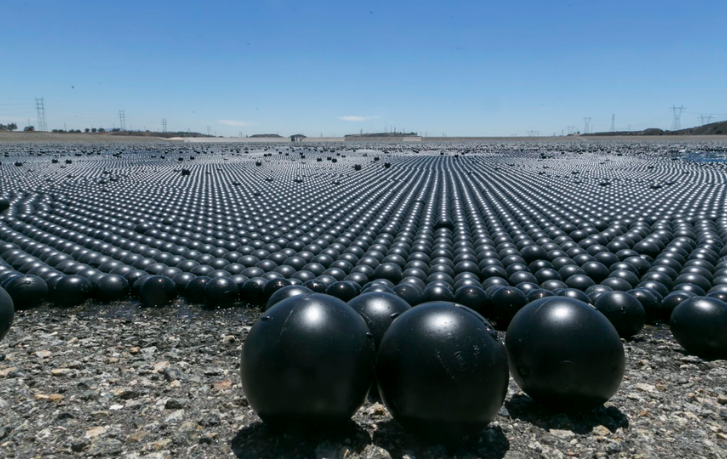
Los Angeles Used 96 Million Black Balls to Protect Drinking Water
Sunlight was the critical input Los Angeles needed to remove from an unexpected chemical reaction in one of its drinking-water reservoirs. Chlorine was necessary for disinfection, while naturally occurring bromide was difficult to remove. Under bright sunlight, however, the two could contribute to the formation of bromate, a regulated disinfection byproduct associated with increased cancer risk.
The mechanical answer was a floating barrier made from 96 million black plastic spheres. Although the installation is often associated with evaporation control, its primary purpose at Los Angeles Reservoir was to block the light involved in bromate formation and protect water quality.
A chemical problem after treatment
Bromide can enter water supplies through natural processes including saltwater intrusion. It is described as harmless in this context, but its behavior changes when treated water containing chlorine is exposed to strong sunlight. Tests found that bromate levels increased after treated water entered the open reservoir.
The health standard left little room to ignore that reaction. The Environmental Protection Agency’s drinking-water regulations set bromate’s maximum contaminant level at 0.010 milligrams per liter, equivalent to 10 micrograms per liter. The agency lists bromate as a drinking-water disinfection byproduct and sets its non-enforceable health goal at zero because of the increased cancer risk associated with long-term exposure above the limit.
The reservoir operator therefore faced a systems constraint: chlorine still had to control microbes, and removing bromide was considered impractical. That made incoming solar energy the variable available for control. Instead of changing the water’s essential disinfection process, the operator changed the reservoir’s physical boundary condition.
Why spheres replaced a conventional roof
Engineers considered floating covers, pipe-supported structures and pieces of floating plastic. Hollow spheres previously called bird balls because they were used to discourage waterfowl from landing on certain ponds offered a modular surface cover without a large supporting frame.
A small comparison test used three inflatable pools filled with reservoir water. One remained exposed, another was covered by a tarp and the third received the floating balls. The shade-ball pool stopped the bromate problem immediately, according to the reservoir account. That result supported scaling the concept to the full reservoir.
The geometry helps the covering adapt to changing water levels without requiring a tightly fitted membrane. Millions of individual balls can spread across the free surface, move with the water and maintain broad coverage. The same freedom of movement creates a wind-management problem, so each ball is partly filled with water as ballast. That added mass helps keep high winds from carrying the spheres out of the reservoir.
Black plastic serves two functions
The spheres are made from food-grade high-density polyethylene, a common material also used for products such as milk jugs. Products used in contact with potable water require attention to possible chemical migration. Shade balls of this type were certified to NSF/ANSI Standard 61 for drinking-water system components, which evaluates whether materials introduce contaminants at levels of health concern.
The black color is functional rather than cosmetic. Carbon black makes the shell opaque, preventing light from reaching the water, and improves the polyethylene’s resistance to prolonged solar exposure. The specified material was expected to last at least 10 years in sunlight. Three blue alternatives were tested, but their dyes could not be guaranteed to remain stable for more than one year.
Color, material and ballast therefore operate as an integrated design. Opacity interrupts the photochemical pathway, ultraviolet resistance supports service life, potable-water compatibility addresses continuous contact, and the internal water keeps the lightweight cover in place.
Evaporation reduction was a secondary benefit
By separating much of the water surface from direct sun and moving air, the balls also reduce evaporation. The reported reduction is 80% to 90%, and water beneath the cover was measured as cooler than uncovered water in direct sunlight. Those benefits became especially visible during drought, but they were not the original engineering driver.
Blocking sunlight also eliminated the reservoir’s reported algae problem, sharply reduced chlorine use and largely stopped birds from landing there. Each ball cost approximately 33 to 34 cents. Estimates that chemical and evaporation savings could repay part of that expense depend on service life and operating conditions, so they are less definitive than the demonstrated water-quality function.
The installation’s unusual appearance can suggest that plastic was simply dumped onto drinking water. In practice, the 96 million ballasted spheres form a movable reservoir cover built around one tightly defined requirement: keep sunlight from completing a chemical reaction that the treatment and storage system could not otherwise avoid.
| More aerospace and engineering stories, right in your MSN feed. Follow AMI on MSN |
By Thomas Caldwell — AMI’s senior editor for mechanical and mobility engineering, covering vehicle electronics, systems integration, electrification, chassis systems, propulsion, and safety policy.



