


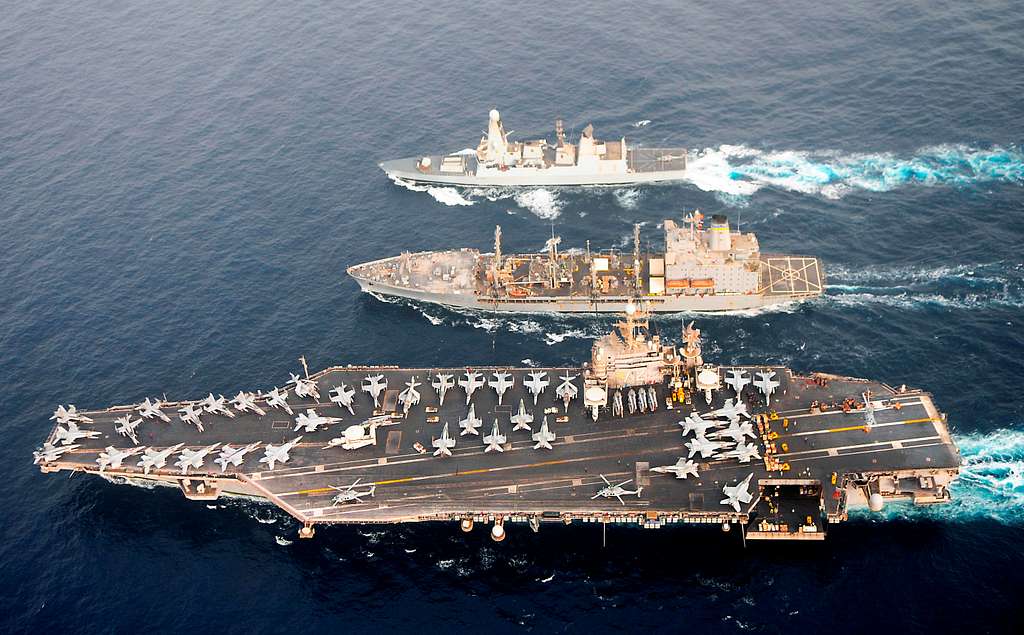
USS Abraham Lincoln Will Leave San Diego, Moving 5,000 to Kitsap
USS Abraham Lincoln will permanently leave San Diego for Naval Base Kitsap near Seattle by the end of 2026, setting up a change of station for approximately 5,000 sailors and their families. The Navy announced the homeport decision on Oct. 19, less than two weeks after the aircraft carrier returned from an unusually long deployment.

The move is also the first step toward a planned period at Puget Sound Naval Shipyard & Intermediate Maintenance Facility. The Navy calls it a “long-planned maintenance availability,” but it has not announced when that work will begin. That leaves personnel with a relocation deadline while the carrier’s detailed shipyard schedule remains open.
Lincoln is expected to remain at Naval Air Station North Island initially to support crew leave, equipment offloads and family moving arrangements. Those tasks make the homeport shift more than a transfer of the ship itself: housing, schools, household moves and support services must all follow a carrier community from Southern California to Washington state.
A homeport move tied to shipyard access
For the Navy, Kitsap puts Lincoln alongside the West Coast facility equipped to dry-dock Nimitz-class carriers for major repair and maintenance. That proximity reduces the separation between the ship’s assigned base and the industrial site responsible for its coming availability, although the Navy has not disclosed the scope or duration of the work.
Maintenance availability is a central part of carrier readiness. A nuclear-powered aircraft carrier combines propulsion, aviation facilities, electrical systems, crew spaces and extensive supporting machinery in one large maintenance program. Scheduling that work must account for shipyard capacity as well as the availability of other carriers, so the timing of Lincoln’s entry and return will affect how the Navy sequences its Pacific carrier force.
The relocation follows a demanding operating period. Lincoln returned to San Diego on Oct. 8 after a 322-day deployment, including a Navy-record 260 consecutive days without a port visit. Some family members publicly raised concerns about the deployment’s length, food and absence of port calls. A letter from Acting Navy Secretary Hung Cao released by Sen. Kirsten Gillibrand said eight sailors assigned to the Lincoln Carrier Strike Group attempted suicide during the deployment; none died.
That recent history raises the human burden of another major transition. The carrier’s crew now moves from post-deployment leave and equipment offload into preparations for a permanent transfer, followed by a maintenance period whose start date has not been made public.
Kitsap’s carrier lineup is changing
Lincoln’s arrival forms part of a broader turnover at Naval Base Kitsap. USS Ronald Reagan is already based there. USS Nimitz, commissioned in 1975 and identified by the Navy as the oldest American carrier in active service, transferred to Norfolk in 2026 ahead of its planned retirement. The carrier’s official Navy history shows that Kitsap has repeatedly served as a homeport during its service life.
Another change is scheduled for 2029, when the future USS John F. Kennedy is due to shift its homeport to Kitsap. That Ford-class carrier is undergoing East Coast sea trials and final work before joining the fleet. Lincoln therefore enters a Pacific Northwest carrier base in transition: Nimitz is departing the force, Reagan is already assigned there, and Kennedy is expected later in the decade.
The sequence gives the Navy a bridge between carrier generations, but the key dates are not yet fully connected in public. Lincoln must complete its move by the end of 2026, its Puget Sound maintenance is planned but undated, and Kennedy is not scheduled to arrive until 2029. The start and length of Lincoln’s shipyard period will determine how its relocation translates into usable fleet availability during that transition.
| More aerospace and engineering stories, right in your MSN feed. Follow AMI on MSN |
By David Whitaker — Associate editor for AMI’s aerospace and drone systems desk, translating flight systems, aircraft programs, spaceflight, and UAV developments into accessible technical stories.



