


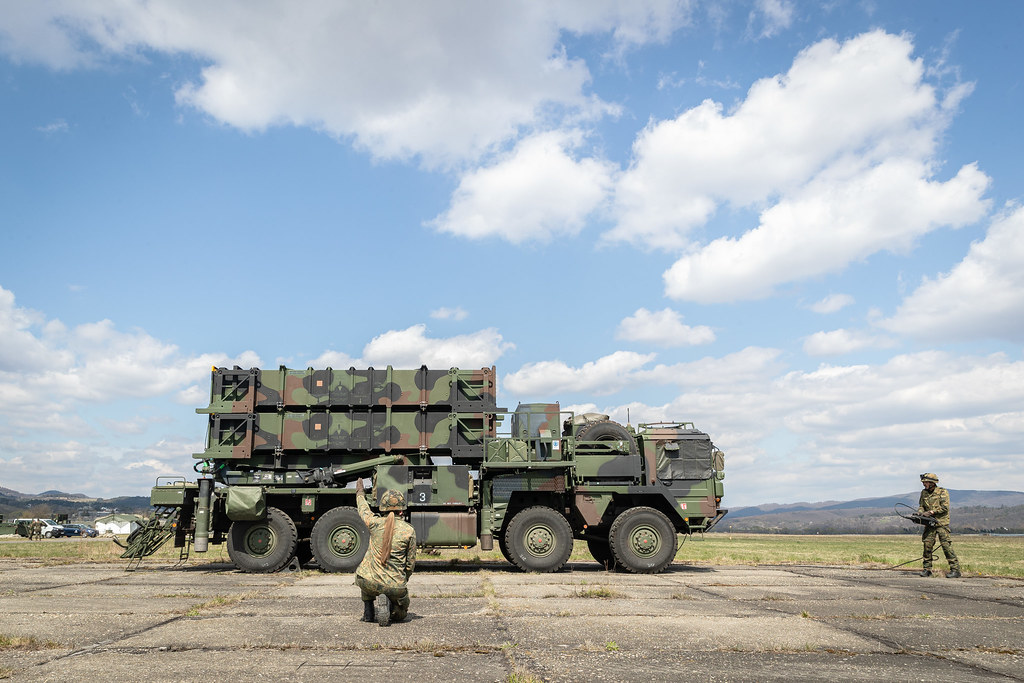
Ukraine Asks Lockheed Martin to Speed Patriot Supplies; No Commitment Announced
Ukraine wants faster access to Patriot air-defense systems as Russian ballistic-missile pressure continues, but its latest discussion with Lockheed Martin produced no announced supply commitment. Ukrainian President Volodymyr Zelenskiy said the talks covered ways to expand and accelerate supplies of equipment he described as vital to the country’s defense.

The gap between urgency and outcome is the central issue. Zelenskiy identified both Patriot systems and F-16 aircraft as important for defending against Russian ballistic missiles and jet-powered drones, adding that conditions were difficult for both. Yet no agreement, order, production increase, delivery timetable or improvement in operational availability was disclosed after the conversation.
A supply discussion is only an early step
Lockheed Martin is a central industrial participant, but a manufacturer-level discussion cannot by itself unlock faster fielding. Air-defense availability depends on more than factory output: orders must be funded and authorized, equipment must move through the supply chain, and complete systems require trained personnel, maintenance support and compatible inventories of interceptors.
The Patriot name also covers more than one piece of hardware. A functioning air-defense capability draws on launchers, radar, command equipment, communications, interceptors and sustainment. Increasing one element does not automatically create another complete, deployable unit. None of those categories was quantified in the announced discussion, so it remains unclear whether Ukraine was seeking additional systems, more interceptor missiles or a broader package.
That uncertainty is particularly important because Zelenskiy spoke about “supplies” broadly. The conversation establishes demand and identifies Lockheed Martin as part of the industrial discussion, but it does not show whether additional equipment is already under contract, available for transfer or moving toward delivery.
Missile pressure raises the stakes
Supporters of Ukraine worry that Russian ballistic missiles keep getting through while Patriot deliveries lag. The latest announcement, however, supplied no interception figures, delivery data or documented change in readiness that would measure either part of that concern.
The pressure behind the request is nevertheless visible. An October 19 assessment from the Institute for the Study of War reported that Russian missile and drone strikes heavily damaged Ukrainian energy and civilian infrastructure during the preceding night. Citing Ukrainian officials, the assessment said about 550,000 households lost power across 15 regions after strikes affected substations and other energy infrastructure.
Those figures do not establish how any individual weapon performed or why particular strikes reached their targets. They do show why the availability of air-defense equipment carries an immediate consequence beyond procurement accounting: limited supply must be weighed against recurring attacks on geographically dispersed infrastructure.
The F-16 question remains unresolved
Zelenskiy also placed F-16 availability within the wider discussion, saying the aircraft play an important defensive role and that conditions were not easy on that front. No new aircraft supply, support arrangement or readiness improvement was announced.
The reported account also did not verify that Zelenskiy raised repairing F-16s inside Ukraine. Establishing that would require a separate statement or confirmation identifying domestic repair as part of the talks. Without it, the supported development is narrower: F-16 supply and availability were discussed alongside Patriot systems, while the location and scope of any prospective maintenance work remain unspecified.
That distinction has practical weight. Aircraft availability depends not only on acquiring airframes but also on maintenance capacity, spare parts, trained crews and the time required to return aircraft to service. The latest conversation provides no figures for any of those constraints.
For now, Ukraine has elevated two urgent availability problems directly with a major U.S. defense manufacturer. What it has not announced is the result that would change conditions on the ground: an approved order, higher production, a delivery date or a confirmed repair plan.
| More aerospace and engineering stories, right in your MSN feed. Follow AMI on MSN |
By David Whitaker — Associate editor for AMI’s aerospace and drone systems desk, translating flight systems, aircraft programs, spaceflight, and UAV developments into accessible technical stories.



