


SK Enmove’s Spanish Plant Supplies Europe With Million-Ton Annual Lubricant Output
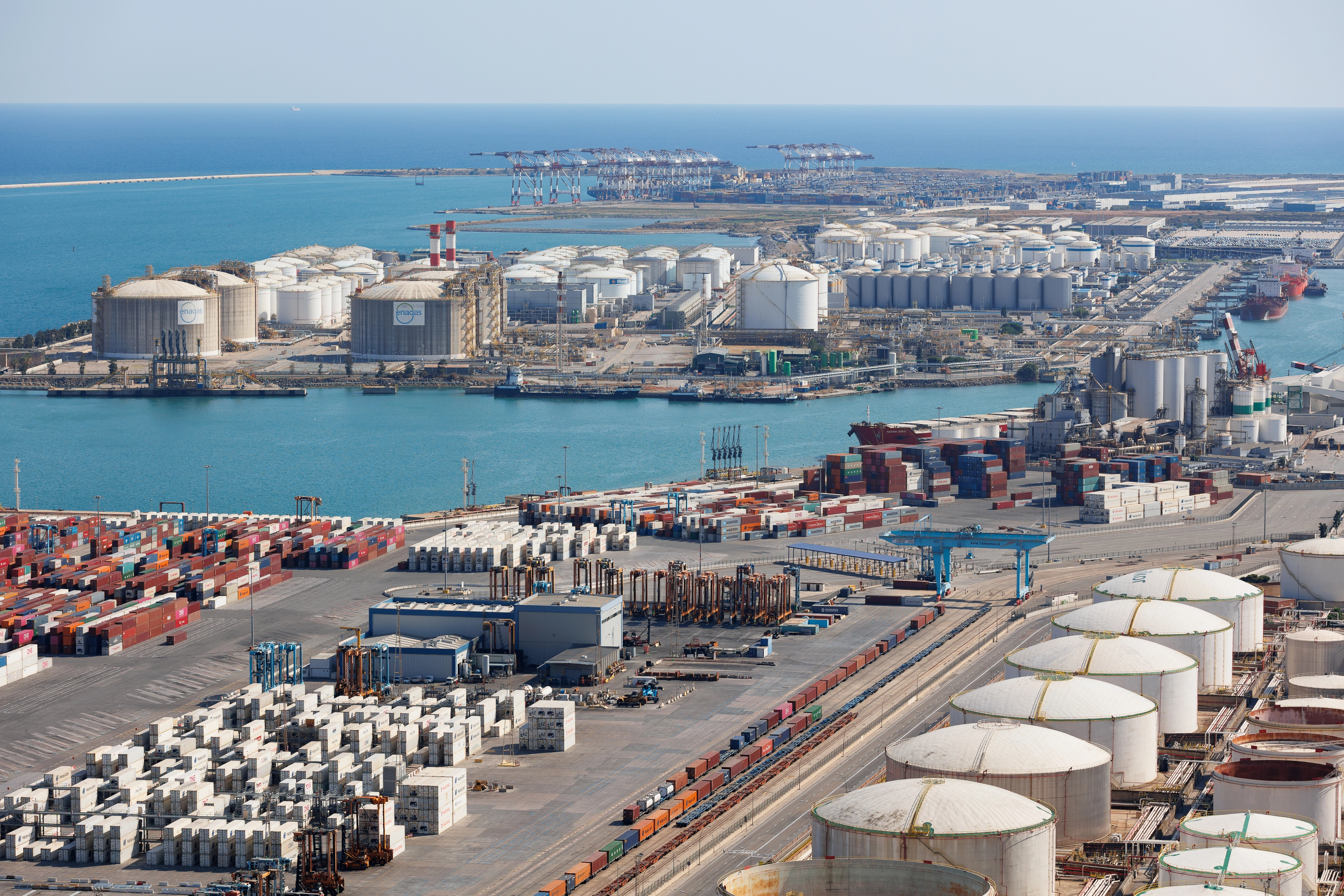
One million metric tons a year is the scale of the lubricant supply buffer operating in southern Spain. SK Enmove’s joint venture with Repsol is supplying European customers from a plant capable of producing 19,300 barrels per day of high-grade base oil as Middle Eastern production and shipping contract. The iLBOC facility, located in Spain’s Escombreras Valley near Cartagena, is described as Europe’s largest single-site producer of Group III lubricant base oil.

That material is an upstream building block rather than finished motor oil. Lubricant companies combine base stocks with additives to formulate products for engines, transmissions and industrial machinery. Group III material has a high viscosity index, low sulfur content and strong oxidation stability, properties that support the lower-viscosity and longer-lasting lubricants used in many modern vehicles.
The scale matters because Middle Eastern plants in Qatar, the United Arab Emirates and Bahrain have historically supplied about 30% of global Group III output. Industry estimates cited for the current disruption project worldwide production falling approximately 27% below normal levels in 2026, followed by a 12% shortage during the first half of 2027. European automakers, lubricant formulators and industrial operators are consequently seeking supply from other regions.
Why higher prices cannot create an immediate replacement
Base oil capacity is only the first requirement. A substitute must provide consistent physical and chemical properties, work with the intended additive package and retain the approvals attached to the finished lubricant. Products developed for specific vehicle manufacturers and driveline systems can have narrow substitution margins.
The numbered base-oil groups provide a classification framework, but products in the same group are not automatically identical. According to an ExxonMobil technical overview, Group III base stocks can differ in low-temperature viscosity, volatility and other performance characteristics. Actual bench, rig and engine testing remains the most reliable way to predict performance in an application.
That makes an established producer harder to replace than its nameplate capacity alone suggests. New production equipment takes time to build and stabilize, while a different base stock may require formulation work, testing and customer approval. Price increases can redirect available supply, but they cannot instantly produce a qualified manufacturing process or recertify an automotive lubricant.
A refinery and base-oil plant operating as one system
The Spanish operation began production in 2014 and expanded in 2023. Repsol’s nearby Cartagena refinery complex sends unconverted oil and utilities to iLBOC through pipelines. The plant then uses SK Enmove’s process technology including vacuum distillation, dewaxing and hydrotreating to manufacture YUBASE products.
In broad terms, vacuum distillation separates the feed under reduced pressure, dewaxing improves low-temperature behavior, and hydrotreating removes unwanted compounds while improving stability. Controlling those linked stages is essential to producing repeatable base-stock properties for demanding lubricant formulations.
Finished product moves through a four-kilometer pipeline to a 25-meter-high storage tank. Most output is then shipped to Rotterdam and Antwerp, two distribution points from which it can reach lubricant manufacturers and customers across Europe. The arrangement links refinery feedstock, specialized processing, storage and regional logistics without relying on one site to perform every function.
Feedstock geography adds another layer of resilience. Repsol’s crude sourcing is concentrated in Africa, South America and Canada, giving the Cartagena system relatively low dependence on Middle Eastern crude. Diversification does not remove exposure to global prices or shipping constraints, but it reduces the plant’s direct reliance on the same production region now experiencing curtailed output.
Availability is part of effective capacity
A million-ton rating has limited value if outages prevent the product from reaching customers. SK Enmove reports that operating practices transferred from its Ulsan facility have helped iLBOC maintain availability above 99.9% and an accident-free record exceeding a decade. Those are company-reported internal metrics, but they illustrate why process discipline and safety management are integral to supply capacity rather than separate performance categories.
SK Enmove traces its commercial Group III production to Ulsan in 1995 and now operates five facilities across South Korea, Japan, Spain and Indonesia with combined capacity of 83,000 barrels per day. That geographic spread, together with accumulated formulation data, customer certifications and logistics relationships, gives the company options that a newly constructed standalone plant would not possess immediately.
The present constraint is therefore more than a shortage of refinery volume. Europe needs material that can move through established distribution channels and into approved automotive and industrial formulations without forcing extensive redesign or retesting. Until Middle Eastern output and shipping recover, the Spanish plant’s million-ton annual production remains difficult to duplicate and difficult for Europe’s lubricant system to do without.
| More aerospace and engineering stories, right in your MSN feed. Follow AMI on MSN |
By Thomas Caldwell — AMI’s senior editor for mechanical and mobility engineering, covering vehicle electronics, systems integration, electrification, chassis systems, propulsion, and safety policy.



