


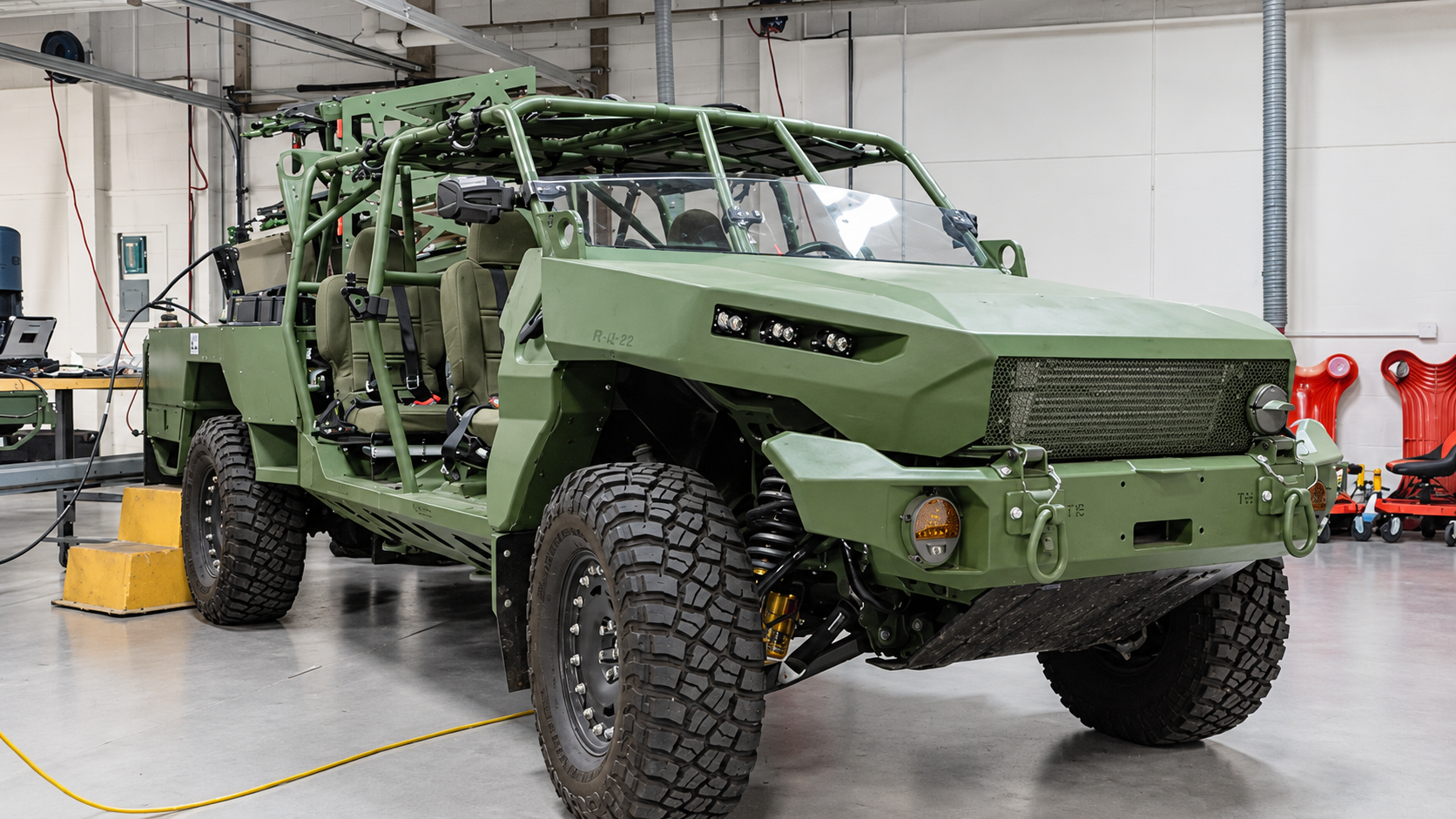
Lockheed Fires 17 Long-Range Missiles From Light Army Vehicle in Three-Day Test
A lightweight U.S. Army utility vehicle launched 17 long-range missiles during a three-day demonstration, testing whether infantry can gain precision-strike reach normally associated with a larger, dedicated launcher. Lockheed Martin conducted the live-fire event at Dugway Proving Grounds in Utah, with Army infantry soldiers conducting most of the shots.
Every missile was fired from an Infantry Squad Vehicle–Utility, or ISV-U, marking the first launch of Lockheed Martin’s Spike Non-Line-of-Sight missile from that platform. The 17 engagements against simulated operational targets at varying ranges showed that soldiers could train on and safely operate the vehicle-mounted system during the same week. They did not establish combat readiness, disclose whether every engagement produced a successful hit or result in an Army fielding decision.
A light carrier takes on a heavier launcher’s role
The comparison driving the experiment is straightforward. A dedicated missile vehicle can be designed around its weapons, sensors, electrical loads, crew stations and ammunition. A utility variant of the Infantry Squad Vehicle begins from a much lighter transportation platform and must accommodate the missile system without losing the mobility that makes the vehicle useful.
The baseline ISV was developed to move soldiers and equipment where heavier vehicles may be less practical. According to a Congressional Research Service overview, it is a lightweight, unarmored vehicle derived largely from commercial components. It is about 17 feet long, carries a payload near 3,200 pounds and has less payload capacity than the Army’s Humvee and Joint Light Tactical Vehicle.
That makes the ISV-U missile installation potentially more practical for mobile infantry than relying solely on a heavier dedicated launcher. It could place long-range fire support on a vehicle class already intended for relatively rapid movement and transport. The idea may also appear cheaper because it uses a light utility platform, but neither Lockheed Martin nor the Army disclosed integration, missile, support or lifecycle costs. The demonstration therefore provides no basis for concluding that this configuration is less expensive.
Payload capacity is only one constraint. A production configuration would also have to account for crew workload, missile stowage, electrical demand, communications, stability, maintenance and the effect of added equipment on vehicle mobility. Lockheed Martin has not disclosed the full operational configuration, so the engineering cost of concentrating this capability on the ISV-U remains unclear.
More reach than a shoulder-fired missile
Spike NLOS has a stated ground-launch range of approximately 30 kilometers, or 19 miles, substantially beyond the reach of the shoulder-fired Javelin. It is designed to engage targets outside the launch platform’s direct line of sight. That gives the Army a different capability from a weapon carried and launched directly by dismounted troops, while avoiding exclusive dependence on a larger missile carrier.
The test supports the Army’s Mobile Long-Range Precision Strike Missile requirement, which seeks a ground-based, beyond-line-of-sight system for mobile brigade combat teams. It also falls under the Army’s Transformation in Contact initiative, in which soldiers handle emerging equipment and provide feedback before requirements and configurations are finalized.
Seventeen live engagements over three days are meaningful because they provided repeated launches from the same type of light vehicle rather than a single proof-of-concept shot. The event demonstrated that the launcher-vehicle combination operated through the planned training and firing activity, with soldiers performing most launches. Specific engagement distances, target details and a shot-by-shot results breakdown were not released, limiting conclusions about precision across the missile’s operating envelope.
Lockheed Martin described the demonstration as a continuation of earlier Phase 1 and Phase 2 work. Validation testing is planned over the next year, with soldier observations and live-fire data feeding the Army’s final requirements and integration decisions. Phase 3 is expected to include delivery of final system prototypes and the start of initial operational production. Until those tests define the configuration and operating limits, the central trade remains open: the ISV-U has demonstrated that it can launch the long-range missile, but the Army has not yet established what mobility, payload, support burden and cost it must accept to field that reach on a light vehicle.
| More aerospace and engineering stories, right in your MSN feed. Follow AMI on MSN |
By Robert McKinney — Editor-in-Chief for AMI’s automotive and mobility coverage, with a mechanical engineering background and a decade reporting on powertrain systems, EV innovation, and global vehicle manufacturing.


