


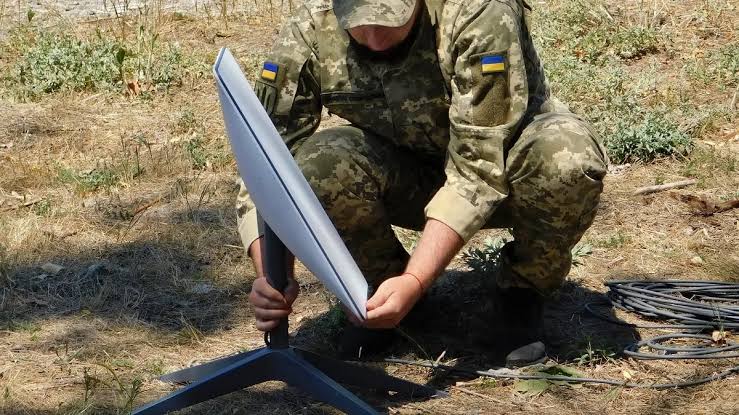
Ukraine Says Starlink and Starshield Restored After Weeklong Limits Disrupted Drone Defense
A satellite connection can be technically available yet operationally inadequate when its permitted mobility falls below the speed of the platform carrying it. Ukraine says that constraint has now been removed from SpaceX’s Starlink and the military-focused Starshield service, after more than a week of restrictions disrupted communications, hindered drone interception and forced some operations to be canceled.
President Volodymyr Zelenskiy said in an official address that both services had returned to their pre-restriction speeds. Recovery began overnight, he said, and Ukraine’s defense ministry subsequently reported stable connectivity above 400 kilometers per hour. The earlier limit was reported at 160 kilometers per hour.
The restored speed matters because the restriction applied to movement, not merely headline download performance. A satellite terminal that works when stationary or moving slowly may still become unusable for a faster mobile application if the service rejects or constrains connectivity above a set velocity. In this case, Ukrainian officials said the limit affected efforts to intercept Russian attack drones and led to canceled operations.
Starlink also remains important to frontline communications. That makes a remotely administered service condition a readiness issue: hardware can be installed and functioning, satellites can remain overhead, and users can still lose a required capability when account permissions or service parameters change.
Control remains divided and disputed
The unresolved issue is who ordered or implemented the restrictions. Neither SpaceX CEO Elon Musk nor the U.S. government initially accepted responsibility, and each publicly indicated that only the other could have made the relevant decision. Reuters reported, citing sources, that the Starshield throttling order originated inside the White House. The U.S. government has not publicly acknowledged issuing it.
The distinction between the two services complicates accountability. Starlink is SpaceX’s commercial satellite-internet service, while Starshield uses Starlink technology for government and military customers. Musk has said decisions governing Starshield rest with the U.S. government. U.S. defense policy, meanwhile, treats commercial satellite communications as part of the wider Defense Department information network and routes procurement through the Space Force’s commercial satellite communications office.
That arrangement buys access to rapidly deployed commercial infrastructure, but it can spread authority across a provider, contracting agencies and senior government decision-makers. When a service parameter changes, the immediate operational effect can be visible well before the decision chain becomes public.
Previous U.S. administrations have asked SpaceX to activate or deactivate Starlink in various countries, according to Reuters sources. That history shows why commercial satellite capacity cannot be treated like equipment that becomes fully independent once delivered. Continued access depends on service governance as well as terminals, power and spacecraft coverage.
Musk alleged a terms violation after restoration
Hours after Ukraine announced the recovery, Musk accused the Ukrainian military of violating Starlink’s terms of service by using the commercial service for offensive drone strikes. He said SpaceX had closed what he called a loophole and was enforcing existing terms. SpaceX did not provide additional technical detail about how the commercial Starlink restriction related to the reported Starshield speed cap.
Ukraine has denied relying on Starlink or Starshield for long-range drone operations inside Russia, including attacks on oil refineries. Ukrainian officials have described the affected uses as frontline communications and operations involving shorter-range systems, including interception. The competing statements leave the contractual and technical scope of the restriction unresolved.
For readers concerned about who constrained Ukraine’s air-defense and drone capability for more than a week, there is still no complete public answer. The service is back at the speeds Ukraine says it requires, but restoration does not identify who authorized the limit, which service rules were applied to each system or what process would govern another restriction.
The episode exposes a practical cost of relying on commercial satellite networks for military readiness. Their distributed spacecraft and user terminals can provide resilient connectivity, but access remains a managed service rather than an owned radio network. Ukraine’s terminals are again connecting above 400 kilometers per hour; authority over the switch that constrained them remains contested.
| More aerospace and engineering stories, right in your MSN feed. Follow AMI on MSN |
By David Whitaker — Associate editor for AMI’s aerospace and drone systems desk, translating flight systems, aircraft programs, spaceflight, and UAV developments into accessible technical stories.



