


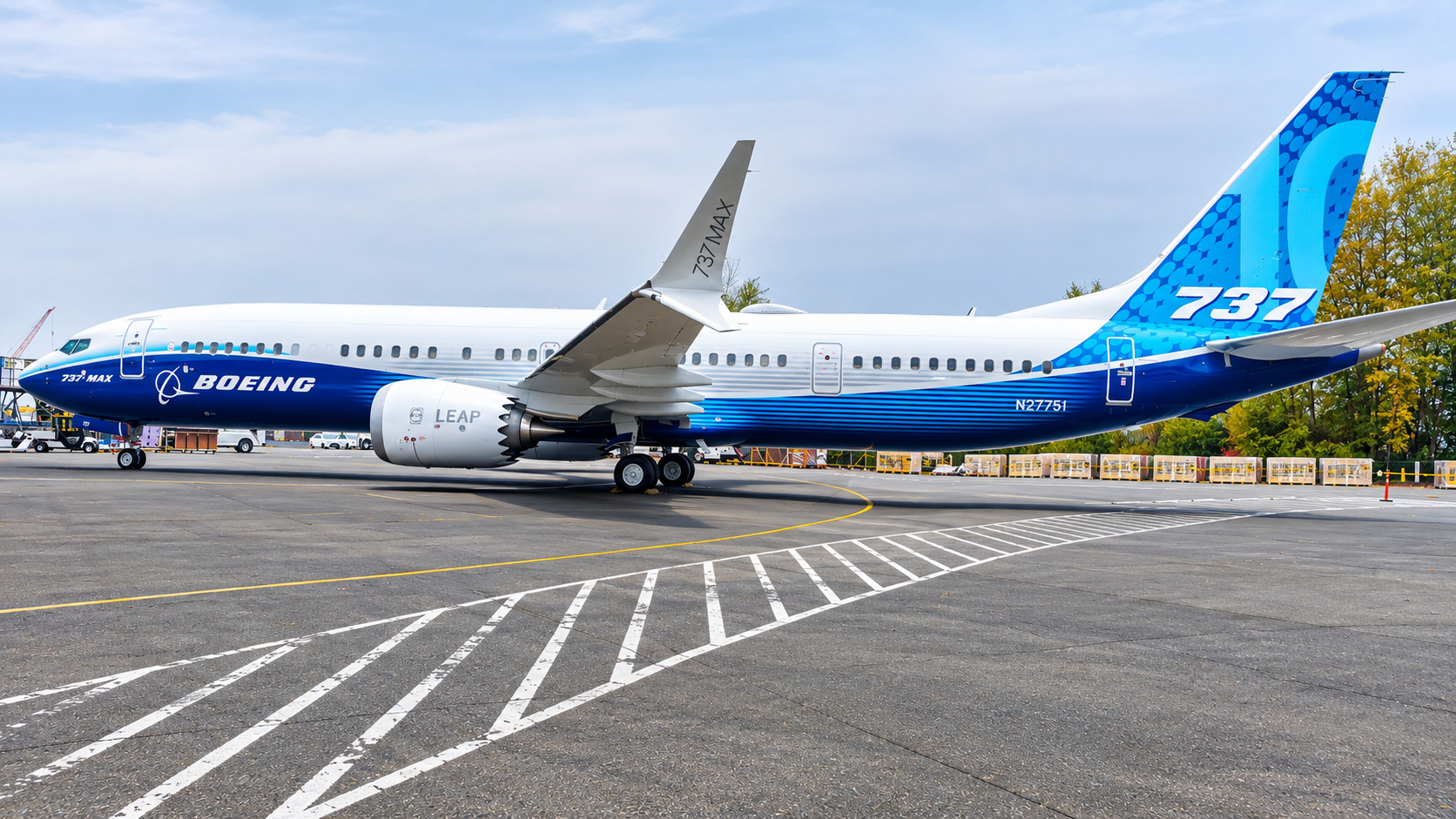
Boeing’s First Everett-Built 737 Rolls Out, but Airline Service Must Wait
Boeing’s first Everett-built 737 has left the factory, but the completed-looking jet is not yet ready for delivery or passenger service. The 737 MAX 10, destined for WestJet, still requires design updates and clearance tied to production at Boeing’s new assembly line.

The aircraft rolled onto the factory apron in Everett, Washington, on October 26, 2026. It is the first completed 737 built outside Renton in more than 50 years a visible break with the narrowbody program’s longstanding production geography. The rollout came only six days after the Federal Aviation Administration certified the 737 MAX 10 following an extensive design and safety review.
For Boeing followers who have waited years to see the largest MAX variant move toward service, the airplane’s departure from the building is tangible progress. It completed all scheduled assembly stations before reaching the apron at about 2 p.m. local time, according to The Seattle Times. Seven more aircraft are already moving through the Everett North Line, showing that this was not a one-airplane demonstration.
A fourth final assembly line
Boeing opened the North Line in July 2026 after converting Everett space previously used for widebody manufacturing. The roughly $1 billion project began operations nearly two years later than originally planned and adds a fourth 737 MAX final assembly line alongside three in Renton.
That added footprint is intended to support Boeing’s production ramp. The company is working to stabilize overall 737 MAX output at 42 aircraft per month before targeting 47 and eventually 52. With a backlog exceeding 4,000 MAX aircraft, another line can provide valuable factory capacity but only after its workers, tooling and assembly processes demonstrate repeatable performance.
The Everett space also has a practical advantage for the MAX 10. As the longest member of the family, the aircraft can be positioned nose to tail on the larger North Line. Renton’s smaller production space requires Boeing to stagger the variant among other MAX models.
The MAX 10 is designed to carry as many as 230 passengers and has a stated range of up to 3,100 nautical miles. That combination emphasizes capacity over the longer range offered by smaller members of the family, making the model a high-density option for airlines operating suitable routes.
Built before the design was finalized
The WestJet aircraft entered assembly before the MAX 10 received its final certification. Boeing must therefore put it through “change incorporation,” an industry term for bringing an already-built airplane into conformity with the approved production design.
The required work includes changes to the engine anti-ice system and installation of an enhanced angle-of-attack sensor. The FAA said the enhanced sensor was among the improvements incorporated into the MAX 10 under updated certification and safety requirements. Angle of attack describes the wing’s relationship to the approaching airflow; the enhanced system is designed to identify sensor behavior that does not match expected conditions and keep erroneous information from reaching other systems.
After preflight inspections, the first Everett aircraft could move to another Boeing facility for the modification work. Boeing has not disclosed how long that process will take or what it will cost. Because other aircraft may complete their required work sooner, the first MAX 10 out of Everett may not become the first one delivered.
The airplane and factory face separate approvals
Certification of an aircraft design and approval of the factory operation are related but distinct steps. The FAA’s October 20 action established that the MAX 10 design met the applicable requirements. Boeing must also secure facility-specific approval for production operations on the Everett North Line before aircraft assembled there can be delivered.
For at least the first 10 airplanes, Boeing is running the line at a reduced rate while employees establish and verify its processes. A new final assembly line must show that it can reproduce the approved design consistently, not merely move an airframe through each station. That is why seven additional jets on the line indicate a ramp in activity, but not yet full-rate output.
WestJet is expected to receive its first MAX 10 in early 2027, subject to the remaining modification, production and regulatory work. The first Everett-built 737 has crossed a factory threshold that the program had not crossed in more than half a century; its next threshold is proving that both the airplane and Boeing’s new line conform to the approvals required for airline service.
| More aerospace and engineering stories, right in your MSN feed. Follow AMI on MSN |
By David Whitaker — Associate editor for AMI’s aerospace and drone systems desk, translating flight systems, aircraft programs, spaceflight, and UAV developments into accessible technical stories.




