


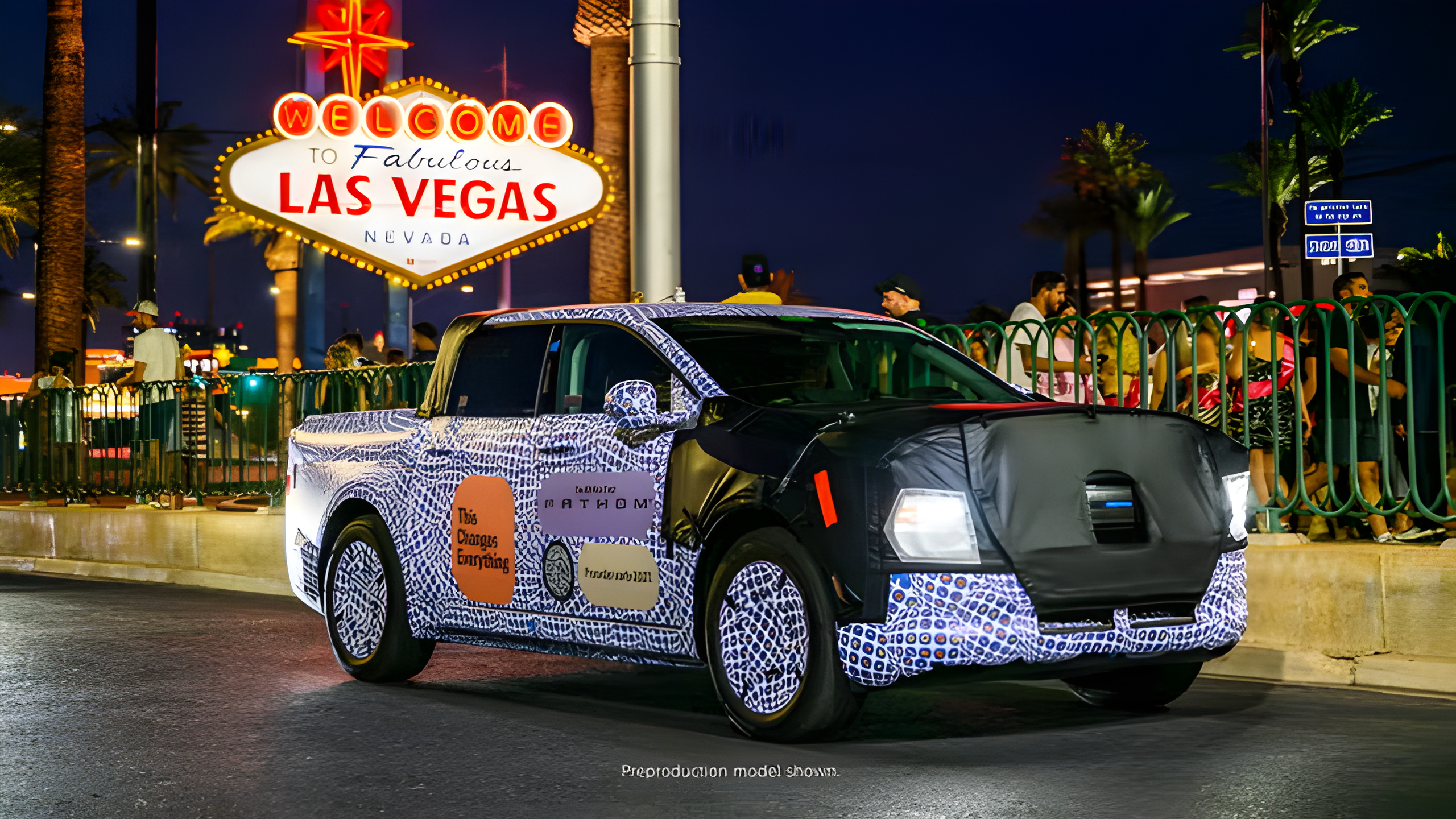
Ford Says Fathom Home-Backup Hardware Will Cost $2,000, Down From $5,205
Ford says the home-backup hardware for its upcoming Fathom electric pickup will cost roughly $2,000 before installation, compared with $5,205 for the former F-150 Lightning package. The reduction comes primarily from moving a major piece of power-conversion equipment the inverter from the house into the truck.
The company plans to launch the Fathom in the United States in 2027 with a starting price below $30,000. According to Ford’s description of the bidirectional system, the truck will deliver more than a projected 10 kilowatts of alternating-current power to a home. That is enough output to support substantial household loads, although actual backup coverage will depend on what equipment is running and how the home is configured.
One costly component moves into the truck
Electric-vehicle batteries store direct-current electricity, while household wiring and appliances generally operate on alternating current. An inverter must perform that conversion before energy from the battery can power the home.
The discontinued F-150 Lightning’s home-backup arrangement relied on a Ford Charge Station Pro and a Home Integration System. Together, the bidirectional charger and integration hardware cost $5,205. Ford’s first-generation Charge Station Pro alone debuted at $1,310 in 2022.
Fathom changes the system boundary. Its inverter is integrated into the vehicle’s E-Box, one of five main electrical modules in the truck, rather than supplied as separate wall-mounted equipment. Ford says the resulting external backup package should cost at least 60% less than its first-generation hardware. That puts the required equipment near 40% of the former package price, or approximately $2,000.
This is a hardware estimate rather than a complete installed price. Fathom owners will still need Ford’s Home Power Station to transfer energy between the vehicle and the property. Owners who want the truck to supply a home during an outage will also need the Home Backup Power Panel, which isolates and routes the backup supply appropriately.
The house can still be the expensive variable
Integrating the inverter removes equipment from the wall, but it cannot standardize every property. An installation may require new conduit, trenching between a parking location and the building, or an electrical-panel upgrade. Those requirements depend on the home’s existing service, wiring, layout and the distance between the truck and connection equipment.
Consequently, two owners buying the same Ford hardware could receive substantially different installation quotes. A newer house with adequate panel capacity and a short wiring route may stay relatively close to the equipment price. An older property requiring a service or panel upgrade could face a much higher final bill.
The distinction between energy management and outage backup also affects the equipment list. Ford says customers using the truck to charge when electricity is less expensive and power the home when rates are higher will need the Home Power Station. Full outage backup adds the Home Backup Power Panel. Any potential utility-bill benefit will depend on local rate structures and how the owner uses the battery; Ford has not provided a universal savings estimate.
Standards and utility rules remain part of the system
Ford says the Fathom system is designed to meet applicable UL 1741 requirements and comply with IEEE 1547 interconnection standards. It will use SAE J3068 communications technology, an approach intended to help the vehicle, charging equipment and electrical system coordinate bidirectional operation.
Utility procedures could still differ by location. Ford formed a working group in July 2026 with American Electric Power, BC Hydro, Consumers Energy, Exelon and Pacific Gas and Electric to address interconnection processes before the truck reaches customers. The group says interconnection should apply when a vehicle operates in parallel with the grid, rather than when an owner only charges it or uses isolated backup power.
The engineering change gives the Fathom a clear equipment-cost advantage over the Lightning package: the expensive conversion stage travels with the vehicle instead of being duplicated at the home. Whether customers experience a similarly large reduction in the final project price will depend on the less predictable side of the connection their property’s panel, wiring route and utility requirements.
| More aerospace and engineering stories, right in your MSN feed. Follow AMI on MSN |
By Thomas Caldwell — AMI’s senior editor for mechanical and mobility engineering, covering vehicle electronics, systems integration, electrification, chassis systems, propulsion, and safety policy.



