


Google Launches Opt-In Gemini Driving Help Across Gmail, Calendar and Maps
A request such as “Take me to my doctor’s appointment” ordinarily requires an assistant to know more than the words being spoken. It needs the appointment, its address and the driver’s current location. Google’s new Personal Intelligence with Gemini is designed to assemble that context from connected services while the user is driving.
Google launched the optional feature on Android Auto on October 27, 2026, and plans to extend it to cars with Google Built-in in the coming months. With permission, Gemini can draw on Gmail, Google Calendar, YouTube, Maps, Google Search history and other connected Google services. The practical tradeoff is direct: more relevant in-car help requires allowing the assistant to combine information held across multiple accounts and applications.
How cross-service context changes the assistant
The central capability is not merely voice control. It is retrieval and reasoning across sources that previously required separate steps. A driver heading to an airport could ask for a flight gate and current flight status without manually finding the confirmation email and then performing another search. Gemini could also use an appointment in Calendar to identify a destination or consider saved places and preferences when suggesting a restaurant along a route.
That changes the in-car interface from a command system into a context broker. Conventional voice assistants typically work best when the driver supplies a clearly defined destination, contact or media request. Personal Intelligence is intended to fill in missing details from the user’s existing Google data, reducing the need to remember addresses, search messages or navigate menus.
Activation remains under the user’s control. Google says connected applications are not enabled for Personal Intelligence until the user turns the feature on, and it can be disabled in Gemini settings. Drivers who have already enabled it in the Gemini app will carry that setting into Android Auto. Without Personal Intelligence, navigation, calls, music and general questions remain available, but responses will not use the same personal context.
Google’s privacy documentation says information shared between Gemini and connected applications can include chat content, device preferences, location, emails, files, events, photos and videos, depending on the services a user connects. Applications can be connected or disconnected through Gemini’s settings. That makes the configuration screen part of the product’s functional design: the quality of personalization depends on access, while the user’s privacy boundary depends on understanding and managing that access.
Hands-free operation still requires careful interface design
Personalized voice retrieval could reduce visual-manual work such as scrolling through an inbox or typing an address. That is relevant to established driver-distraction principles. The National Highway Traffic Safety Administration’s voluntary guidance recommends limiting individual glances away from the roadway to two seconds and total glance time for a task to 12 seconds. It also recommends locking out activities such as manual text entry and reading long-form text while driving.
Voice operation does not remove every human-factors consideration. More capable assistants can invite longer or more complicated interactions, so response length, timing and the driver’s ability to interrupt a task remain important. NHTSA’s interface principles emphasize that secondary tasks should be interruptible and that the driver should control the pace of interaction. A system that finds the right information with one concise exchange has a clearer safety benefit than one that replaces screen work with an extended conversation.
Android Auto and built-in systems divide control differently
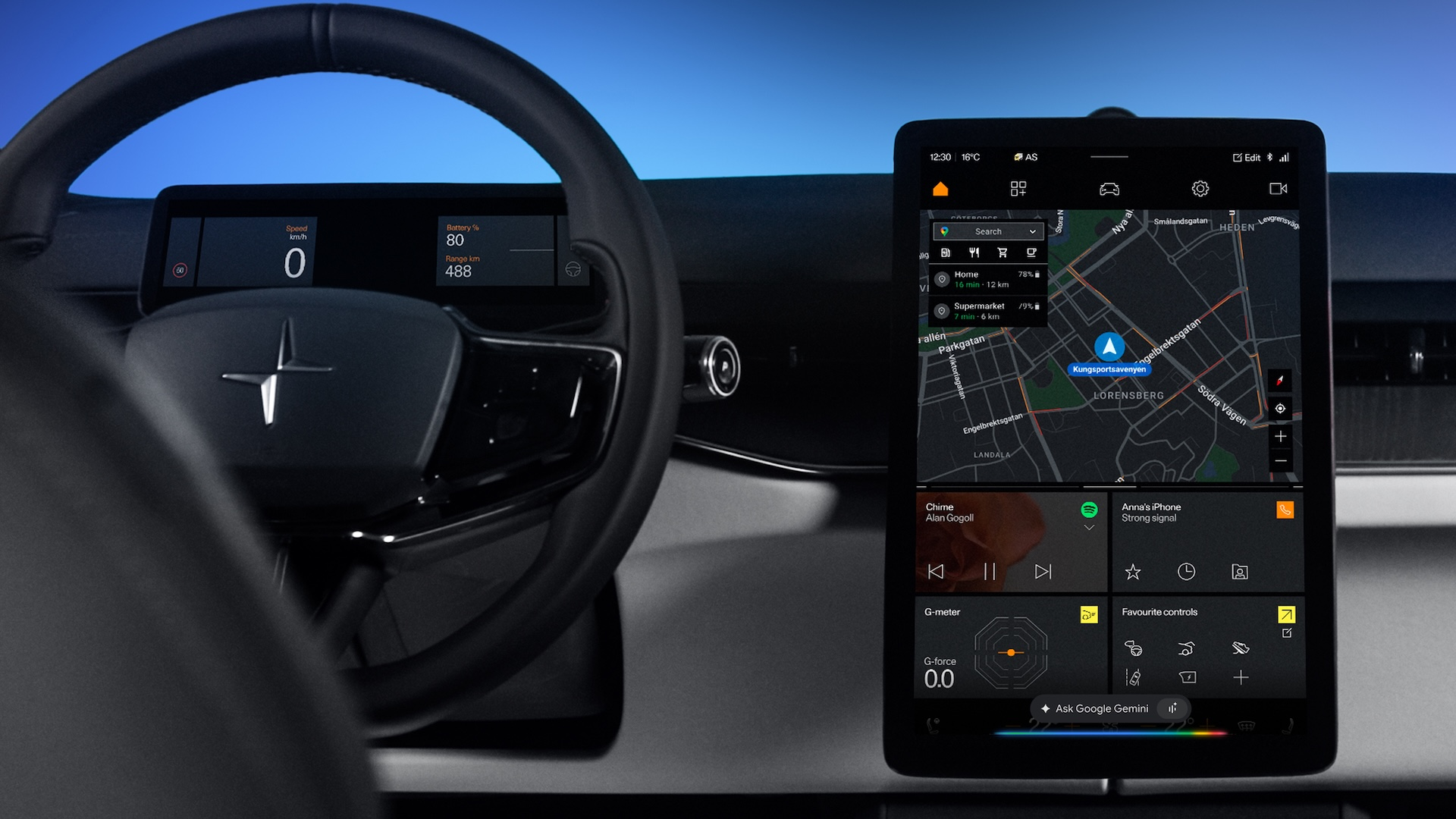
The rollout also spans two distinct integration models. Android Auto distributes the experience from a user’s phone onto a compatible vehicle display. Google Built-in places Google software more directly within the vehicle’s infotainment system. Extending Personal Intelligence across both gives Google continuity between the phone and dashboard while automakers decide how much of the digital experience should remain under their own brands.
That tension is visible in General Motors’ approach. The 2027 Chevrolet Silverado and GMC Sierra use a split-screen interface capable of showing Apple CarPlay or Android Auto alongside GM’s infotainment offerings. GM has said it has not decided whether that arrangement will reach other vehicles. The layout illustrates a possible compromise: smartphone projection can coexist with automaker-controlled functions instead of occupying the entire interface.
For automakers and dealers, increasingly personalized systems add another layer to vehicle delivery and customer support. Staff may need to explain the difference between phone-based projection and built-in software, show how permissions are managed and clarify which functions remain available when personalization is disabled.
The next milestone is Google’s planned expansion to cars with Google Built-in. That move will test whether cross-service context can become a useful part of the vehicle itself without obscuring the consent controls that make the personalization possible.
| More aerospace and engineering stories, right in your MSN feed. Follow AMI on MSN |
By Thomas Caldwell — AMI’s senior editor for mechanical and mobility engineering, covering vehicle electronics, systems integration, electrification, chassis systems, propulsion, and safety policy.



