


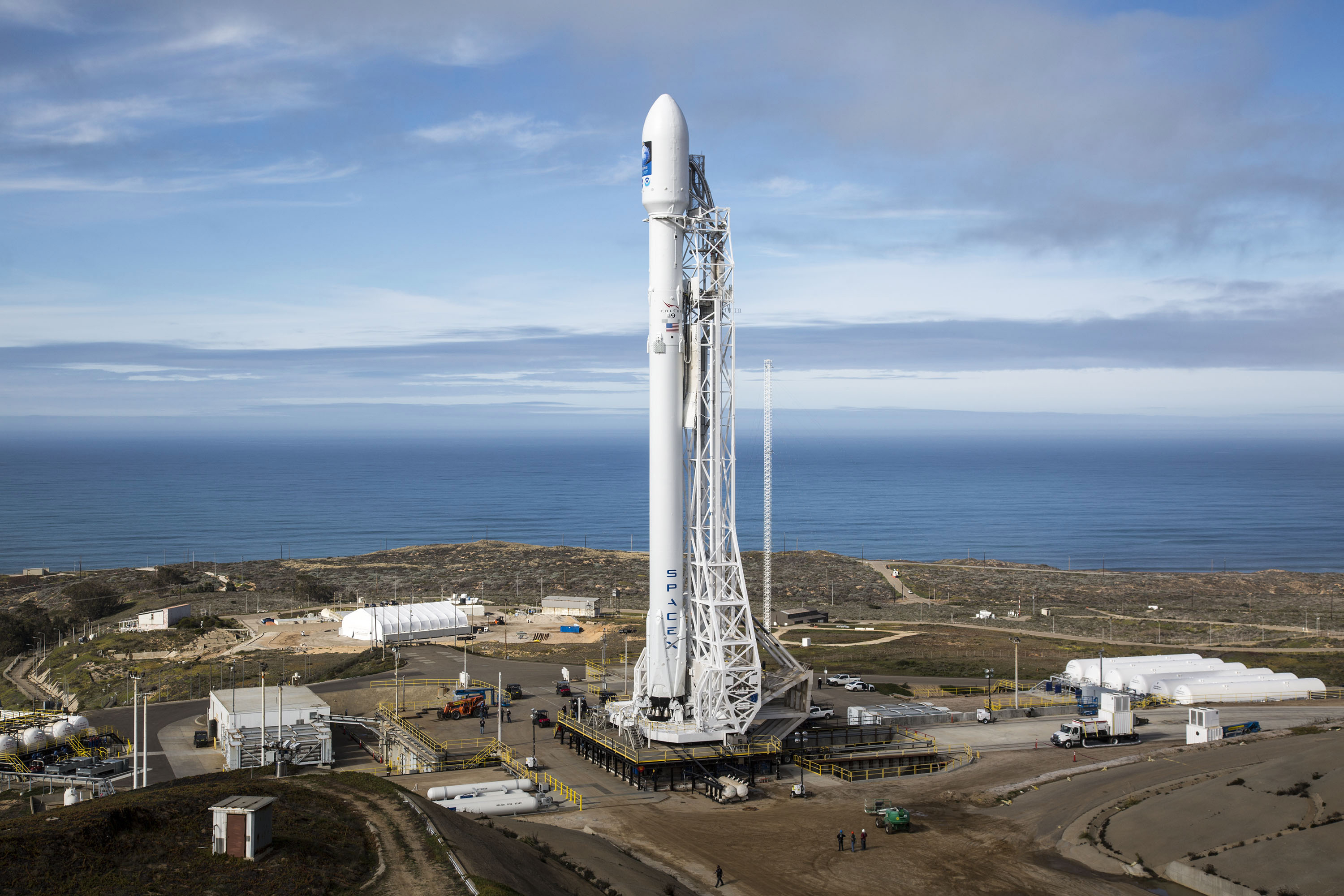
SpaceX Pushes California Past Florida With Record 72 Rocket Launches
California has overtaken Florida in annual rocket launches for the first time since the 1970s, driven by SpaceX’s decision to move frequent Starlink missions west while it prepares Florida infrastructure for Starship. A Falcon 9 launch from Vandenberg Space Force Base early Oct. 27 raised California’s 2026 total to a state-record 72, putting it 12 launches ahead of Florida.

The reversal is particularly sharp because Florida recorded 109 launches in 2025. By late October 2026, it had completed 60, while California’s Falcon 9 cadence had accelerated around one of the industry’s most repeatable missions: deploying batches of SpaceX’s own Starlink satellites.
A high-frequency workload moved west
Most of California’s surge comes from Falcon 9 Starlink flights. Moving that recurring workload between coasts can change annual totals much faster than adding an occasional government or commercial mission. SpaceX controls the satellites, rocket and launch scheduling, giving it more flexibility than a provider waiting on unrelated customer payloads.
Florida’s last Starlink mission on Falcon 9 launched Aug. 25. Kiko Dontchev, SpaceX’s vice president of launch, acknowledged the lower Florida cadence during an Oct. 21 appearance and connected it to preparations for bringing Starship to the state.
Falcon 9 has not disappeared from Florida. The rocket continues flying NASA, Space Force and private payloads from Cape Canaveral’s Launch Complex 40, while Falcon Heavy operates occasionally from Kennedy Space Center. What Florida lost was the steady volume supplied by Starlink, rather than all SpaceX activity.
The next Florida Starlink launch is planned for Starship, although the first Starship vehicle had not yet arrived in the state when California took the lead. Equipment designed to load Starlink satellites into Starship had reached Kennedy, and SpaceX continued targeting a Florida Starship launch by the end of 2026.
Starship preparation trades current cadence for future capacity
Florida is therefore absorbing a near-term reduction in familiar Falcon 9 missions while SpaceX develops a much larger launch system there. That transition involves more than delivering a rocket. Starship requires its own launch, propellant, payload-processing and licensing infrastructure.
At Cape Canaveral’s Space Launch Complex 37, the Federal Aviation Administration is preparing a supplemental environmental review for proposed Starship and Super Heavy operations. SpaceX would also need a modified vehicle-operator license before conducting the proposed commercial launches and landings from that complex.
The scale under review illustrates Florida’s longer-term objective. The proposal covers as many as 76 Starship-Super Heavy launches and 152 landings annually at Complex 37, including booster and spacecraft returns. Those figures describe the proposed operating envelope, not an approved 2026 flight schedule, and infrastructure development and regulatory work remain in progress.
Two unavailable rockets widened the gap
SpaceX’s mission shift alone does not explain Florida’s reduced total. United Launch Alliance’s Vulcan spent most of 2026 grounded after a solid-rocket-booster anomaly during a February mission. ULA has now scheduled a Nov. 13 return flight using an improved booster-nozzle design, with an Amazon Leo satellite mission expected to provide fresh flight data.
Blue Origin’s New Glenn operation suffered a separate interruption in late May, when an explosion during a routine test destroyed its pad at Cape Canaveral’s Launch Complex 36. A faulty liquid-oxygen valve on a BE-4 engine was identified as the cause. Teams were working to restore Launch Complex 36A by year-end, with Complex 36B expected to follow.
Vulcan and New Glenn are both assigned to deploy satellites for Amazon’s Leo broadband constellation. Their reduced availability removed missions that otherwise could have contributed to Florida’s count. Both rockets use BE-4 core-stage engines, but Vulcan’s February problem involved its solid rocket booster rather than the BE-4 issue identified in the New Glenn pad explosion.
California’s 72-to-60 advantage shows how launch leadership can turn on vehicle availability and manifest placement, not merely the number of pads at a spaceport. Florida is building toward Starship operations and working to restore two other launch systems. California, meanwhile, is flying the industry’s highest-frequency existing combination: Falcon 9 carrying Starlink from Vandenberg.
| More aerospace and engineering stories, right in your MSN feed. Follow AMI on MSN |
By David Whitaker — Associate editor for AMI’s aerospace and drone systems desk, translating flight systems, aircraft programs, spaceflight, and UAV developments into accessible technical stories.




