


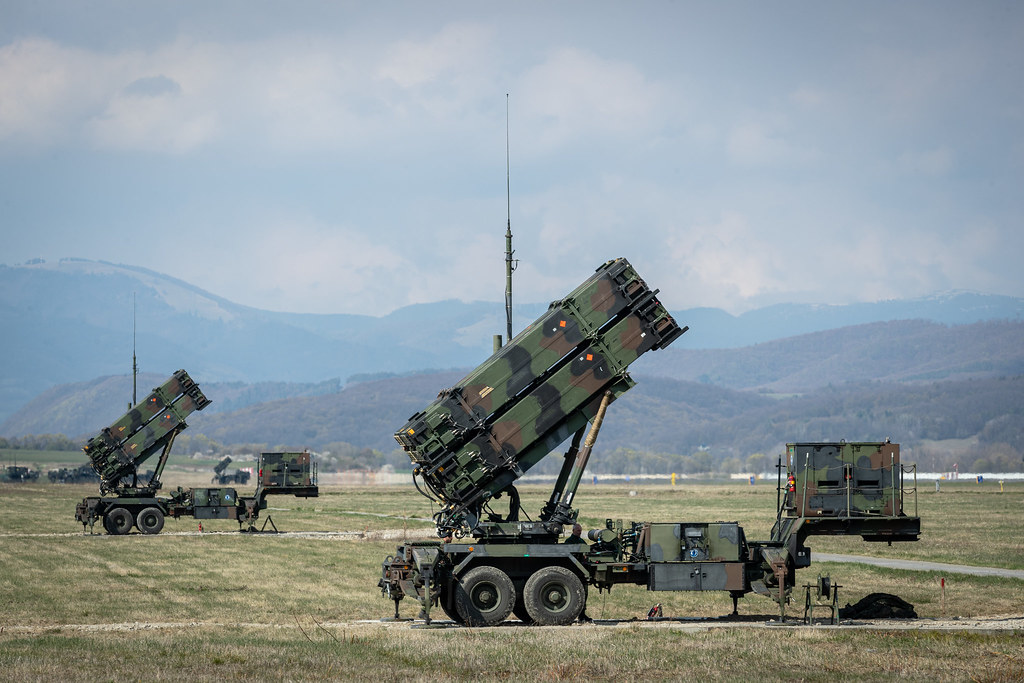
Ukraine Restores Starshield Access, but Delayed Patriot Missiles Leave Wider Gaps
Ukraine has restored full access to Starshield, removing a reported satellite-connectivity constraint that had disrupted some interceptor-drone operations. But the October 24 restoration addresses only one layer of a larger air-defense dependency: previously agreed Patriot interceptor batches have been delayed, while vital missile-warning intelligence still comes from the United States.

Starshield is the military version of SpaceX’s Starlink satellite internet system. The restrictions reportedly concerned terminal mobility rather than ordinary download speed, illustrating how a service can remain available while becoming less useful to connected systems moving at higher speeds. The restrictions were believed to have impaired high-speed interceptor drones and disrupted Ukrainian military activity in several frontline areas. Restoring full access removes that immediate limitation, according to Ukraine’s Defense Ministry, but it does not supply interceptors or replace warning data.
Three dependencies, three different constraints
Satellite communications, missile-warning intelligence and air-defense interceptors perform different jobs. Communications carry data between users and systems. Warning intelligence provides notice of an incoming ballistic-missile attack. Interceptors are the limited physical inventory used to engage the threat. Restoring one component cannot compensate for a shortage or interruption in either of the other two.
Ukrainian President Volodymyr Zelensky said on October 23 that previously agreed batches of Patriot interceptors had not arrived on schedule. That delay reflects a production and allocation problem that cannot be corrected with a software change or a restored network account. Patriot missiles are complex manufactured products supported by specialized plants, suppliers, testing and long procurement cycles.
The industrial bottleneck is substantial. Lockheed Martin officials told PBS News that one Patriot missile can take more than a year to make and cost an estimated $3 million to $4 million. The company is expanding facilities and its supplier base, with an ambition to raise annual production from a historical range of 400 to 600 missiles to as many as 2,000 by 2030. That is a major increase, but it does not create near-term inventory already available for delivery.
Warning intelligence presents a different problem. Zelensky said there had been occasions when Ukraine did not receive US warnings about ballistic-missile attacks. US officials denied restricting intelligence sharing, and Zelensky later said the exchange had been restored by the evening of October 20. The episode nonetheless highlights the operational value of access to specialized sensors and the data systems that turn detections into usable alerts.
Europe’s spending cannot immediately replace US systems
Europe has provided more total aid to Ukraine than the United States since 2022, according to figures attributed to the Kiel Institute for the World Economy. Aid from the European Union and its member states has reached at least $228.5 billion, compared with at least $131.5 billion from the United States.
Those totals measure financial scale, not interchangeability. Some European assistance consists of US-made weapons whose transfer can still require Pentagon approval. More broadly, Europe does not yet have immediately available substitutes for every US satellite, intelligence and air-defense capability. Money committed by a larger group of governments cannot instantly reproduce established sensor networks, missile inventories, secure terminals or the industrial capacity behind them.
Europe is working on alternatives. The EU is discussing Ukrainian participation in GOVSATCOM, a secure government satellite-communications program that could add commercial capacity in early 2027. The service pools satellite resources from participating countries, potentially giving Ukraine another communications path when terrestrial networks or individual providers are unavailable. Switching networks would still require compatible equipment and integration; terminals built for one proprietary constellation cannot simply connect to another.
The EU has also approved projects covering space-based warning and integrated air and missile defense. Those efforts could reduce long-term dependence, but they are development and capacity-building programs rather than immediate replacements for Starshield, US warning intelligence or existing Patriot inventories.
Ukraine can continue drawing on European assistance and its domestic defense industry, but the timelines are mismatched. Starshield access could be restored as a service decision. Intelligence exchange could resume through established channels. Patriot missiles must be manufactured, tested, allocated and delivered and the planned production surge is measured in years, with the largest target set for 2030.
| More aerospace and engineering stories, right in your MSN feed. Follow AMI on MSN |
By David Whitaker — Associate editor for AMI’s aerospace and drone systems desk, translating flight systems, aircraft programs, spaceflight, and UAV developments into accessible technical stories.



