


California High-Speed Rail CEO Resigns After Losing Contract Authority
California High-Speed Rail has changed leaders after its board restricted the chief executive’s contracting powers, but the personnel change leaves the project’s hardest delivery problems intact. Ian Choudri resigned on October 28, citing “personal and family priorities,” and California Department of Finance Director Joe Stephenshaw was named interim CEO. The railway remains more than 30 years late and more than $100 billion beyond its original budget.
Choudri’s departure followed a 7-2 board vote that removed his sole authority to sign and manage contracts below $25 million. In-house attorneys must now approve or modify new and existing contracts, while contracts above that threshold already require board approval. The action came after the authority’s inspector general identified hundreds of thousands of dollars in improper consultant travel expenses.
The investigation examined claims from four consulting firms and found expenses involving premium travel and trips to locations including an escape room and a cigar lounge. The authority paused travel payments to the firms, began reviewing claims and said it would seek to recover questionable payments. The contracting restriction therefore addressed a specific control failure: spending could pass through an approval process without sufficient verification of purpose, authorization or compliance.
A governance repair, not a delivery plan
Adding legal review and limiting unilateral contract authority can reduce the risk that weakly documented expenses are approved again. It also changes accountability by spreading contract decisions among more people rather than concentrating them in the CEO’s office. For taxpayers, that provides additional review before money is committed.
More review also carries an operational tradeoff. Major infrastructure programs depend on frequent contract modifications, consultant coordination and timely decisions across design, construction and systems work. If the added controls are not supported by clear approval deadlines and defined responsibilities, they can slow legitimate decisions along with questionable ones. The authority’s challenge is to make its oversight more rigorous without creating another administrative bottleneck in a project already measured in decades.
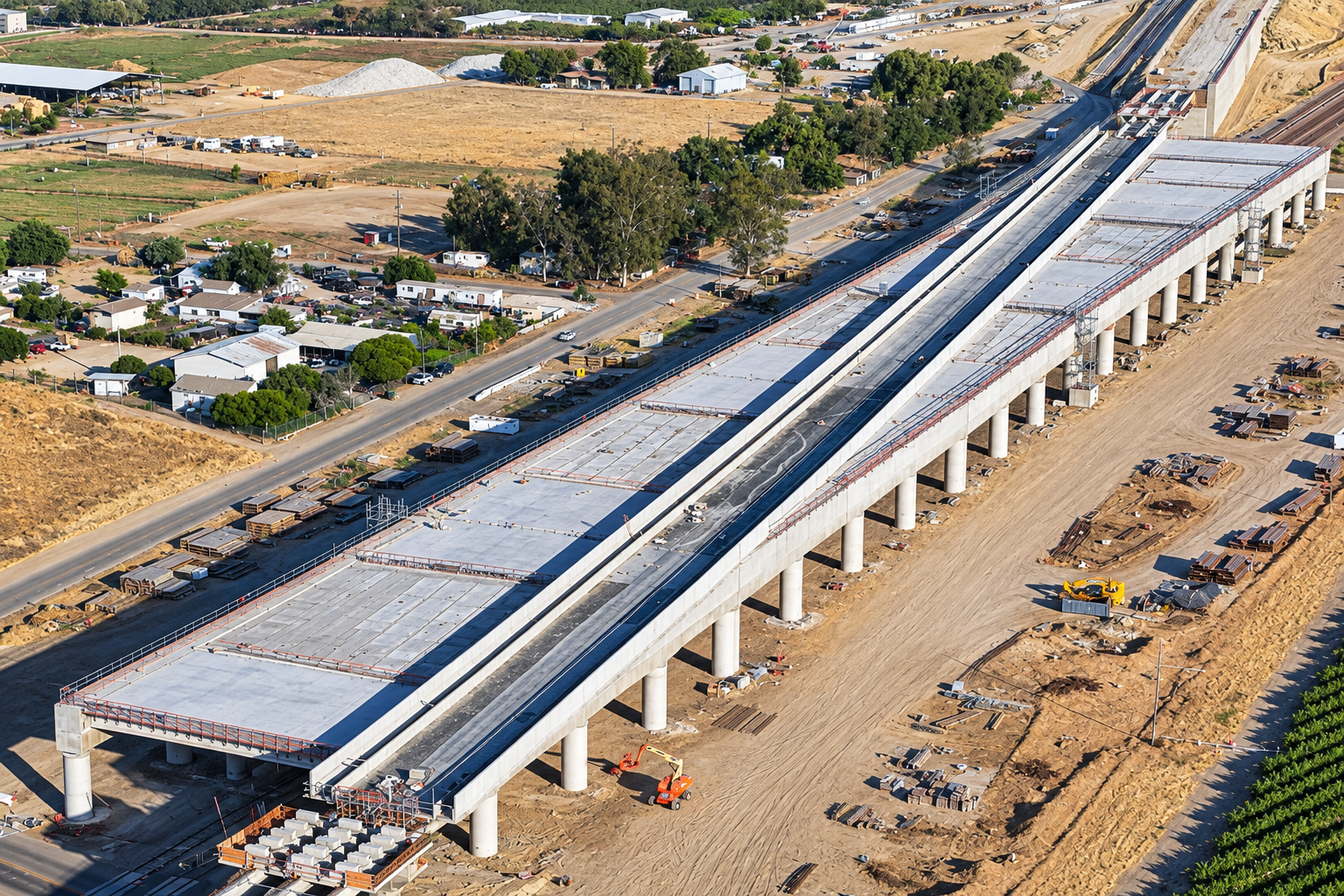
The scale mismatch is substantial. Construction is concentrated on 119 miles in the Central Valley, while most of the nearly 500-mile route from Anaheim to San Francisco remains unfunded. No construction start date has been set for the other sections. Reassigning contract authority may improve how individual expenditures are reviewed, but it does not secure the capital needed to build hundreds of additional miles or establish a credible sequence for completing them.
The project also lost billions of dollars in federal support after a federal review concluded that it had “no viable path” forward. That funding loss places more pressure on California to match the physical scope of the program with money that is actually available. Prospective passengers bear the service consequence of continued delay, while taxpayers carry the risk that partially completed assets and extended program administration consume resources before a usable intercity system is delivered.
Clearance and train orders do not close the funding gap
Hours after Choudri’s resignation was announced, the board granted environmental clearance to the final 33-mile section between Los Angeles and Anaheim. That decision gives the full Anaheim to San Francisco route environmental clearance, an important legal and planning milestone. It does not fund construction, award all the necessary civil works or set construction dates for the unbuilt sections. The Los Angeles to Anaheim portion alone is estimated to cost $8.8 billion.
The board also approved a Siemens Mobility contract to design and manufacture three high-speed trainsets. Procuring trains advances the operating system beyond paper planning, but vehicles are only one element of a railway. Track, structures, stations, power, signaling, maintenance capacity and safety integration must all reach compatible levels of readiness before trains can provide passenger service. A small initial fleet can support testing and early operations, but it cannot substitute for an incomplete corridor.
Communities along the southern section face a separate distribution of costs and benefits. Representatives from Vernon raised concerns about businesses, employment and environmental burdens along the proposed alignment. Those objections illustrate why route clearance is not merely an engineering checkbox: construction choices can impose concentrated local disruption even when the intended transportation benefits are regional.
Stephenshaw now inherits two distinct assignments. The immediate one is organizational strengthening expense controls, contract review and public transparency. The larger one is aligning scope, funding and construction into a deliverable railway. The first can be addressed through governance changes; the second requires enough money and coordinated infrastructure to extend useful service beyond the 119 miles where work is now concentrated.
| More aerospace and engineering stories, right in your MSN feed. Follow AMI on MSN |
By Thomas Caldwell — AMI’s senior editor for mechanical and mobility engineering, covering vehicle electronics, systems integration, electrification, chassis systems, propulsion, and safety policy.



