


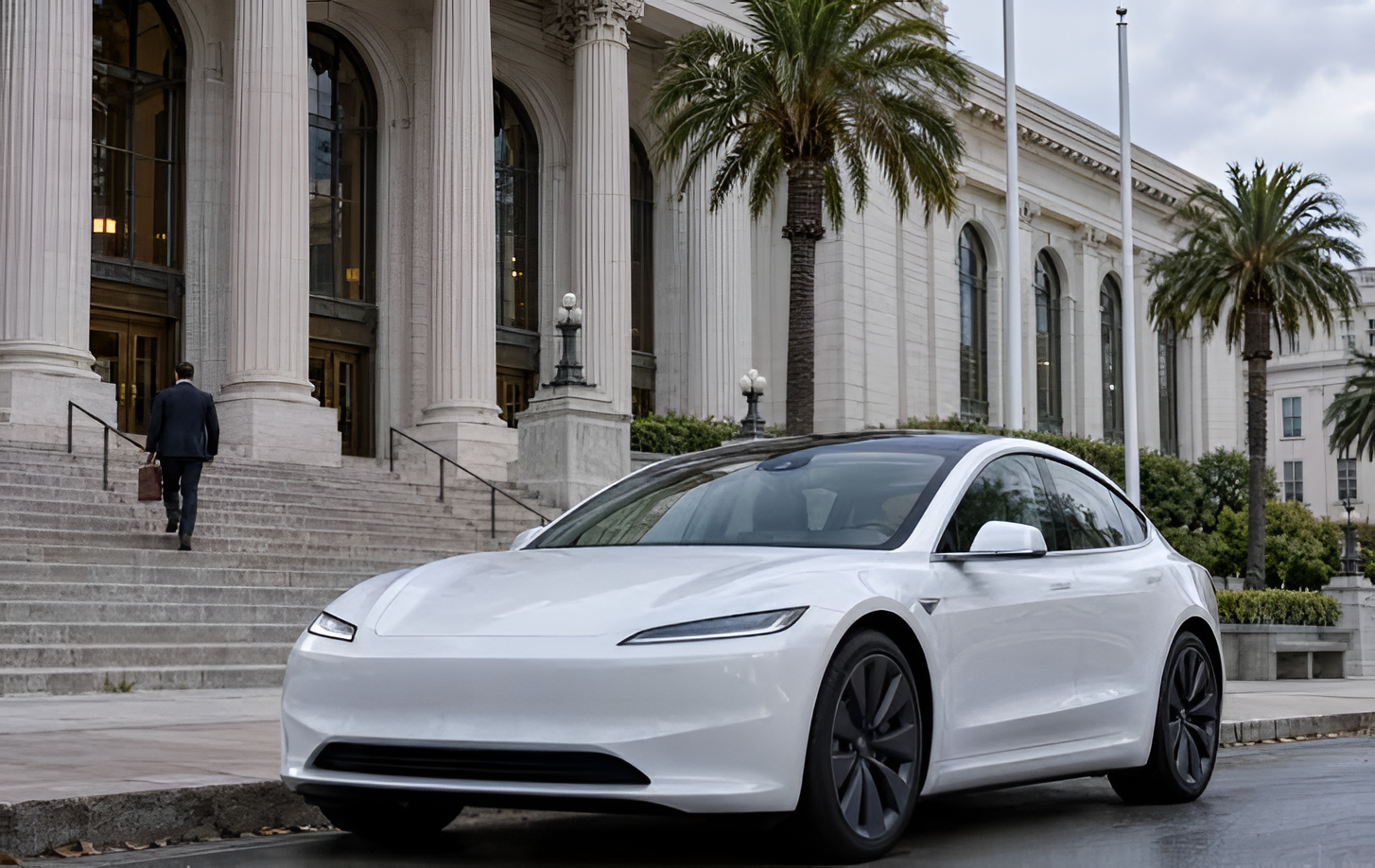
South Korean Court Denies 88 Tesla Full Self-Driving Buyers Full Refunds
The product was called Full Self-Driving, but the name did not persuade a South Korean court that Tesla had promised buyers a car capable of operating without human intervention. The Seoul Central District Court rejected full-refund claims from 88 Tesla owners on Thursday, October 29, leaving the plaintiffs unable to recover all the money they paid for the driver-assistance package.

In its first-instance ruling, the court found that Tesla had not breached its contractual obligations. According to an account of the decision from SBS News, the package covered functions requiring driver involvement and provided for additional capabilities when technological and regulatory conditions allowed them. The court also found that buyers already had received some included functions.
A product name and a contractual promise are different
The central tension is straightforward: “Full Self-Driving” sounds like a description of a vehicle that can drive itself, while the package at issue still required human intervention. For the refund case, however, the controlling issue was not what the name might suggest in isolation. It was what Tesla was contractually required to deliver and under what conditions.
The court determined that the option did not promise fully autonomous operation without a driver. It treated the agreement as an indefinite-term arrangement under which relevant functions would be supplied as regulatory approval and technological development made them available. That interpretation made the timing and conditions attached to future features central to the outcome.
The buyers had also been aware that some capabilities could take considerable time to arrive, the court found. Because Tesla had supplied part of the package and the agreement allowed for later feature delivery, the absence of fully autonomous driving did not entitle the plaintiffs to cancel the contract and obtain full refunds.
The record summarized publicly does not provide the package’s purchase price, a complete list of functions delivered or still outstanding, or whether the owners plan to appeal. The decision therefore resolves the refund demand at this stage without establishing a specific delivery date for every remaining function.
Driver assistance is not full driving automation
Established engineering terminology helps explain the functional boundary behind the dispute. The SAE driving-automation framework runs from Level 0, meaning no driving automation, through Level 5, or full driving automation. SAE describes Level 1 and Level 2 technologies as driver-support systems rather than systems that remove the driver from the operating task.
That distinction depends on responsibility, not merely on how many steering, braking or navigation functions software can perform. A system may control both speed and lateral movement for sustained periods while still requiring a person to monitor the road, supervise performance and intervene when necessary. Adding capabilities does not automatically cross the systems boundary into driverless operation.
Regulation reinforces that separation. United Nations Regulation No. 171 defines driver-control assistance as sustained support for longitudinal and lateral vehicle motion without taking over the entire driving task. The UNECE regulation requires the driver to remain responsible and attentive, while also requiring warnings designed to detect and address disengagement.
For consumers, that framework makes three questions more useful than the product name alone: What driving task does the system perform, what supervision remains with the person behind the wheel, and which promised functions depend on future approval or development? In the South Korean case, the answers favored Tesla because the court found that human intervention remained part of the package and future delivery was conditional.
The ruling’s immediate reach is limited to the plaintiffs and contract before the Seoul court. Its engineering-policy significance lies in the way software-defined vehicles divide a purchase across existing functions, later updates and regulatory permission. Those layers allowed a package called Full Self-Driving to remain contractually short of fully autonomous driving and left 88 buyers without the full refunds they sought.
| More aerospace and engineering stories, right in your MSN feed. Follow AMI on MSN |
By Thomas Caldwell — AMI’s senior editor for mechanical and mobility engineering, covering vehicle electronics, systems integration, electrification, chassis systems, propulsion, and safety policy.



