Russia Reportedly Lost 13 Military Aircraft in One Month
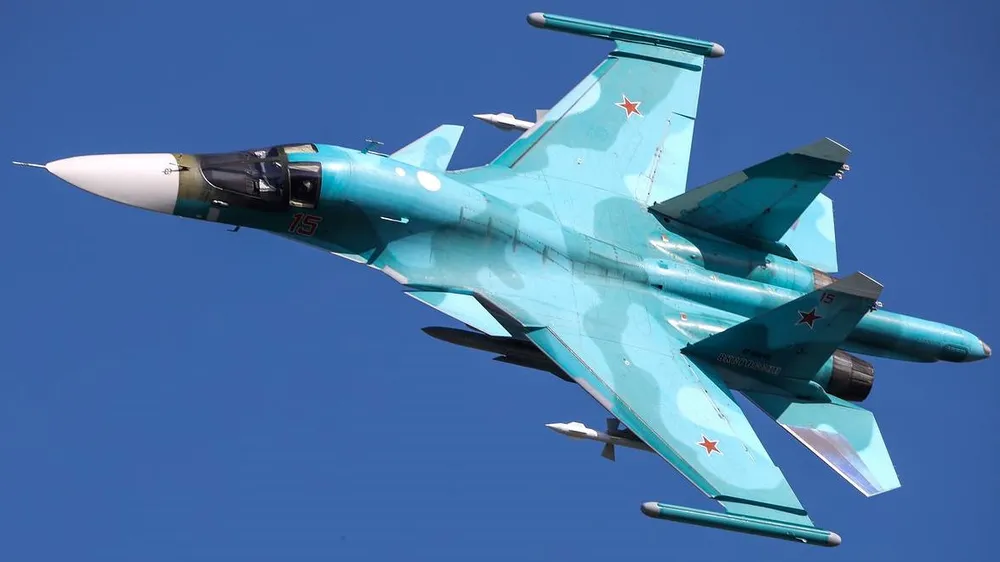
Russia reportedly lost 13 military aircraft between September 29 and October 30, 2026, a concentrated run of airfield losses and flight accidents that could add pressure to its modern combat fleet. The compiled total includes seven Su-34 fighter-bombers, two Su-30SM fighters, one Su-35 fighter, one Tu-95MS strategic bomber, one Su-57 fighter and one Mi-8 helicopter. Three additional aircraft were listed as damaged, although two of those damage claims remain unconfirmed.
The striking feature is where the aircraft were lost. Most were reportedly destroyed while parked or after landing, rather than during combat missions. The listed events include a Tu-95MS on September 29; a Su-34 and Su-35 on October 4; four Su-34s during an October 14–15 attack; two more Su-34s on October 29; and an Mi-8 after it landed on October 30. Imagery from October 29 also appeared to show a burned Su-57, though the circumstances surrounding that aircraft remain unclear.
Two Russian Naval Aviation Su-30SM fighters separately crashed on October 21, one near Timofeevka and another in the Kaliningrad region. Later imagery suggested the Kaliningrad accident involved a mid-air collision that also left another Su-30SM with a badly damaged wing. Combined with the airfield attacks, the two crashes made October an unusually costly month for Russian military aviation.
Seven Su-34s represent the central fleet pressure
The Su-34 accounts for more than half of the 13 listed aircraft. Ukraine estimates that Russia has about 140 Su-34s in service, so seven aircraft would equal roughly 5% of that stated fleet. The operational effect cannot be calculated from the aircraft count alone: fleet totals do not show how many jets are available on a given day, undergoing maintenance or assigned elsewhere. Even so, removing multiple examples of the same modern type in a short period can tighten scheduling across training, maintenance and operations.
Aircraft availability is governed by more than the number of intact airframes. Each jet also depends on trained crews, ground equipment, inspections, replacement parts and maintenance capacity. Dispersing aircraft can reduce the number exposed at one location, but it also distributes those support requirements across additional bases. A move that improves survivability may therefore impose a logistics and maintenance penalty.
Distance presents another tradeoff. Marinovka Air Base, attacked on October 29, is more than 400 kilometers from Ukraine. The airfield strikes have been linked to Ukraine’s developing Neptune-D long-range capability, which Ukraine claims can reach 1,000 kilometers. Demonstrated ranges extend to 600 kilometers, according to the compiled account.
Those figures do not place every Russian air base within demonstrated reach. They do, however, expand the set of bases that must account for a long-range strike threat. Moving fighters farther away could increase transit time and fuel consumption while reducing response speed and the time aircraft can remain in their operating area. Keeping them closer can preserve mission efficiency but leave more parked aircraft within the expanding threat envelope.
Extra distance consumes airframe life
Modern Russian fighter airframes reportedly have design lives of approximately 6,000 to 8,000 flight hours, while a peacetime fighter-utilization figure is around 200 hours annually. Wartime demand can drive utilization much higher. Every longer sortie adds cycles, inspections and accumulated hours, even when the aircraft performs the same basic mission after reaching its operating area.
That makes basing decisions a readiness problem rather than a simple matter of relocating jets. Greater standoff distance can reduce exposure on the ground, but it purchases that protection with more flight time, less time on station and potentially faster consumption of finite airframe and engine life. Maintenance organizations must absorb the additional workload while still returning aircraft to service quickly.
For supporters of Ukraine, the reported destruction of Su-34s, a Tu-95MS and potentially a Su-57 shows Russia paying a material price while valuable aircraft are stationary. From a fleet-management perspective, the consequence is broader: parked-aircraft losses remove capacity before it can generate a sortie, while crashes consume both aircraft and the training time invested in their operation.
Further pressure may arrive from another direction. Ukraine is scheduled to receive an initial 16 older Gripen C/D fighters from Sweden in early 2027, with crew and technical training underway, according to current delivery preparations. The reported package may include Meteor air to air missiles, although the cited June announcement did not specify Ukraine’s contracted weapons package.
The immediate readiness issue remains the loss ledger itself. Several entries still depend on imagery or wartime claims, particularly the burned Su-57 and two reported damaged aircraft. But the confirmed and apparently corroborated events already expose the same operational tension: protecting aircraft by basing them farther away can preserve hardware on the ground while consuming more of its service life in the air.
| More aerospace and engineering stories, right in your MSN feed. Follow AMI on MSN |
By David Whitaker — Associate editor for AMI’s aerospace and drone systems desk, translating flight systems, aircraft programs, spaceflight, and UAV developments into accessible technical stories.