Ford’s Three Safety Recalls Leave Truck Cable Fixes Waiting Until January 2027
Ford’s three safety recalls cover a combined 45,122 vehicles or service modules, but the largest affected group faces the longest repair delay. A free tailgate-cable replacement for 30,123 trucks is not expected to become available until January 2027. The other campaigns address Lincoln hybrids that can unexpectedly shift into neutral and incorrectly programmed anti-lock brake modules that can impair braking performance.

The total requires an important distinction: 41,746 vehicles are directly counted in the truck and hybrid campaigns, while the remaining 3,376 are replacement brake-system modules that may have been installed in older vehicles. Across the campaigns, Ford is addressing three different failure paths mechanical overload, circuit-board corrosion and incorrect control programming.
A tailgate cable can break without an electronic warning
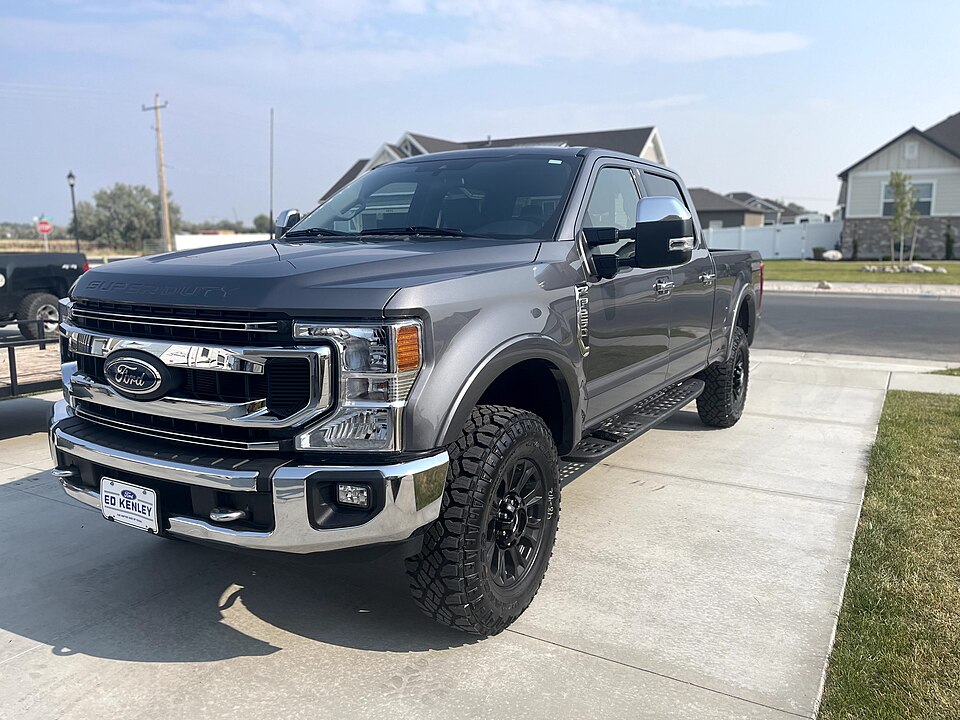
The largest recall covers certain 2026 and 2027 Ford F-150, F-250 Super Duty, F-350 Super Duty and F-450 Super Duty trucks. Under certain heavy-load conditions, the left-side cable supporting the open tailgate can fail, allowing the tailgate to fall onto the rear bumper.
Owners will not receive a cluster message, malfunction light or another electronic warning for the cable problem. That limitation follows the nature of the affected component: the cable is a load-bearing mechanical element, and the recall information identifies no sensor-based warning before it fails. Ford reports no injuries or accidents associated with the defect.
Dealers will replace the cable at no charge, but Ford does not expect the remedy to be ready until January 2027. Initial notification letters are scheduled to begin Dec. 14, and another letter is planned once replacement cables become available. The affected vehicle identification numbers are scheduled to become searchable on the National Highway Traffic Safety Administration website beginning Dec. 17.
Corrosion can remove drive power from Lincoln hybrids
The second campaign covers 11,623 vehicles: 11,560 Lincoln Nautilus Hybrid models from the 2026 and 2027 model years and 63 Lincoln Corsair Hybrid models from the 2027 model year. According to the hybrid recall details, corrosion on the transmission park-lock actuator circuit board can cause a vehicle to shift unexpectedly into neutral while it is moving.
An unexpected neutral shift removes drive power even though the vehicle remains in motion, increasing crash risk. The fault shows how damage on a relatively small electronic board can change the operating state of the propulsion system. Drivers may receive a service-wrench warning and a “Service Vehicle Soon” or “Shifting System Error” message.
Ford is aware of 15 related warranty claims in the United States and 106 worldwide. No associated crashes, injuries or fires have been reported. Dealers will replace the Integrated Park Module at no cost, and owner notifications were scheduled to begin Nov. 2.
Incorrect programming affects replacement brake modules
The third campaign concerns 3,376 anti-lock brake system service modules with one of five implicated part numbers. These are replacement components rather than a new population of 3,376 factory-built vehicles. They may have been installed in 1,190 Ford Explorers from model years 2011 through 2015; 774 Ford Edges and Lincoln MKXs from 2013 through 2015; and 1,412 Ford Expeditions and Lincoln Navigators from 2012 through 2017.
Incorrect programming can prevent the anti-lock system from operating as intended, potentially increasing stopping distance and reducing stability under certain conditions. The hydraulic brakes can remain functional while incorrect electronic control degrades the wheel-slip management that supports controlled braking.
This safety role is reflected in UN Regulation No. 13-H, an international type-approval standard rather than the rule governing this U.S. recall. It treats braking equipment as a system comprising the control, transmission and brakes, and subjects anti-lock systems to defined testing involving wheel lock, adhesion use, split-traction surfaces and overall system performance. That framework helps explain why module programming matters even when no hydraulic component has broken: braking behavior depends on the integration of software, electronic control and physical hardware.
Ford reports 75 service-part warranty claims potentially associated with the programming issue, with no known crashes or injuries. Dealers will inspect the modules and replace them as necessary at no charge. Notification letters are scheduled to begin Nov. 30.
Owners can contact Ford customer service at 1-866-436-7332. The repair strategy differs by mechanism replace the loaded cable, replace the corrosion-affected park module, or inspect and replace the incorrectly programmed brake module but the most pronounced ownership constraint remains the same: 30,123 truck owners are due an initial warning before the permanent cable remedy is expected to reach dealers in January 2027.
| More aerospace and engineering stories, right in your MSN feed. Follow AMI on MSN |
By Thomas Caldwell — AMI’s senior editor for mechanical and mobility engineering, covering vehicle electronics, systems integration, electrification, chassis systems, propulsion, and safety policy.