Hormuz Tankers Move Nearly 10 Million Barrels, but Normal Traffic Remains Distant
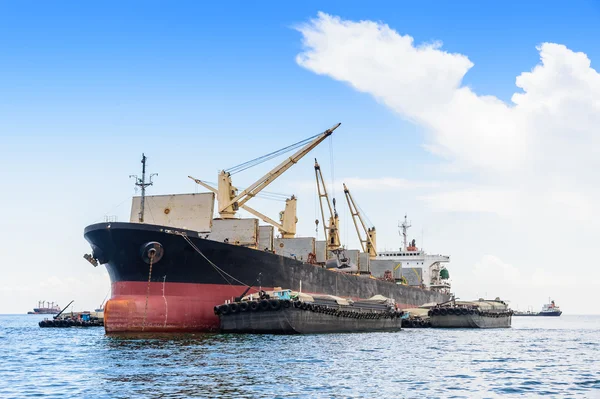
Nearly 10 million barrels of oil are moving through or beyond the Strait of Hormuz, but the surge is clearing stranded cargo rather than demonstrating that the waterway has returned to routine operation. More than 100 tankers had been trapped inside the Persian Gulf, leaving operators with a large backlog to release before the durability of the recovery can be judged.

Vessel-tracking data compiled by Bloomberg showed the movement underway on October 29 as an interim U.S.-Iran agreement took effect. The traffic included the first Saudi-owned tankers to transit since the war began, an oil cargo from the United Arab Emirates, a Qatari liquefied-natural-gas shipment and a Chinese fuel tanker. Five Iran-linked ships also entered the waterway.
Combined with millions of barrels moving through bypass pipelines, the tanker departures brought Middle Eastern energy shipments closer to normal than at any point since the disruption began. Kuwait also said it had started raising oil production, while crude futures fell to around $77 a barrel. Prices had already been retreating as Chinese imports declined and U.S. exports increased, so the market move cannot be attributed to Hormuz traffic alone.
A backlog can move once; a trade route must keep cycling
The central operating test comes after the waiting ships leave. An export system depends on a repeating loop: empty tankers enter the Gulf, reach loading terminals, take on cargo and depart through the strait. Clearing laden vessels restores deliveries already delayed, but it does not by itself replenish the fleet available for subsequent loadings.
Shipbrokers and owners reported little evidence of new cargo bookings or broad willingness to send empty vessels back into the Gulf. That makes the distinction between backlog clearance and sustained throughput especially important. A few high-volume departures can produce a striking daily total, while the underlying transport cycle remains thin.
The scale of the route magnifies that uncertainty. According to the U.S. Energy Information Administration, Hormuz carried an average of 20 million barrels of oil per day in 2024, equivalent to about 20% of global petroleum-liquids consumption. Around one-fifth of global liquefied-natural-gas trade also passed through the strait that year, primarily from Qatar.
Navigation and traffic control remain limiting conditions
Bimco said the central portion of the strait remained mined and un-navigable, while inshore traffic zones near Oman and Iran were reportedly clear. The ships transmitting location signals followed a northern corridor along Iranian waters. The Joint Maritime Information Center lowered its regional threat level from severe to substantial, indicating improvement but not a return to ordinary commercial conditions.
Restricted usable water changes the capacity problem. Tankers are large, slow to maneuver and dependent on predictable separation from opposing traffic. Concentrating ships into limited corridors reduces operating margins, particularly when many vessels are trying to clear an accumulated queue. Intertanko said mine clearance and a command-and-control system for vessel traffic remained necessary elements of normalization.
The interim memorandum provides for the waterway to remain fully open without tolls for 60 days. Commercial operators, however, must evaluate more than formal access. They need confidence that navigation conditions, traffic instructions, insurance coverage and voyage schedules will remain stable for the duration of a round trip not merely for a ship already positioned near the exit.
Pipelines provide capacity, but not a complete substitute
Saudi Arabia continued moving significant oil volumes through its East-West pipeline to the Red Sea during the disruption, while the UAE operates a line to Fujairah outside the strait. The EIA estimated before the current disruption that about 2.6 million barrels per day of unused Saudi and UAE pipeline capacity could be available to bypass Hormuz.
Those routes provide resilience, but most regional exports have no equivalent outlet. Pipelines also connect specific production areas with specific terminals; they cannot freely replace the destinations, cargo types and loading flexibility of the tanker network. Qatar’s liquefied-natural-gas exports are particularly dependent on maritime passage through Hormuz.
Insurance is the final link between physical access and commercial operation. Lloyd’s Market Association said the main requirement for recovery was stability and certainty for shipowners and insurers, warning that displaced vessels and distorted supply chains could take months to reorganize. Owners must be willing to accept voyages, charterers must book new cargoes, and insurers must provide coverage on terms that allow those voyages to proceed.
The nearly 10 million barrels now moving are therefore a meaningful first release of constrained supply, not yet proof of restored capacity. The stronger confirmation will come when empty tankers begin returning in volume and new cargo bookings replace the one-time backlog now passing through the strait.
| More aerospace and engineering stories, right in your MSN feed. Follow AMI on MSN |
By Thomas Caldwell — AMI’s senior editor for mechanical and mobility engineering, covering vehicle electronics, systems integration, electrification, chassis systems, propulsion, and safety policy.