Toyota Tundra Reportedly Suffers Engine Failure Month After Passing Hammer Test
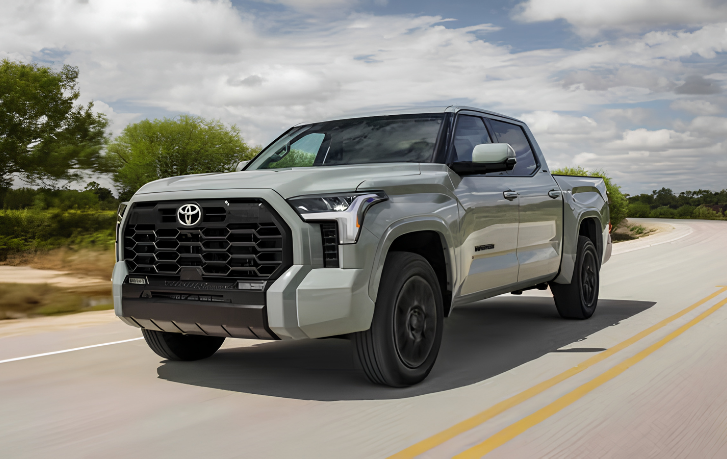
A 2023 Toyota Tundra reportedly suffered an engine failure at 63,780 miles, roughly one month after passing Toyota’s crank-bearing inspection commonly called the “hammer test.” The close timing creates an understandable concern for owners: what reassurance does a passing inspection provide if an engine can require replacement soon afterward?
The account came from owner Gabriel Ctracho in a Facebook owners group and was detailed in an Oct. 30 Torque News report. Ctracho said Toyota replaced the engine and did not allow the dealership to work on the failed unit because the company wanted to determine why it had passed the inspection. The repair order, original inspection results and Toyota’s technical findings were not available for independent review. Toyota had not responded to a request for comment when the account was published.
Those missing records prevent a firm conclusion about whether the inspection missed the recalled condition. The available information also does not identify the failed component or establish whether the later problem involved the No. 1 main bearing the specific area evaluated by Toyota’s procedure. Another engine fault could produce the same practical outcome for the owner while having no connection to the recall condition.
What Toyota’s hammer test measures
The procedure is more controlled than its nickname suggests. A technician prepares the engine, attaches an accelerometer and strikes the crankshaft pulley with a plastic hammer. Inspection software analyzes the resulting response and incorporates available vehicle drive data to evaluate the No. 1 main bearing.
The system requires three acceptable impact measurements before producing an engine-replacement decision. Toyota’s dealer instructions call for replacement when the system cannot confirm that the bearing will remain free from abnormal wear associated with the recall condition. In practical terms, the hammer supplies a repeatable input, the accelerometer records the engine’s response and the software compares those measurements against Toyota’s decision criteria.
A pass therefore means the measured response did not trigger replacement under that procedure at that time. It is not a lifetime health certificate for the complete engine, nor does it rule out every defect that could emerge later. Inspection systems are designed around defined components, failure signatures and decision thresholds; their meaning is limited to that scope.
That boundary is especially important here because Toyota’s November 2025 recall announcement identified production machining debris as a potential cause of knocking, rough running, failure to start or loss of motive power in affected vehicles. Without the failed engine’s diagnosis, there is no basis to assign this Tundra’s reported failure to machining debris or abnormal wear in the bearing evaluated by the inspection.
The records needed to judge the result
The original inspection record would show whether all required measurements were accepted, what decision the software returned and when the procedure occurred. The repair order should document the symptoms that brought the truck back, any diagnostic trouble codes and the dealership’s initial findings. Toyota’s examination of the removed engine would be the most important evidence because it could identify the damaged component and determine whether the recall-related bearing condition was present.
Those records could support several materially different explanations. The bearing condition may have been present but outside the test’s detectable or replacement threshold at the time. The condition may have developed or progressed after the inspection. The engine may instead have failed for an unrelated reason. The reported one-month interval makes the case worth examining, but elapsed time alone cannot select among those possibilities.
A self-selected Tundras.com tally adds little statistical clarity. It showed 20 passes and three failures among 23 owner-reported inspections when checked Oct. 30, but forum participants are not a representative sample of the affected fleet. The tally also does not establish how many passing trucks later developed engine trouble. It cannot be used as a pass rate, a post-inspection failure rate or proof that the procedure is broadly ineffective.
Owners should retain their inspection paperwork and seek dealer attention if a truck develops knocking, rough running, starting difficulty or another new symptom, even after a passing result. Recall eligibility and remedy status depend on the individual vehicle. Owners can check open campaigns using the National Highway Traffic Safety Administration’s recall lookup guidance and their vehicle identification number.
For this Tundra, the decisive evidence will come from Toyota’s analysis of the removed engine. Until the failed component and inspection record are known, the case remains a legitimate question about the limits of a passing result not a demonstrated failure of the hammer-test system.
| More aerospace and engineering stories, right in your MSN feed. Follow AMI on MSN |
By Thomas Caldwell — AMI’s senior editor for mechanical and mobility engineering, covering vehicle electronics, systems integration, electrification, chassis systems, propulsion, and safety policy.