Archer Midnight Cleared for Limited LA Flights as Quarterly Loss Hits $274.5 Million
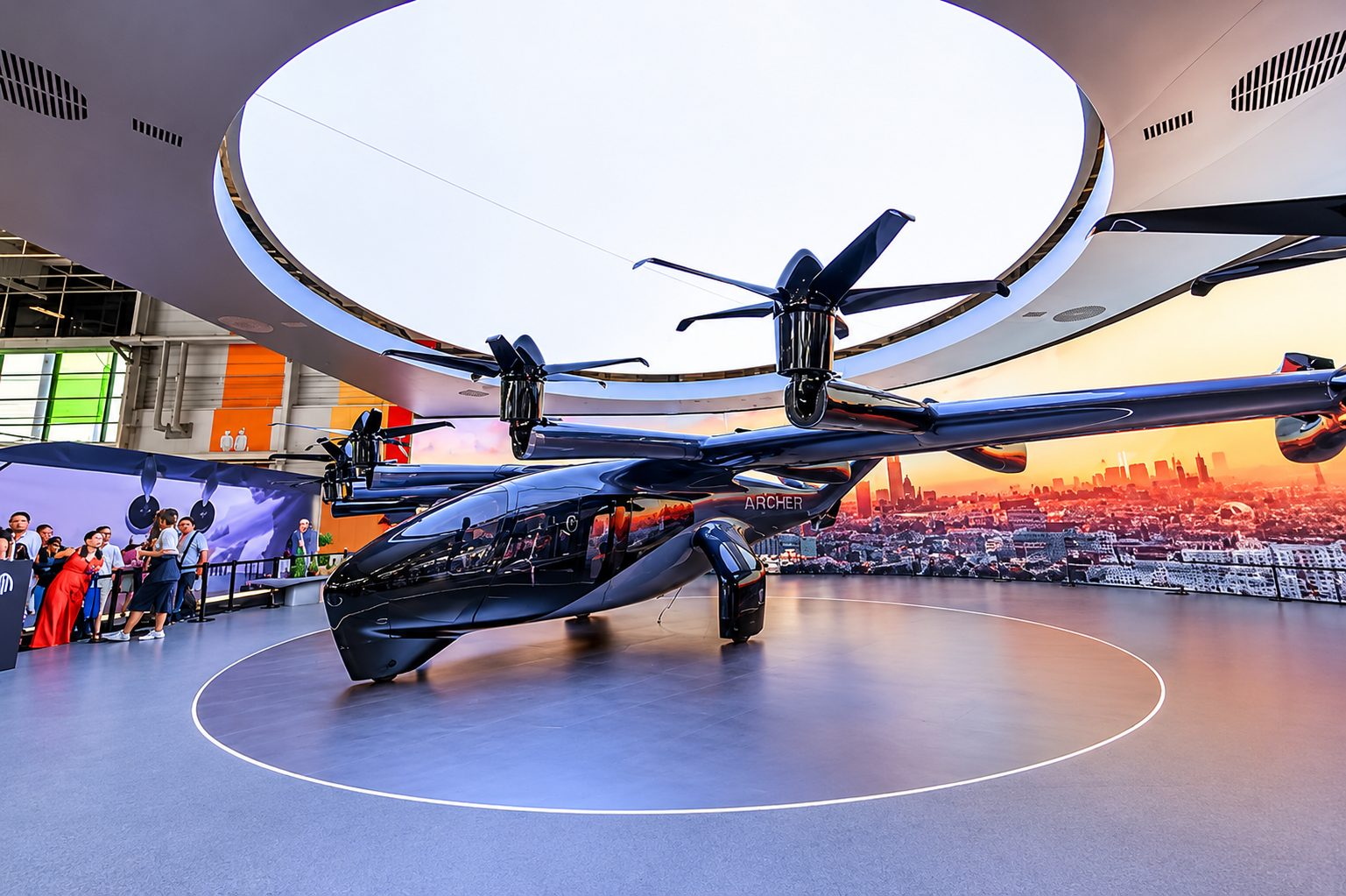
Archer Aviation has gained permission to put its Midnight electric air taxi into limited piloted operations around Los Angeles, but it has not received full approval to carry paying passengers in routine service. The milestone arrives as the company reports a $274.5 million quarterly net loss attributable to common stockholders, highlighting the cost of moving an unconventional aircraft from demonstrations toward commercial operation.

The Federal Aviation Administration granted Midnight a Market Survey Special Airworthiness Certificate, according to Archer’s third-quarter results released November 10. The certificate permits piloted market-survey operations in and around Los Angeles before the aircraft completes full type certification. It is a defined step forward, not general authorization for ordinary air-taxi service.
A Midnight aircraft has arrived at Hawthorne Airport for the next stage of Archer’s “No Roads” demonstration tour. The company plans to progress from conventional takeoffs and landings to vertical operations, followed eventually by flights carrying pilots and passengers. Chief Executive Adam Goldstein said he intends to become Archer’s first passenger in 2027, but that remains a company plan rather than an approved launch date for commercial service.
Why limited flight authority still matters
Los Angeles gives Archer a more demanding environment in which to develop operating experience. Piloted flights around a large metropolitan area can generate information about airspace coordination, ground procedures, flight routing and interaction with existing airport traffic. The FAA says its broader electric vertical-takeoff-and-landing integration program is intended to collect real-world data, identify operational constraints and inform future procedures and regulations.
The certificate nevertheless addresses only part of the commercialization problem. Full type certification concerns whether the aircraft design meets the applicable safety standards. Commercial passenger operations also depend on operating authority, trained personnel, approved procedures and suitable landing infrastructure. Archer’s market-survey certificate allows a controlled operational step before those broader requirements are complete.
The ground system is especially important in a dense city. The FAA’s advanced-air-mobility infrastructure guidance describes vertiports as specialized facilities for powered-lift aircraft and notes that early operations can use existing airports and heliports with modifications. Those locations still require airspace review, compatible approach and departure paths, charging access and coordination with airport and local authorities.
FAA vertiport guidance also accounts for touchdown-area geometry, lighting, load capacity, obstacle clearance, battery charging, fire planning and rotor downwash or outwash. The current design framework applies to piloted aircraft operating under visual meteorological conditions and is not itself permission to operate an aircraft. In practical terms, an approved aircraft and an acceptable landing site are separate pieces of the same transportation system.
The financial cost of reaching passenger service
Archer’s third-quarter net loss attributable to common stockholders widened to $274.5 million from $263.2 million in the preceding quarter and $129.9 million a year earlier. Its total net loss was $274.6 million. Operating expenses reached $294.3 million as the company continued spending on Midnight flight testing, certification and production, alongside other aircraft and technology programs.
Revenue was $5.1 million, generated after Archer made its first deliveries of electric powertrain components to defense contractor Anduril. That revenue remains small relative to the company’s costs and did not come from routine Midnight passenger operations. Archer’s adjusted loss before interest, taxes, depreciation and amortization was $178.5 million, within its previously stated range of $170 million to $200 million.
The company ended September with approximately $1.4 billion in cash, cash equivalents and short-term investments, down by $207 million from the preceding quarter. It used $164.6 million in operating activities and $31.7 million for property and equipment during the quarter. Those figures connect the regulatory milestone to the commercialization challenge: flight authority can produce experience, but certification, manufacturing and infrastructure development continue to consume capital before regular passenger revenue begins.
Archer has proposed a Los Angeles network involving LA Live, SoFi Stadium, USC and fixed-base operators, and it is the designated air-taxi provider for the 2028 Olympic Games. None of those plans substitutes for the remaining aircraft and operating approvals. The immediate milestone is narrower and measurable: Midnight can begin limited piloted market-survey flying around Los Angeles while its full commercial pathway remains unfinished.
| More aerospace and engineering stories, right in your MSN feed. Follow AMI on MSN |
By Thomas Caldwell — AMI’s senior editor for mechanical and mobility engineering, covering vehicle electronics, systems integration, electrification, chassis systems, propulsion, and safety policy.