FAA Certifies Boeing 737 MAX 7, but Flights Wait Until 2027
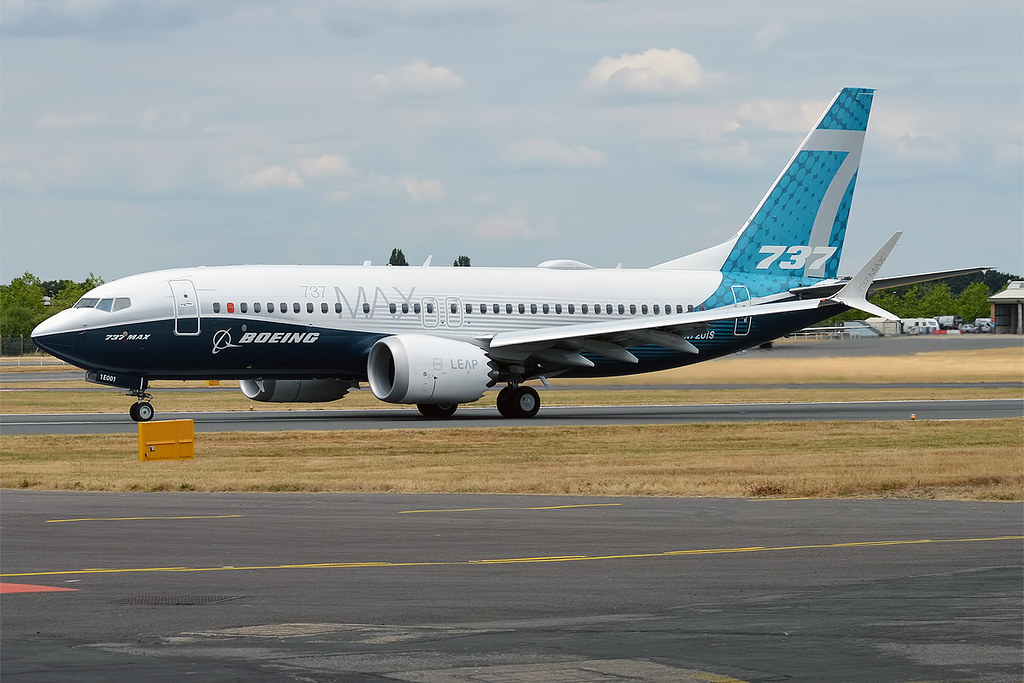
The Federal Aviation Administration has certified Boeing’s 737 MAX 7, clearing the central regulatory obstacle facing the smallest member of the MAX family. Yet certification will not put the aircraft into airline service immediately: Boeing still expects first deliveries in 2027, after approximately 30 completed jets are updated, inspected and individually approved.

Boeing announced the type certification on August 3, nearly a decade after development began and seven years after the company originally expected to certify and deliver the model. The approval establishes that the MAX 7 design complies with the applicable airworthiness, noise, fuel-venting and emissions standards. It also gives Boeing the approved configuration against which production aircraft must be completed and assessed.
Completed aircraft still need individual clearance
Type certification approves an aircraft design, not every airplane produced from that design. Boeing must now bring MAX 7s assembled during the certification campaign into the final approved configuration, conduct inspections and obtain airworthiness certificates for individual aircraft before delivery.
That distinction explains why finished-looking jets cannot move directly from storage into passenger operations. According to Cirium data, approximately 30 MAX 7s have already been assembled and are awaiting delivery. Boeing has begun incorporating changes made during certification into those aircraft, but each must conform to the approved design and be found ready for safe operation. The FAA describes a standard airworthiness certificate as its official authorization allowing a type-certificated aircraft to operate.
The certification program took far longer than Boeing’s original 2019 target. The two fatal MAX 8 crashes in 2018 and 2019 led to a worldwide grounding and broader regulatory review of the aircraft family. Production and quality concerns also affected the program, while Boeing identified an engine anti-ice issue in 2023 involving the potential for CFM LEAP-1B engines to overheat during continuous operation. Those factors contributed to the extended path to an approved MAX 7 design.
Southwest has another approval and training process
Southwest Airlines, the launch customer, holds firm orders for 256 MAX 7s and plans to use the model to replace aging 737-700 aircraft. The airline expects to need approximately six months after certification to revise its manuals and maintenance procedures, add the aircraft to its operating specifications and train crews.
Southwest is targeting the first quarter of 2027 for revenue service. Its published schedule through March 2027, however, does not yet include MAX 7 flights. That leaves the exact entry date dependent on aircraft deliveries, operating approvals and the airline’s preparation work.
The MAX 7 typically accommodates 135 to 160 passengers in a two-class layout and has a stated range of up to 3,800 nautical miles, or 7,038 kilometers. That combination could support relatively thin routes requiring more range than an airline wants to obtain from an older small narrowbody.
Its commercial position is constrained by operating economics. The MAX 7’s operating costs are close to those of the larger MAX 8, which can spread similar trip costs across more passengers. Airlines have consequently shifted much of their narrowbody demand toward larger models. United Airlines and WestJet moved their MAX 7 orders to the MAX 8, while the remaining disclosed customers include Allegiant Air with approximately 24 orders, Luxair with four, and Ruili Airlines and SkyUp Airlines with two each. Boeing also lists 16 for an unidentified customer.
MAX 7 production will remain at Boeing’s 737 facilities in Renton, Washington; the company’s Everett North Line lacks the tooling to build this variant. That concentrates the work of updating stored aircraft and producing new ones within Boeing’s existing 737 manufacturing system.
Certification has therefore changed the MAX 7 from a design awaiting regulatory approval into an aircraft eligible to proceed toward delivery. The next test is execution across manufacturing, inspection and airline integration. Southwest’s first-quarter 2027 target leaves only a limited window for Boeing to convert roughly 30 assembled jets into deliverable aircraft and for the airline to complete the approvals and training required before passengers can board.
| More aerospace and engineering stories, right in your MSN feed. Follow AMI on MSN |
By Thomas Caldwell — AMI’s senior editor for mechanical and mobility engineering, covering vehicle electronics, systems integration, electrification, chassis systems, propulsion, and safety policy.