BYD Recalls Great Tang SUVs After Front and Rear Wheels Were Swapped
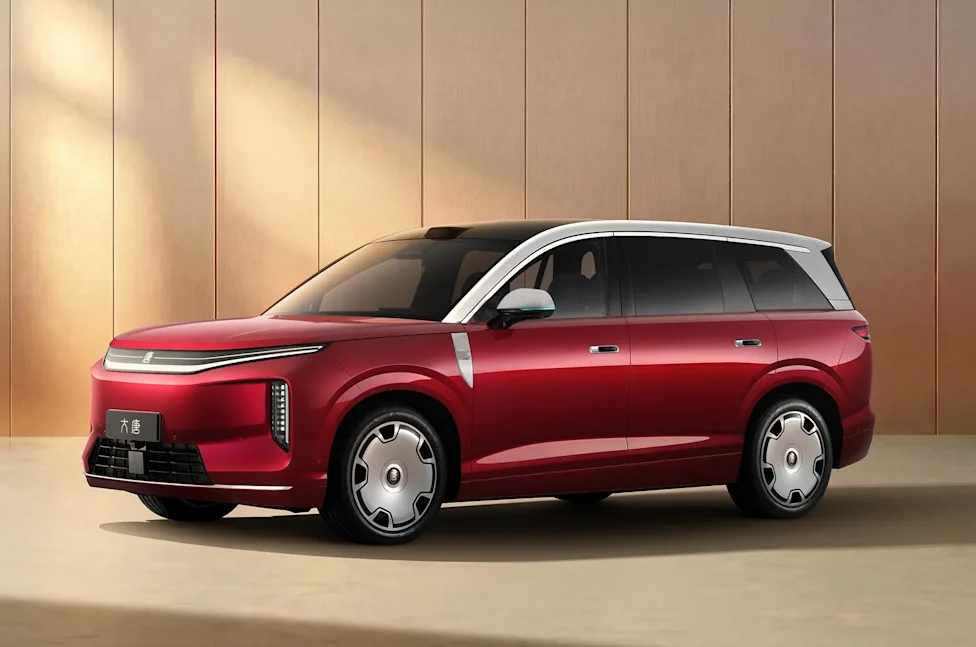
A basic assembly error reached customers in China: Some BYD Great Tang SUVs left the factory with their rear wheel rims installed at the front and their front rims installed at the rear. BYD is recalling affected vehicles for inspection and correction, although the automaker says the reversed fitment had no effect on handling and created no safety risk.
According to BYD’s account of its investigation, customer feedback prompted the company to examine the issue. It traced the mistake to a coding-entry error by a wheel-rim supplier. The incorrect code allowed front and rear components to be directed to the wrong assembly positions on some vehicles.
That explanation makes this more than a mechanic installing a single wheel incorrectly. The error originated in the production data used to identify or route parts, allowing the wrong configuration to pass through assembly. BYD said it has corrected the coding, taken measures to prevent the same mistake in future production and worked with the supplier to add visual checks to its line.
Owners get new rims and a restarted warranty
BYD will invite affected owners to service centers for free inspections and professional wheel-rim replacement or adjustment. The company has also offered a replacement vehicle or compensation for transportation expenses while the work is performed. It apologized for the inconvenience.
The unusually significant part of the remedy is the warranty treatment. BYD said the full-vehicle warranty on affected Great Tang SUVs will restart from November 11, rather than merely continuing from each vehicle’s original in-service date. That gives owners a benefit extending beyond correction of the wheel fitment itself, although the available information does not specify whether every warranty provision restarts on identical terms.
The largest unanswered question is scale. BYD has not disclosed how many Great Tang SUVs received the incorrect rims, which production dates are covered or how owners will be identified. Without that population information, it is impossible to determine whether the mistake involved a short production run or a broader batch. The company also has not provided technical details about the testing behind its conclusion that handling and safety were unaffected.
Front and rear wheel assemblies can differ in width, tire size or other specifications when a vehicle uses a staggered setup. BYD has confirmed that the positions were reversed on affected Great Tangs, but its public explanation does not quantify the dimensional differences or describe its evaluation procedure. The appropriate conclusion therefore remains narrow: BYD says its testing found no handling or safety effect, while the assembly configuration was still incorrect and requires service-center work.
A simple error creates a quality-control test
The production response addresses two different control points. Correcting the supplier code removes the identified data error, while adding a visual check creates a separate opportunity to catch a mismatch before parts reach customers. That second layer is important because coding and labeling systems are intended to reduce assembly variation, but an incorrect digital instruction can reproduce the same mistake consistently until another control detects it.
The Great Tang issue arrives as BYD expands its lineup and prepares for wider overseas sales, increasing scrutiny of its manufacturing and service operations. It follows a separate Shark 6 recall in Australia during the previous month involving a spare-wheel support that could potentially detach and endanger other motorists. The two recalls involve different vehicles and unrelated components, so they do not establish a common technical failure.
BYD also faced scrutiny in Europe earlier in the week when court-appointed bailiffs acting for Jaguar Land Rover raided its Netherlands offices. The action was connected to Jaguar Land Rover’s claims about similarities between BYD’s Ti7 and the revived Land Rover Defender. No details supplied about that dispute connect it to the Great Tang’s wheel-rim error.
For Great Tang owners, the practical next step is a free inspection and correction, backed by transportation support and a warranty restarted from November 11. For BYD, the unresolved measure of the incident is how many SUVs escaped the factory with such an immediately understandable assembly mistake an affected total the company has yet to provide.
| More aerospace and engineering stories, right in your MSN feed. Follow AMI on MSN |
By Robert McKinney — Editor-in-Chief for AMI’s automotive and mobility coverage, with a mechanical engineering background and a decade reporting on powertrain systems, EV innovation, and global vehicle manufacturing.