Advances in Artificial Muscles for Soft Robotics
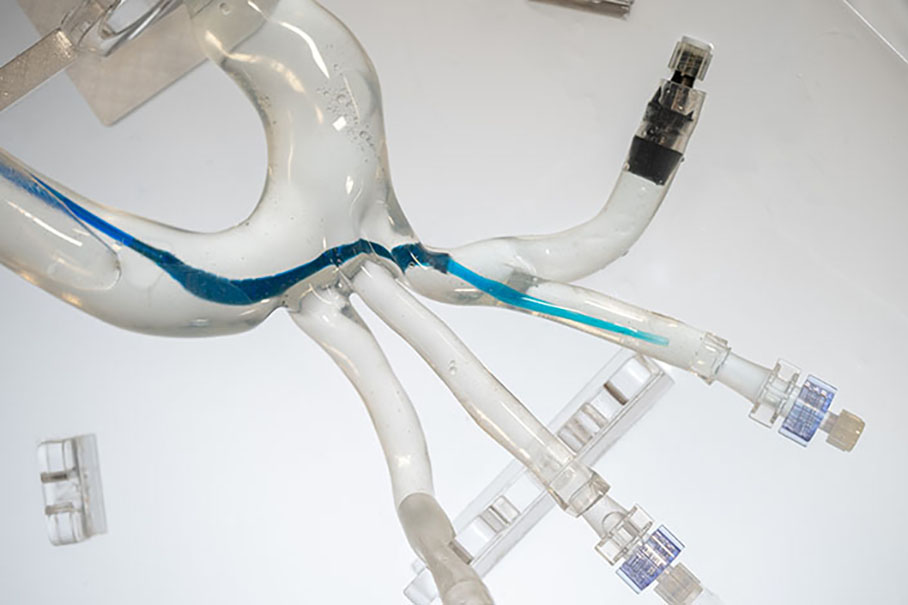
Artificial muscles have emerged as a pivotal technology in the evolution of interactive soft robotic systems, enabling functions such as shape morphing, manipulation, and mobility with unprecedented versatility. These actuators, designed to emulate or surpass the performance of biological muscles, draw upon a diverse range of material systems and actuation strategies. The most prominent categories include dielectric elastomer actuators, pneumatic actuators, electrochemical actuators, soft magnetic actuators, and stimulus-responsive polymers.

Dielectric elastomer actuators (DEAs) exploit the deformation of compliant elastomer films under electrostatic forces, offering high strain and rapid response. Their lightweight construction and ability to deliver significant specific power make them attractive for aerospace-inspired robotics, where efficiency and responsiveness are paramount. Pneumatic actuators, often constructed from flexible polymeric chambers, harness pressurized air or fluid to generate motion. They are valued for their simplicity and high force output, though their reliance on external compressors or pumps can limit portability.
Electrochemical actuators operate through ion migration and redox reactions within active materials, enabling precise control over displacement at low voltages. These actuators are particularly suited for applications requiring fine manipulation, such as micro-robotics or biomedical devices. Soft magnetic actuators integrate magnetic particles within elastomeric matrices, responding to external magnetic fields with controlled deformation. Their remote actuation capability is advantageous in environments where direct wiring or tethering is impractical.
Stimulus-responsive polymers expand the scope of artificial muscle design by reacting to environmental triggers such as temperature, pH, or light. This class of materials allows for programmable and reconfigurable morphing behaviors, facilitating adaptive robotic systems capable of navigating complex terrains or interacting with delicate objects.
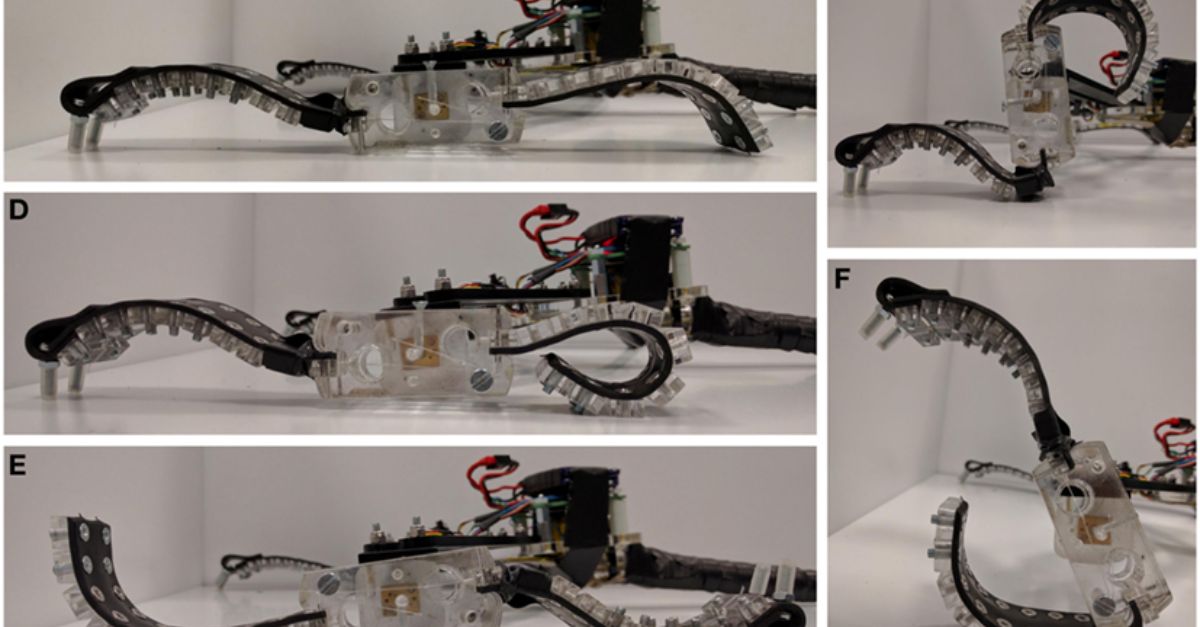
Recent research has achieved artificial muscles with specific power outputs surpassing those of natural muscles, a benchmark long considered challenging. The ability to program and reconfigure shape morphing behaviors has enabled robots to alter their form dynamically, enhancing maneuverability across surfaces with varying obstacles and textures. Such dexterity is critical for exploration tasks, whether in planetary rovers negotiating rocky landscapes or underwater drones adapting to shifting currents.
The integration of soft electronic devices with artificial muscles represents a significant opportunity for advancing smart and interactive robotics. Flexible sensors, stretchable circuits, and conformal energy storage systems can be embedded directly into the actuator structure, allowing real-time feedback and adaptive control. This convergence of actuation and sensing transforms artificial muscles from passive mechanical elements into active, intelligent components of a robotic organism.
Material innovations underpin these advances. High-performance elastomers with optimized dielectric properties, nanostructured electrodes for improved charge distribution, and composite matrices with tailored mechanical anisotropy have all contributed to enhanced actuation efficiency and durability. In electrochemical systems, the development of robust ion-conducting polymers and stable electrode chemistries has extended operational lifetimes and reduced degradation.
Soft magnetic actuators benefit from precise control over particle alignment and distribution within the host matrix, enabling complex deformation patterns under relatively low magnetic field strengths. Stimulus-responsive polymers have seen progress through molecular engineering, producing faster response times and greater mechanical strength without sacrificing flexibility.
These developments are not merely incremental; they redefine the performance envelope of soft robotics. The capacity for high maneuverability, coupled with adaptive shape morphing, positions artificial muscles as a transformative technology in fields ranging from autonomous vehicles to assistive devices. As Jiangxin Wang noted, “Artificial muscles are the core components of the smart and interactive soft robotic systems,” underscoring their central role in future designs.
The trajectory of artificial muscle research points toward increasingly integrated systems, where actuation, sensing, and control are seamlessly combined within soft, compliant structures. Such systems promise to expand the functional boundaries of robotics, enabling machines that can interact safely and effectively with humans, navigate unpredictable environments, and perform tasks with a level of dexterity previously unattainable.