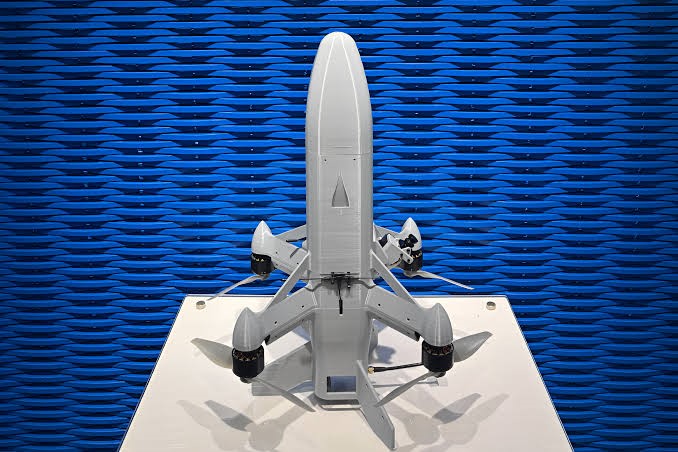
China Advances in Delivery Drone Logistics
While much international attention has focused on China’s export of armed drones, the nation’s progress in civilian delivery drone deployment has been quieter yet significant. For China’s express delivery companies, drones offer a potential remedy to declining profit margins, particularly in the costly and complex last-mile segment of logistics. This final stage—bringing goods directly to customers—can account for more than half of transportation costs due to its fragmented nature and multiple stops.

In rural China, last-mile delivery is especially challenging. Vast distances between destinations, coupled with mountainous and difficult terrain, hinder efficient transport. With e-commerce demand rising in these regions, drones have emerged as a practical solution, bypassing the lack of traditional logistics infrastructure and reaching remote communities directly. In urban centers, where streets are congested and low-altitude flight requires special permissions, drones can sometimes outperform human couriers by avoiding ground traffic.
JD.com has been a pioneer in this space, initiating drone deliveries in 2015. The company has developed a three-tier UAV logistics network: trunk line drones capable of covering 300 kilometers to move goods between warehouses; branch line drones for rapid transfers between logistics sub-centers; and terminal drones designed to bridge the last-mile gap to rural customers. Meituan entered the field more recently, completing its first drone delivery in January 2021. In Shenzhen, under a pilot program spanning 10 neighborhoods and four business districts, the company has served 8,000 customers. Deliveries are made to kiosks strategically placed for easy customer access, and plans are underway for a pilot center in Shanghai.
Technical hurdles have been considerable. Meituan, for instance, needed to shift from remote-controlled operations to fully autonomous flight, while accommodating packages of varying weights. Solutions included robust navigation systems and drones equipped with spare powertrain capacity to handle heavier loads. The weight limitation is being further addressed through cargo drones. China’s first unmanned freighter flight took place in Jingmen City, Hubei, carrying 500 kilograms over 500 kilometers. Such heavy-lift drones are expected to move from testing to operational status within the next decade.
Regulatory conditions have been favorable. In January 2021, China implemented its first national standard for express drone delivery services, detailing operational conditions, procedural requirements, and safety measures. Commercial drones must be approved and registered with the Civil Aviation Administration of China, providing a clear framework for deployment.
Despite these advantages, rollout has been slower than some anticipated. Smaller drones still face constraints in battery life, payload capacity, and susceptibility to adverse weather. Larger cargo drones may alleviate these issues, but in urban areas, autonomous ground vehicles have gained traction more quickly. These robots can carry more packages, have larger batteries, and avoid the challenges of variable high-altitude weather.
China’s delivery drone sector nonetheless outpaces that of the United States. Amazon’s first drone delivery service, planned for Lockeford, California, awaits regulatory approval and has been hindered by safety incidents and high turnover in its drone program. China’s dominance extends beyond commercial applications, encompassing civilian and military drone production, a factor in ongoing technological and political tensions between Beijing and Washington.
While military drone exports raise concerns over data security, human rights, and geopolitical alliances, such issues are less pronounced in the realm of delivery drones. Here, the focus remains on enhancing logistics efficiency and improving customer satisfaction. The trajectory of China’s commercial drone delivery suggests continued development, with both technological refinement and operational expansion likely to shape the sector’s future.