


NASA’s Moon Crew Launch Tests Orion Far Beyond Earth
I’m hoping that we just stay focused on the launch tomorrow, said NASA test director Jeff Spaulding. This quote captures the essence of the Artemis II mission better than the coincidence of its April 1 liftoff date. The Artemis II mission is crucial because it is transitioning NASA’s lunar program from the rehearsal phase to human deep-space operations. Artemis II takes four astronauts aboard Orion to the Moon and back on an approximately 10-day expedition, making all previous years of hardware preparation, simulations, and delays pay off in a true live test of NASA’s ability to safely send humans past low Earth orbit.

In this case, the crew consists of Reid Wiseman, Victor Glover, Christina Koch, and Canadian Space Agency astronaut Jeremy Hansen. These four people are doing more than simply carrying forward the symbolism of the Apollo era astronauts. According to NASA, Artemis II marks the first time in more than half a century that a crewed space mission departs from Earth orbit for a flight around the Moon. Also, for the first time in NASA’s history, Orion launches with a crew aboard.
Every system will receive more scrutiny since it must ensure the safety and comfort of the astronauts. Life support, communication, power generation, manual operation, and crew capability to operate independently without a fast way to come back to Earth is crucial for Orion. This is where the real purpose of the mission comes into play. The Moon is a visible destination, but the primary purpose of the Artemis II mission is to test NASA’s new technology. A successful Orion flight would be a sign for NASA to continue developing its missions and proceed from a flyby to extended lunar operations.
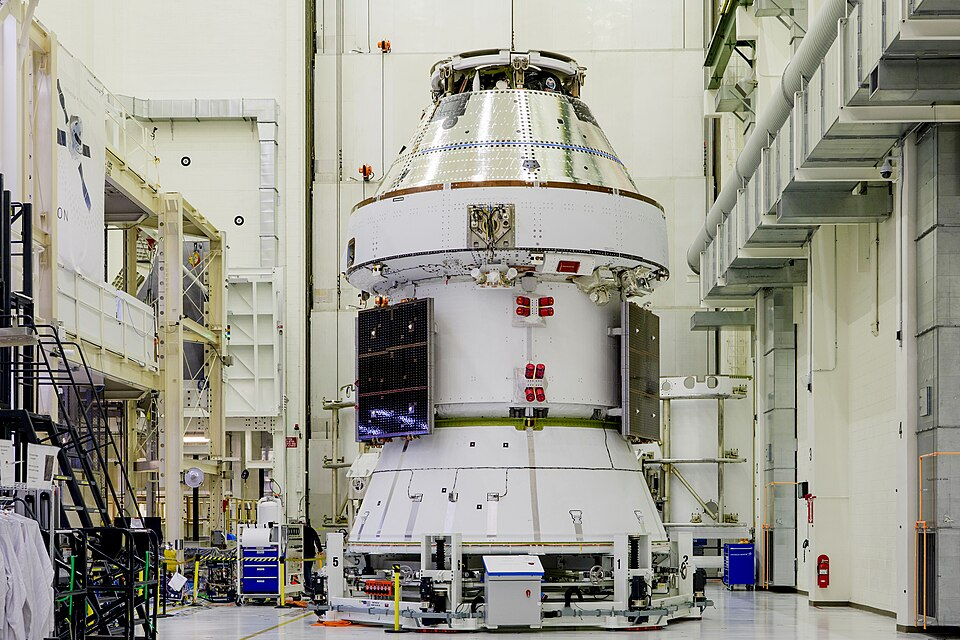
This mission would not be possible without NASA’s solar array wings. After the launch, they were successfully deployed, and the spacecraft received electrical power. For example, Orion’s four wings provide power for communication, avionics, operations, and even life support. In addition, Orion’s European-built service module powers the spacecraft, supplies water and air, and provides thermal controls to the crew. Therefore, the spacecraft’s service module becomes its spine during deep-space flights.
Besides testing the new Orion spacecraft, the Artemis II mission aims to understand how the crew works with Orion. After launching the spacecraft into space, the crew conducted a proximity operations demonstration using the interim cryogenic propulsion stage as a target. This kind of demonstration was necessary because of the specific conditions of this mission. Unlike an ISS mission, astronauts would not be able to get help, quickly land the spacecraft, and perform other operations that are available while orbiting around Earth.
The rocket under Orion remains vital for a successful mission. At the moment of lift-off, SLS gave 8.8 million pounds of thrust, which included the power of twin solid rocket boosters in the beginning of the flight. Rocket power has always been a nonchalant part of any story about NASA missions; however, Artemis II will help NASA understand whether the launch power can transform into a dependable transport system for future lunar explorations. For Artemis II, every minor milestone carries huge importance: suit check, hatch seal verification, sensors readings, solar array wing tracking, timing of burns, crew workload assessment, and many others. This is why Artemis II is not a mission with a single event that will be remembered.


