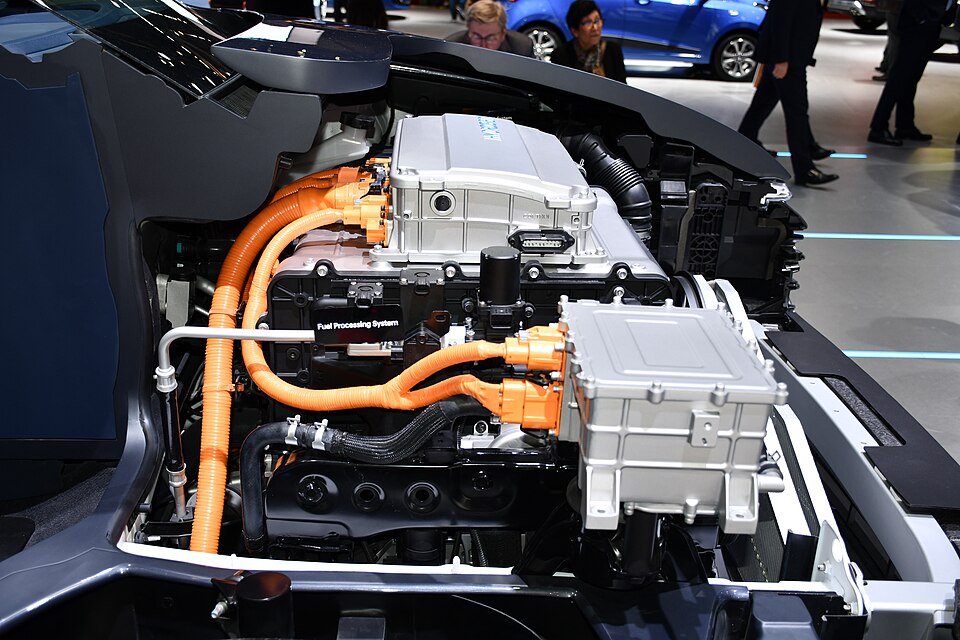
Hydrogen Fuel Cell Car Sales Plummet in 2020
Hydrogen fuel cell vehicles have long occupied a niche corner of the U.S. automotive landscape, operating more like an extended pilot program than a thriving market segment. Sales figures over the past several years reflect that reality. After reaching a modest peak in 2018—only slightly above 2017 levels—the segment began to contract. In 2019, sales slipped by 12 percent. The downturn accelerated sharply in 2020, with volumes falling by more than half to fewer than 1,000 units.

Data from the California Fuel Cell Partnership illustrates the scale of the decline. Toyota’s Mirai, the most prominent fuel cell passenger car in the U.S., recorded 499 sales in 2020, a steep 67 percent drop from 1,502 the year before. Hyundai’s NEXO fared slightly better but still fell 22 percent, from 267 units to 208. Other models combined for 230 units, down 28 percent from 320. That brings the total to roughly 937 vehicles sold in 2020, a 55 percent decrease from 2,089 in 2019. Figures for the Honda Clarity Fuel Cell were not disclosed.
Over the past nine years, cumulative U.S. sales of new hydrogen fuel cell cars have reached just 8,931 units. The technology has seen some adoption in public transit, with 48 hydrogen-powered buses operating in California. Yet infrastructure remains a limiting factor. As of January 20, 2021, California—by far the leading market for these vehicles—had 43 open retail hydrogen stations, a number that barely changed over the previous year. Several new stations were expected to come online during 2021, but the pace of expansion has been slow compared to the rapid build-out of battery-electric charging networks.
Hydrogen fuel cell vehicles (FCVs) convert compressed hydrogen gas into electricity through an electrochemical reaction in a fuel cell stack, emitting only water vapor. This offers the potential for quick refueling and long driving ranges, attributes that in theory could rival or surpass battery-electric vehicles (BEVs) for certain use cases. However, the high cost of fuel cell systems, limited hydrogen production and distribution infrastructure, and the efficiency losses in generating and transporting hydrogen have hindered broader adoption.
California’s hydrogen network is supported by state incentives and partnerships between automakers, energy companies, and government agencies. Toyota, Hyundai, and Honda have been the primary automakers offering FCVs to U.S. consumers, often through lease programs bundled with fuel incentives. Despite these efforts, the market has struggled to gain momentum, especially as BEVs have surged ahead in both consumer acceptance and model variety.
The contrast is stark. BEVs benefit from a rapidly expanding charging infrastructure, falling battery costs, and the ability to leverage the existing electrical grid. By early 2021, mainstream automakers were announcing multiple new electric models, many with ranges exceeding 250 miles and charging capabilities that could replenish significant range in under an hour. In parallel, battery energy density improvements and manufacturing scale have driven down costs, making BEVs more competitive without heavy reliance on subsidies.
Hydrogen production methods also influence the environmental calculus. Most hydrogen available today is produced via steam methane reforming, a process that emits carbon dioxide. While renewable-powered electrolysis can generate “green hydrogen” with near-zero emissions, it remains more expensive and less common. For FCVs to achieve their full environmental promise, both production and distribution systems would need significant investment and scaling.
Advocates for hydrogen point to its potential in heavy-duty transport, aerospace applications, and industrial processes where high energy density and fast refueling are critical. In these sectors, hydrogen’s advantages may outweigh its inefficiencies compared to direct electrification. Yet in the light-duty passenger car market, the 2020 sales collapse underscores the uphill battle FCVs face against the accelerating momentum of battery-electric alternatives.