Pizza Delivery Drones Are Finally Carrying Family-Sized Orders
While food delivery drones may have sounded like futuristic visions for years, there has been one critical issue that prevented their widespread implementation dinner typically weighed more than coffee. However, the time when food delivery by drone will cease to remain a novelty has seemingly come. A collaboration between Little Caesars and Flytrex has led to the introduction of a novel drone platform that was created to carry payloads sufficient to deliver a household meal and while it is true that pizza is not particularly difficult to deliver even without drones, the importance of this event lies elsewhere.

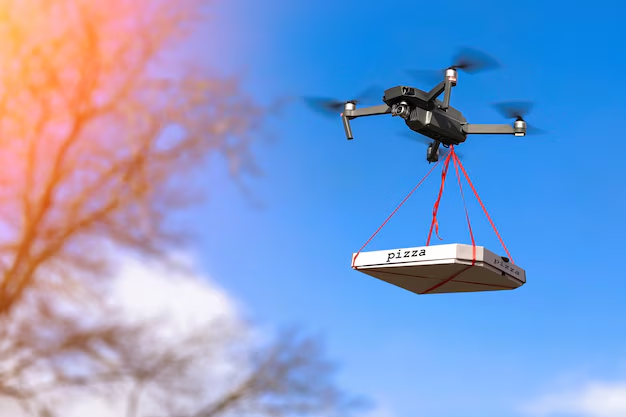
According to information released by the company, its Sky2 model can hold 8.8 pounds (two 16-inch pizzas). While other drones used to deliver goods in the USA were typically limited to the 5-pound mark, or even lower, this particular feature opens up numerous possibilities that did not exist before. It becomes feasible to think about drones making household deliveries instead of small orders, and that is precisely the difference that needs to be considered.
In addition to payload capacity, several other parameters also indicate the direction that Flytrex is going in. The drone is expected to make 4.5-minute roundtrips within four miles radius, improving upon earlier models that had less efficient designs. Since suburbs have much higher density of buildings, as well as numerous intersections and other factors influencing traffic speeds, this becomes a very crucial point. In this environment, delivering a pizza becomes quite possible.
Furthermore, the Sky2 features octocopter design with two batteries installed and an AI algorithm for flight logic. Such technical features show that the development of drones that will deliver food will increasingly focus on efficiency, as well as automation and management of logistics process. As far as regulation is concerned, the key to success of drone flights in America lies in obtaining permission for operating beyond visual line of sight. Part 135 is responsible for approving such operations in the United States, which makes getting such permissions critical for drone networks. Payload is obviously an essential factor, but so is scale.
Thus, a food delivery by a drone may say much more about the current state of industry than might initially appear. Flytrex has also expanded through integration of its technology directly into point-of-sale systems of restaurants, removing an additional layer of inefficiency that often prevents innovations. On a larger scale, there is a general tendency in logistics that sees improvements in delivery thanks to use of AI specifically, the efficiency of operations can increase by 40%. Autonomous drones should see similar improvements, including stable routes, obstacle avoidance, precise delivery and shorter turnaround times.
Once again, this is just an example of a larger trend. The moment when a company manages to make a drone that can reliably deliver a household’s worth of food within acceptable timeframe, integrate into existing restaurant workflows and be operated within current FAA guidelines is the moment when a new era begins. And that is precisely the point we seem to be reaching.