3D Printing Reshapes the Future of Housing
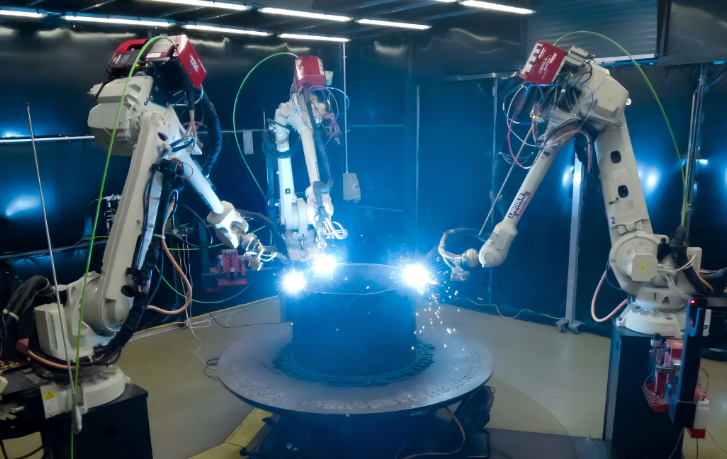
In Beckum, a town in northwestern Germany, the unveiling of the first fully 3D-printed house marked a significant milestone in construction technology. The two-story residence, offering 160 square meters of living space, was co-funded by the state of North Rhine-Westphalia. The process, reminiscent of icing a cake, involves a robotic arm extruding building material layer by layer, leaving gaps for doors and windows. This layered approach not only accelerates construction but also expands architectural freedom. “The special thing is that we, as planners, have a lot more freedom with the concrete printer,” said Waldemar Korte, the architect behind the Beckum project. “We can really play around with the form.”

Beyond concrete, 3D printing in construction is embracing sustainable materials. In Italy, the TECLA project—developed by WASP (World’s Advanced Saving Project) and Mario Cucinella Architects—creates circular dwellings from local raw earth. TECLA, short for technology and clay, draws inspiration from Italo Calvino’s 1972 novel *Invisible Cities*. Built in Massa Lombarda near Bologna, these 60-square-meter structures embody bio-climatic principles and local building traditions. Nearly zero-waste, even the furnishings are designed for reuse or recycling. A TECLA home can be completed in 200 hours, providing a rapid, eco-conscious solution to challenges posed by climate change, migration, and natural disasters.
Cost efficiency is another driver of adoption. Korte predicts that, given current technological progress, 3D-printed houses could undercut traditional construction costs within five years. His Beckum project required only four days to build and fewer workers, addressing shortages of skilled labor. According to All3DP, advances in concrete mixes and falling prices of large-scale printers are making printed homes increasingly affordable worldwide.
Examples abound. In 2017, Apis Cor built a 38-square-meter home in Russia for about $10,000 in a single day. Texas-based ICON aims to reduce house prices to $4,000, while China’s Winsun set records in 2014 by printing 10 houses in one day at roughly $4,800 each. Such efficiencies stem from innovations in materials. While standard mixes combine cement and sand, builders often incorporate geopolymers and fibers for added strength. Lavacrete, developed by U.S. architect Paul Schwam, blends pulverized red volcanic rock with cement and water, yielding resilience against extreme weather. ICON demonstrated this durability in Mexico’s Tabasco state, where its printed homes withstood a 7.4-magnitude earthquake with minimal impact.
The humanitarian potential is equally compelling. U.S.-based charity New Story leverages 3D printing to address housing shortages in the Global South. “Instead of waiting for profit motivation to bring construction advances to the Global South, we are fast-tracking innovations like 3D home printing that can be a powerful tool toward ending homelessness,” said Alexandria Lafci, the organization’s chief operating officer. To date, New Story has helped fund over 2,300 homes in Mexico, Bolivia, Haiti, and El Salvador.
In Germany, the technology remains nascent. Of the 300,000 apartments built in 2020, only two were 3D-printed. Yet industry leaders see promise. Felix Pakleppa, head of the Zentralverband Deutsches Baugewerbe, noted, “We believe that 3D printing would, above all, find a market in prefabrication,” envisioning components printed in factory halls and shipped to sites.
Some companies are already looking beyond Earth. ICON, in collaboration with Bjarke Ingels Group and NASA, is developing autonomous construction systems for lunar habitats. This effort aligns with broader research into extraterrestrial living, where additive manufacturing could enable humanity’s first home on another world.