Crash Testing Proves C8 Corvette’s Safety Advancements
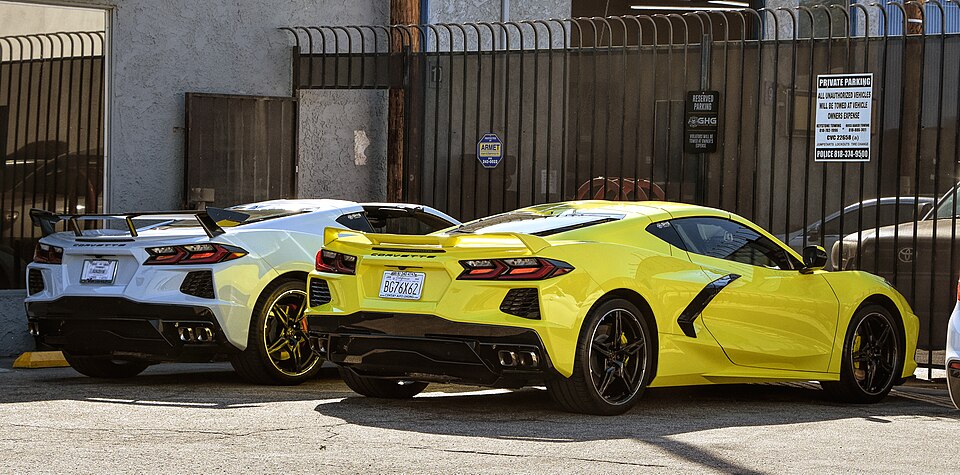
Six years into its production run, the mid-engine C8 Corvette continues to attract attention not only for its performance but also for its evolving safety credentials. Recent federal compliance crash tests have placed the 2024 and 2025 Stingray Coupes under scrutiny, revealing how far modern engineering has pushed occupant protection in high-performance sports cars.

Two distinct evaluations were conducted. The 2024 Stingray Coupe underwent a frontal crash test at 35 mph, while the 2025 model faced the demanding side pole impact. These tests, documented by DPCcars on YouTube, show the precision and rigor behind contemporary crash analysis. Multiple high-speed cameras, including top-down and underbody views, captured every millisecond of impact, ensuring no detail escaped review.
Frontal crash testing today goes beyond measuring basic occupant injury metrics. Engineers examine windshield strength, intrusion limits, and fuel system integrity. The Corvette’s passenger airbag system was also tested for its ability to detect smaller occupants or child seats, with results indicating low-risk deployments. In the words of the test report, “In a frontal crash at 35 MPH, the belted 50th-percentaile male dummies in the driver and passenger seats recorded injury numbers comfortably under federal thresholds. Chest g loads, femur loads, head injury criteria — these are the cold, clinical metrics that determine whether a seatbelt, airbag, and structure are working as a team. Here, they did.”
The side pole test represents one of the most challenging real-world crash scenarios—a glancing blow against a narrow, immovable object such as a tree or utility pole. This setup demands rapid sensor interpretation and precise airbag deployment. Modern side-pole protection is as much a triumph of electronics as of structural engineering. The Corvette’s control unit processes crash signatures from multiple sensors, firing the appropriate airbags with tailored venting profiles. This orchestration transforms what could be a catastrophic localized impact into a survivable event.
Structural resilience plays a critical role. A stiff side frame, roof rails that resist deformation, and airbags that maintain inflation long enough to prevent head contact with the pole are essential. As the test results showed, “Occupant kinematics—the way the body moves in those first milliseconds—must stay controlled. Good results come from a stiff side structure, a roof rail that does not fold under load, and airbags that stay inflated long enough to keep the head away from the pole.” In the Corvette’s case, the occupant’s head remained shielded, chest loads stayed within safe limits, and the cabin’s integrity held firm.
From an engineering perspective, these outcomes highlight the interplay between materials science, sensor fusion, and crash energy management. The C8’s aluminum-intensive structure, reinforced with high-strength steel in critical load paths, provides the rigidity needed for predictable deformation. Meanwhile, its restraint systems integrate multi-stage airbags and pre-tensioning seatbelts, all coordinated by a central crash control module.
It’s worth noting that these tests occur at controlled, relatively low speeds. The energy levels at 35 mph, while significant, are far below those encountered in many real-world incidents involving high-performance vehicles. Historical accident reports involving earlier Corvette generations underscore the risks when control is lost at much higher velocities. Nevertheless, the C8’s performance in these evaluations demonstrates that modern sports car engineering can deliver both excitement and robust safety measures.
For the tech-minded observer, the takeaway lies in how the Corvette’s safety systems embody principles familiar in aerospace and robotics—redundancy, rapid sensor feedback, and precise actuation. The same engineering discipline that keeps a drone stable in turbulent air or a spacecraft safe during re-entry is at work here, ensuring that when the unexpected happens, the machine responds in milliseconds to protect its occupants.