Airbus Leads German Push for Urban Air Mobility
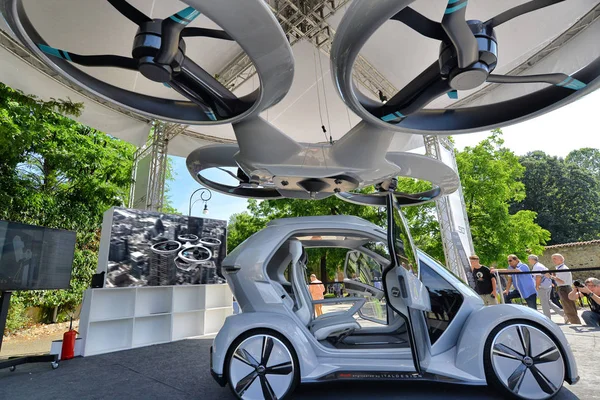
In southern Germany, a broad coalition of industry, academia, and public-sector partners has launched an ambitious effort to accelerate the arrival of advanced air mobility. Under Airbus’ leadership, the Air Mobility Initiative (AMI) brings together major corporations, research institutions, and municipalities to address the technical and societal challenges of integrating electric vertical take-off and landing (eVTOL) aircraft into urban and regional transport networks.

The AMI roster reads like a cross-section of Germany’s aerospace and mobility ecosystem. Airbus is joined by the City of Ingolstadt, Deutsche Bahn, Deutsche Flugsicherung (DFS), Diehl Aerospace, Droniq, Munich Airport, the Bavarian Red Cross, and Telekom, alongside a long list of specialized companies and universities. The initiative is backed financially by both the Free State of Bavaria and the Federal Republic of Germany, with €17 million and €24 million in respective public funding. When combined with industry contributions, the total program budget reaches €86 million over three years.
Markus May, Head of Operations for urban air mobility at Airbus, emphasized the collaborative nature of the undertaking. “In many parts of the world, eVTOLs will offer a whole new mobility service in the near future,” he said. “Airbus and the AMI partners are aware that the introduction of such a system requires the cooperation of many players with different competences. Our goal is to build a transport service that benefits society and this is what we are setting up here in Bavaria.”
The initiative’s work is organized into three interconnected streams. The first focuses on the eVTOL aircraft themselves, led by Airbus in partnership with Diehl Aerospace, the University of Stuttgart, and others. This stream will address vehicle design, systems integration, and certification pathways, building on existing European research into distributed electric propulsion and lightweight composite structures.
The second stream targets unmanned traffic management (UTM) systems, which will be critical for coordinating high volumes of low-altitude flights in complex airspace. Here, AMI partners such as Droniq, f.u.n.k.e. Avionics, SkyFive, BrigkAir, DFS, and Telekom are working with universities in Munich and Hamburg to develop digital infrastructure capable of ensuring safe, efficient routing both within and between cities. This includes real-time communication links, automated deconfliction, and integration with conventional air traffic control.
The third stream addresses vertiports and the physical integration of eVTOL operations into existing transport hubs. Munich Airport, Deutsche Bahn, Bauhaus Luftfahrt, and Airport Nürnberg, together with academic partners in Ingolstadt and Munich, are studying how to design take-off and landing sites that fit seamlessly into airports and urban districts. This involves not only the physical layout of pads and passenger facilities but also ground handling processes, energy supply for rapid charging, and multimodal connections to rail and road networks.
Work began in January 2022, with initial efforts aimed at defining the technological, infrastructural, legal, and social prerequisites for operational deployment. The partners plan to translate these findings into a demonstration project featuring real-world eVTOL flights in the Ingolstadt region. These trials will test vehicle performance, airspace integration, and passenger handling under realistic conditions, providing data to inform future regulatory and commercial decisions.
The breadth of AMI’s membership underscores the complexity of the task. Beyond aerospace manufacturers and air navigation service providers, the consortium includes entities such as the Bavarian Red Cross, which can explore emergency response applications, and Deutsche Bahn, which brings expertise in large-scale passenger transport integration. Research organizations like the Fraunhofer Society and Bauhaus Luftfahrt contribute applied science and systems-level analysis, while technology firms such as HENSOLDT Sensors and EchoStar Mobile add capabilities in sensing and communications.
By aligning diverse competencies under a unified framework, AMI aims to address the interdependencies that have historically slowed the adoption of new transport modes. The initiative’s structure reflects an understanding that vehicle technology, digital infrastructure, and ground facilities must mature in parallel if urban air mobility is to move from concept to reality in the coming decade.