Hyperion Relocates to Columbus for Hydrogen Fuel Cell Production
Hyperion Cos., a California-based hydrogen fuel cell developer, will relocate its headquarters to Columbus, Ohio, in a move that marks the largest new factory opening in the city in a decade. The company plans to invest nearly $300 million in the 65-acre site on the Far West Side, formerly home to the Dispatch printing plant, which closed in 2020. The facility will focus on research and manufacturing of hydrogen fuel cell stacks for energy storage products, including Hyperion’s XP-1 sports car.

The relocation is expected to create more than 680 jobs over six years, with an annual payroll projected to reach $58 million. Hyperion’s workforce will include over 100 engineers, 230 manufacturing staff, 40 warehouse employees, and 35 facilities positions. Columbus City Council member Nick Bankston noted that manufacturing roles will average $61,000 annually, warehouse jobs around $75,000, and facilities positions approximately $62,000. “This is an opportunity for families all across our city to have a better life,” Bankston said, adding that Columbus is poised to become “the Silicon Valley of the Midwest.”
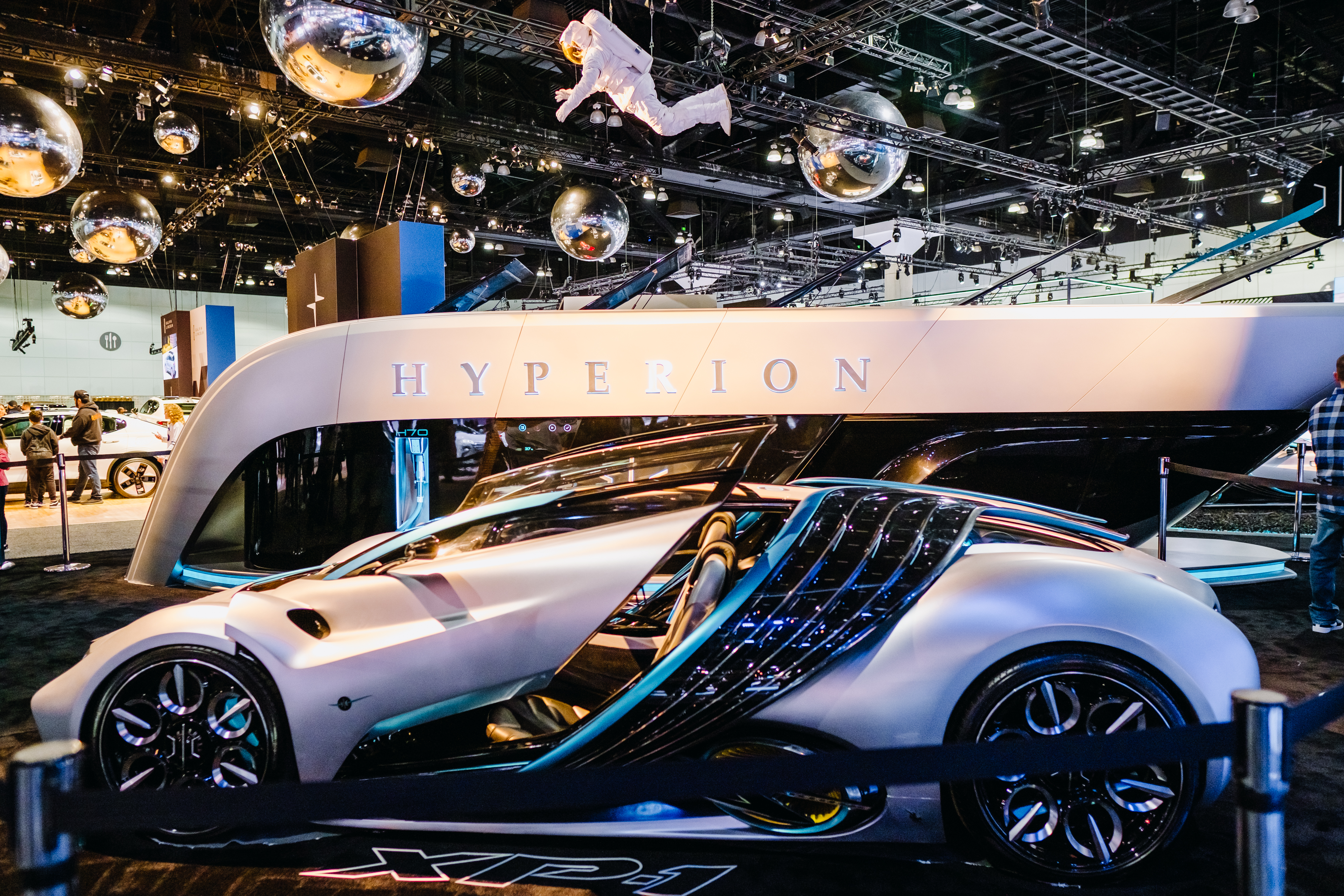
For CEO Angelo Kafantaris, the move represents a return to Ohio, where he co-founded Hyperion in 2011 while in Columbus. “We’re so happy to be here, where it all started, 10 years ago in fact,” Kafantaris said during a press event beside the XP-1. He emphasized that the decision was driven by strategic analysis rather than sentiment: “We came back because we looked at many of the top leading states across the country… and Columbus had the perfect blend because it’s so diverse, from the tech resources and the manufacturing base.”
The plant’s core output will be hydrogen fuel cell stacks—compact units about the size of a car engine but only nine inches high. These stacks will be integrated into a range of energy storage solutions. Kafantaris indicated that a new product addressing hydrogen’s reliance on heavy metals and high costs will be unveiled soon. While the majority of XP-1 manufacturing will occur at the Columbus site, final assembly will take place elsewhere. “It is not our goal to focus on automotive,” he said. “The car is just a great way to tell a story because people can relate to cars. Our focus is to revolutionize energy storage.”
The XP-1 itself demonstrates hydrogen’s performance potential, capable of accelerating from 0 to 60 mph in 2.2 seconds, reaching a top speed of 220 mph, and offering a 1,000-mile range—significantly beyond most battery-electric vehicles. Although hydrogen-fuel-cell cars remain rare, models such as the Honda Clarity, Toyota Mirai, and Hyundai Nexo have reached the market. Kafantaris, who drives a Mirai, suggested that the Columbus site’s 65-acre footprint offers “a lot of room to grow.”
Hyperion selected the former Dispatch plant partly due to its assembly-line configuration, which aligns with processes used in coating fuel cell membranes. This choice underscores the importance of adapting existing industrial infrastructure for advanced energy manufacturing. Hydrogen fuel cells generate electricity by combining hydrogen and oxygen atoms, producing only water and heat as byproducts. Their scalability—from powering portable electronics to supplying grid-level energy—positions them as a versatile clean energy technology.
City and state officials welcomed the announcement. “It is a great day here in the city of Columbus,” said Mayor Andrew J. Ginther. “It’s an exciting day, not just for folks here on the West Side of Columbus, but for our entire city, our entire region, our entire state and I’d like to think for the entire country.” Stuart Lichter, president and chairman of Industrial Realty Group, which managed the property deal, remarked, “Intel, the Super Bowl and now this,” referencing Intel’s recent $20 billion semiconductor investment in Ohio.
JobsOhio, the state’s economic development organization, will provide incentives tied to operational milestones. “Ohio is poised to lead in the development of hydrogen fuel cells,” said J.P. Nauseef, JobsOhio’s president and CEO. The arrival of Hyperion adds momentum to a growing hydrogen industry in Columbus, reinforcing the city’s role in advancing clean energy technologies.