OneWeb Secures Indian GSLV Mark 3 Launches for 2022
OneWeb has finalized an agreement with New Space India Limited (NSIL), the commercial arm of the Indian Space Research Organisation (ISRO), to launch part of its remaining low Earth orbit (LEO) broadband satellites from India in 2022. The company confirmed the arrangement in an April 20 statement, noting that the missions will depart from the Satish Dhawan Space Centre (SDSC) SHAR in Sriharikota. “The first launch with New Space India is anticipated in 2022 from the Satish Dhawan Space Centre (SDSC) SHAR, Sriharikota. The launches will add to OneWeb’s total in-orbit constellation of 428 satellites, 66 per cent of the planned total fleet,” the company stated.

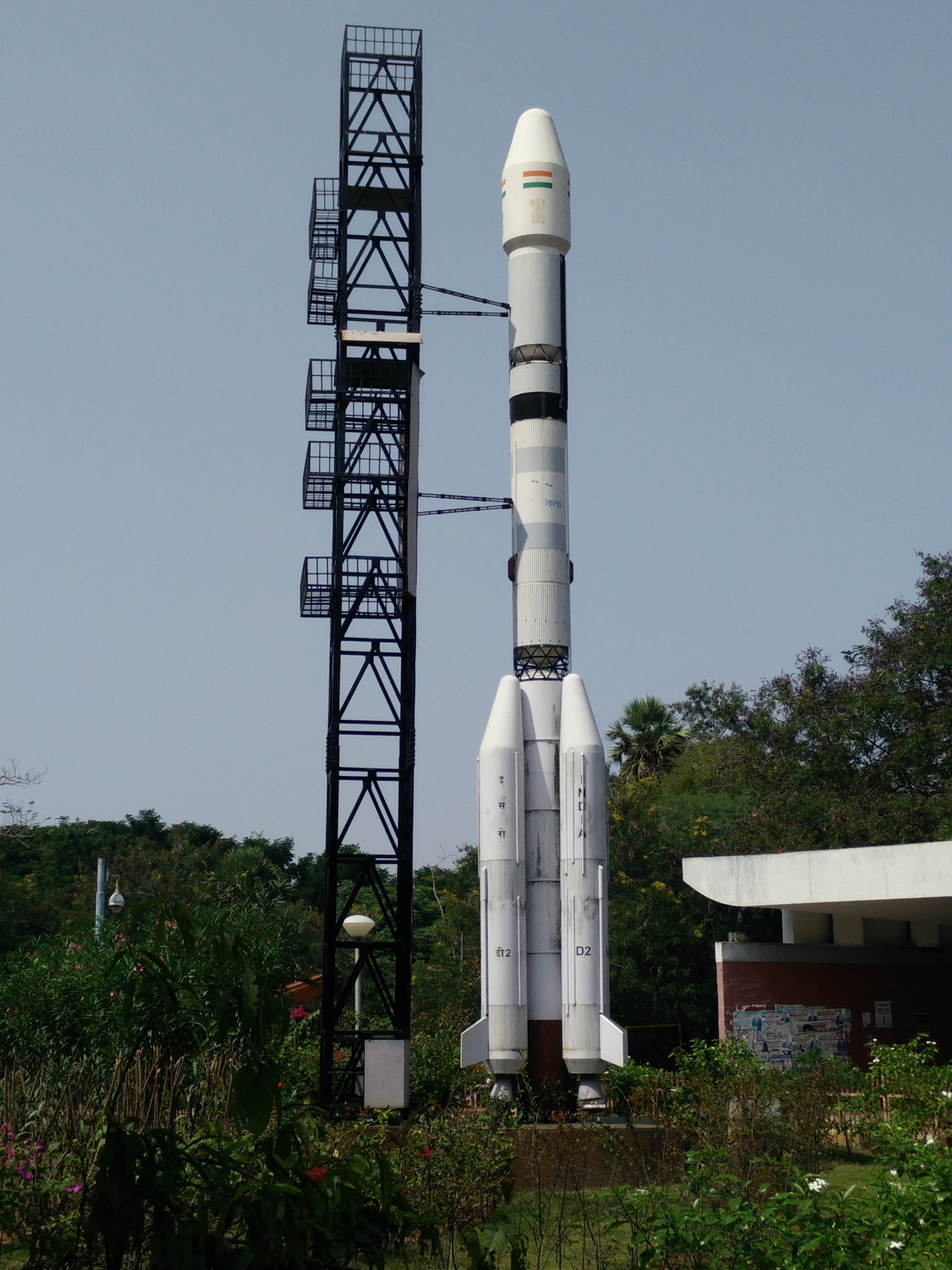
Chris McLaughlin, OneWeb’s chief of government, regulatory affairs and engagement, told SpaceNews that the launches will utilize India’s Geosynchronous Satellite Launch Vehicle Mark 3 (GSLV Mk3). He declined to provide further specifics. The GSLV Mk3 is India’s largest operational rocket, capable of lifting approximately 9,000 kilograms to LEO. This performance is comparable to the Russian Soyuz vehicles previously used by European launch provider Arianespace to deploy OneWeb’s satellites before sanctions halted cooperation following Russia’s invasion of Ukraine.
India last flew the GSLV Mk3 in 2019 for the Chandrayaan-2 lunar mission. The vehicle offers roughly double the payload capacity of the GSLV Mk2, which has not launched since August 2021, when a mission ended in failure. The GSLV Mk2’s last successful flight was in December 2018, delivering the GSAT-7A communications satellite into orbit.
Under Arianespace’s campaign with Soyuz 2.1b, OneWeb was able to deploy between 34 and 36 satellites per launch. The company had planned six more Soyuz launches in 2022 to complete its global coverage, but operations were paused on March 4 to secure alternative launch providers. With only 66% of its planned 648-satellite constellation in orbit, OneWeb’s active service remains limited to high-latitude regions in the Northern Hemisphere.
On March 21, OneWeb announced a separate agreement with SpaceX to resume launches within the year, though it has not disclosed the schedule or payload counts. Whether Indian launches will precede SpaceX missions remains uncertain.
The April contract with NSIL follows a non-binding letter of intent signed in October 2021 to explore launching on both GSLV Mk3 and the medium-lift Polar Satellite Launch Vehicle (PSLV) as early as 2022. That earlier agreement was seen as laying groundwork for potential deployment of OneWeb’s second-generation constellation.
India is also advancing development of the Small Satellite Launch Vehicle (SSLV), a compact launcher aimed at rapid, low-cost missions. According to India Today, its maiden flight is targeted between July and September after delays.
OneWeb’s ties to India extend beyond launch services. Although headquartered in London and partly owned by the British government, its largest shareholder is Bharti Global, an Indian conglomerate. On January 20, OneWeb signed a six-year agreement to distribute broadband in India through Hughes Communications India Private Ltd (HCIPL), a joint venture between Bharti Airtel and Hughes Network Systems. Hughes, a minority shareholder in OneWeb, is building ground gateways for the network in India and other regions.
Meanwhile, Switzerland’s Beyond Gravity, formerly RUAG Space, announced on March 21 plans to double its satellite dispenser production capacity by building a new facility. These dispensers have been integral to OneWeb’s deployment campaigns on Soyuz rockets. Beyond Gravity is also supplying hardware for Amazon’s Project Kuiper, which on April 5 revealed agreements for up to 83 launches from Arianespace, Blue Origin, and United Launch Alliance.