Liquid Hydrogen Powers Breakthrough UAS Flight
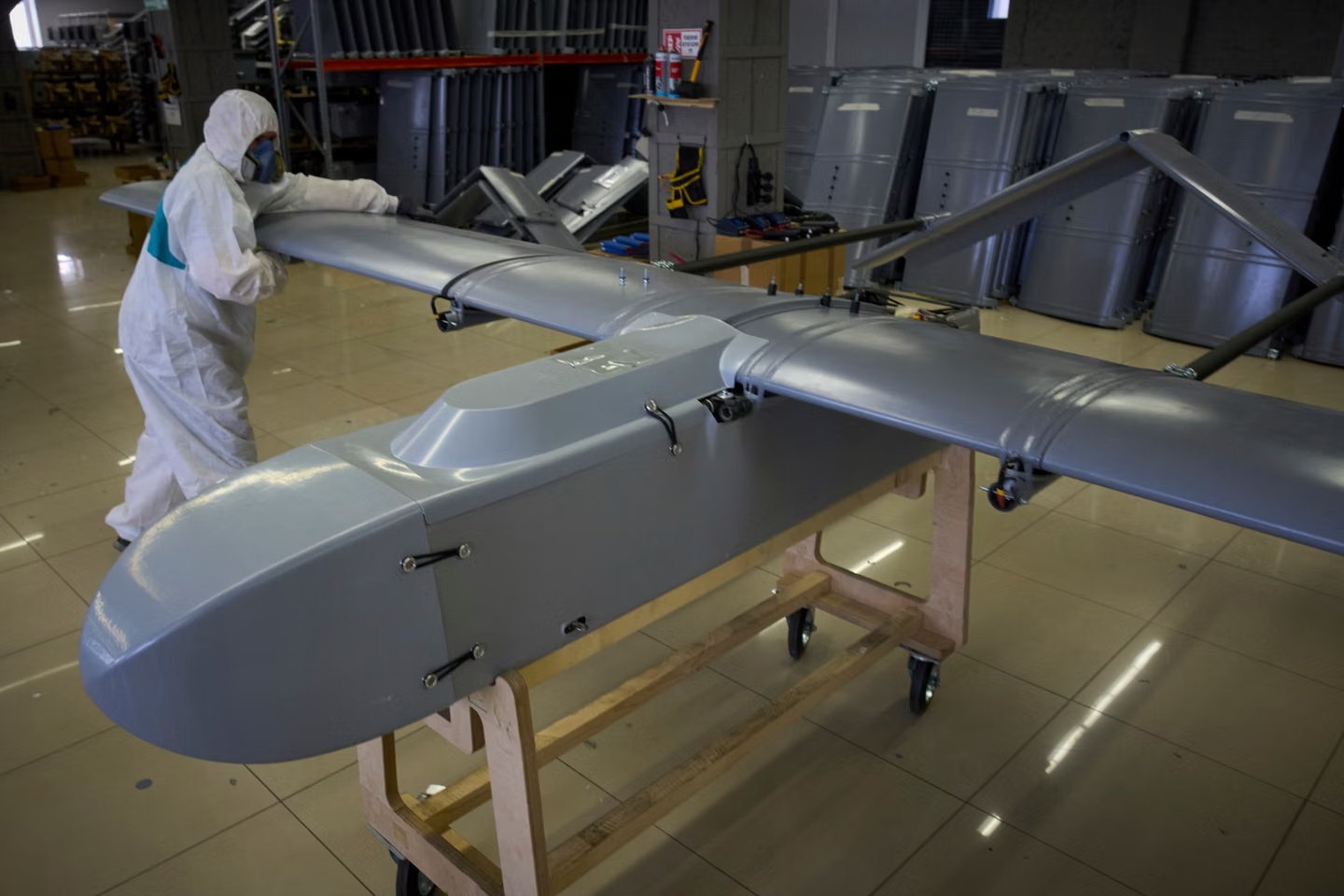
In Eastern Oregon, a liquid hydrogen–powered uncrewed aircraft system (UAS) recently completed its maiden flight, marking a significant milestone in the push toward cleaner aviation propulsion. The aircraft, developed by Insitu, incorporated Washington State University’s patented 3D‑printed liquid hydrogen tank and deployable hydrogen liquefier, and was part of a Mississippi State University–led research program. The demonstration validated the integration of lightweight cryogenic storage with a portable refueling station, enabling quiet, all-electric operation for medium-sized drones.

The Raspet Flight Research Laboratory at MSU, designated as the FAA’s UAS Safety Research Facility and an official UAS Test Site for both the FAA and the Department of Homeland Security, is leading this Department of Defense–funded initiative. The program aims to make UAS platforms cooler, quieter, and more efficient. “The fueling station technology can be used anywhere that there is available electricity and water, which is used to make the hydrogen,” said Jake Leachman, associate professor in WSU’s School of Mechanical and Materials Engineering. “That basically makes this the most convenient fuel anywhere in the world.”
Caden Teer, chief research engineer at Raspet, emphasized the operational goals: “Every aspect of this overall initiative, from this hydrogen work to our acoustic and thermal research, is about creating the capability to fly undetected at lower levels. In each case, we’re ensuring the UAS retain sufficient capabilities to meet mission requirements.”
Hydrogen propulsion offers an alternative to conventional aviation fuels, which contribute to the industry’s roughly 3% share of global carbon dioxide emissions. While batteries and solar panels have proven effective for ground vehicles, their limitations in energy density and endurance have slowed adoption in aviation. Liquid hydrogen, with its high specific energy, is increasingly viewed as a viable low-carbon solution for flight.
“The use of hydrogen fuel in Group 2 UAS has the potential to be a big deal for military applications,” said Don Harring, Insitu product manager for advance development. “Liquid hydrogen fuel, with electric propulsion, will allow these size UAS to fly with almost no noise. This allows operators to fly more covert missions and get better intelligence, surveillance and reconnaissance data than with typical heavy fuel propulsion.” Group 2 UAS weigh between 21 and 55 pounds and typically operate below 3,500 feet.
Ian Richardson, a former postdoctoral researcher at WSU who led the hydrogen project, reflected on the decade-long development effort: “Hydrogen is a fuel that is gaining a lot of momentum. Working on hydrogen technologies for the past 10 years and now having the resources and everything coming together, it is a great time to be an engineer. It’s on us to deliver to get these technologies into the market and start really having an impact.”
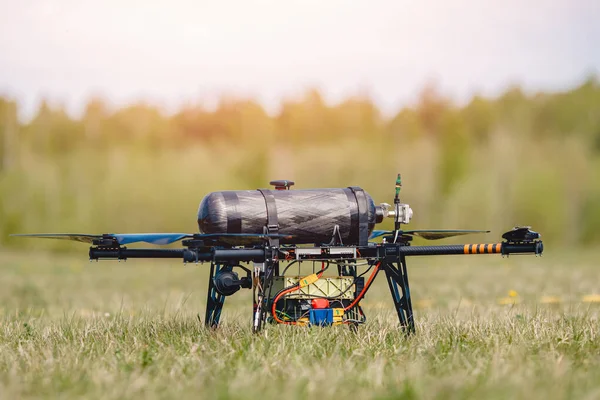
The flight, conducted at the Pendleton Unmanned Aerial Systems Testing Range, used a liquid hydrogen fueling station to fill the 3D‑printed tank, which fed a fuel cell to generate electricity. “This is the first known 3D‑printed liquid hydrogen fuel tank that’s ever flown, and it’s a new type of liquid hydrogen storage technology,” said Richardson. “This was an initial proof-of-concept that we are looking to scale up to larger platforms, including unmanned and manned applications.”
The tank’s polymer construction offers weight savings over metal, while its patent-pending heat exchange system embedded in the tank wall improves fill efficiency and conditions the hydrogen vapor for use. The portable fueling station, housed in an 8‑cubic foot shipping container, represents a miniaturization of industrial-scale liquefaction hardware. Researchers adapted large-scale nozzles and connections into lightweight, flight-rated components, creating a system that can be purged and transported with relative ease.
Beyond defense, the technology could enable quieter aerial surveys in agriculture, reducing disturbance to people and wildlife. The combination of lightweight cryogenic storage, portable liquefaction, and fuel cell propulsion points toward new operational capabilities for UAS in both specialized and broader commercial applications.