Harvard Students Engineer CubeSat and Liquid Rocket Ambitions
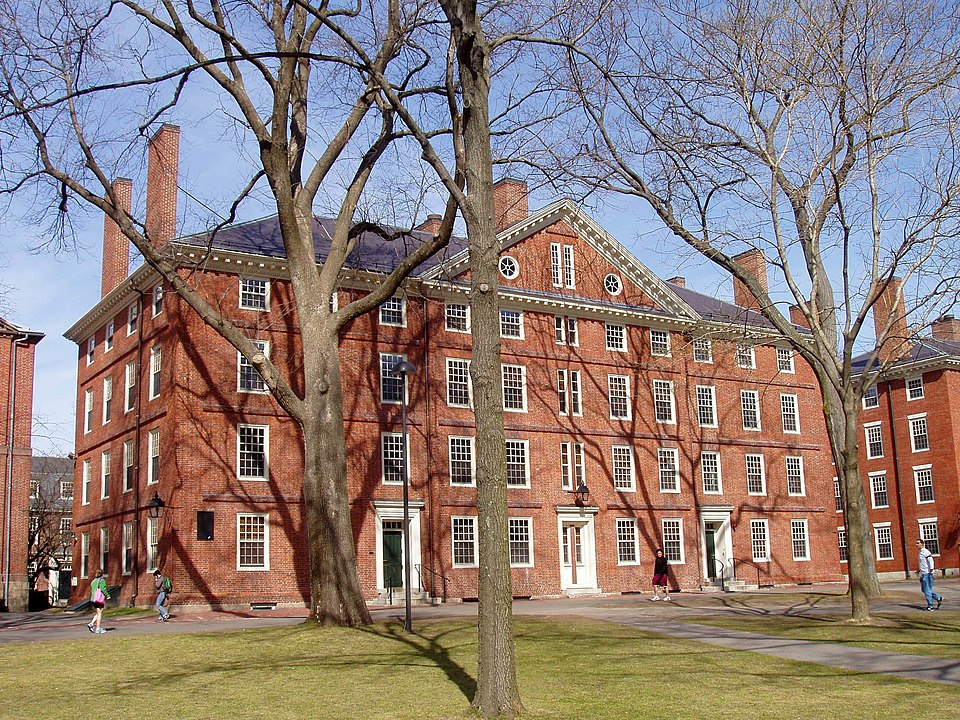
In a collaborative push toward space exploration, undergraduate engineers at Harvard are building the university’s first student-led satellite and developing liquid rocket propulsion systems. The Harvard Satellite Team (HST) and the Harvard Rocket Propulsion Group (HRPG) operate under the Harvard chapter of Students for the Exploration and Development of Space (SEDS), an organization with roots in the 1990s dedicated to fostering interest in space.

The satellite project, initiated in 2018, aims to produce a CubeSat—roughly the size of a shoebox—that could reach low Earth orbit through NASA’s CubeSat Launch Initiative or other providers. Launch sites under consideration include Cape Canaveral, Wallops Flight Facility, and Vandenberg Space Force Base. The CubeSat will feature a payload of nitinol-based solar arrays, a superstructure, antennas, and a ground station for communications.
Leadership spans multiple engineering disciplines. David Andrade, a third-year mechanical engineering student, serves as chief engineer for the satellite team, while first-year electrical engineering student Rodrick Shumba manages the project. Ben Schroeder, a second-year mechanical engineering student, heads the rocket group. Their teams meet weekly in the Active Learning Labs at the Science and Engineering Complex in Allston, balancing hands-on construction with inter-team coordination.
The satellite team is divided into four subgroups: bus mechanical, responsible for the superstructure, solar panels, and antenna deployment mechanisms; bus electrical, which handles computing, power, controls, and communications; payload, focusing on the novel solar array technology; and ground station, managing Earth-based communications. “Bus-mechanical is the creation of solar panels, antenna deployment mechanisms and the superstructure. It’s as mechanical engineering as you can get,” Andrade said. Electrical engineers and computer scientists contribute heavily to bus electrical and ground station efforts.
Weekly subteam meetings focus on active work, while general meetings synchronize progress across disciplines. “The weekly meetings for subteams are normally reserved for work,” Shumba noted. “The general meeting is when the subteam leads and other members talk through what’s happened during the week to make sure everyone is onboard.” In aerospace projects, such synchronization is critical to prevent costly integration failures.
Schroeder emphasized the importance of cross-team awareness: “You have to start thinking about how the payload will integrate into the bus, or how the bus will communicate with the ground station. Those kinds of questions about inter-team collaboration really come to the forefront the farther along you get to the project.”
The pandemic delayed physical construction, but recent semesters have seen active fabrication. The Rocket Propulsion Group has built a spark igniter and plans to advance to liquid engine development. “To see people, especially new members, take ownership of their project components, that’s been really exciting for me to see,” Schroeder said.
The projects provide a direct application of classroom theory. Andrade applies mechanical engineering principles learned in coursework to solve structural and thermal challenges in the CubeSat. “You see engineering in action in a space where sometimes classes get really theoretical,” he said. Shumba, still early in his academic career, encounters engineering problems in SEDS before seeing them in class, gaining a preview of advanced concepts.
Sustaining momentum is a priority. With founding members like Joseph Sanchez having graduated, current leads are focused on knowledge transfer. “You don’t drop a project when you graduate,” Andrade said. “One topic of importance is the role of current team leads in making sure that this is a sustainable club after we’re gone.”
For Schroeder, the value lies in the development process itself: “The meat of the project is the actual development: the ideation from what our payload should be, the design for what it should be, the initial prototyping, the manufacturing. It may launch after we’re gone, but anybody can watch the launch and be there when it happens.”
Participation in SEDS has also opened doors beyond campus. Andrade’s internships at SpaceX and Blue Origin were aided by his hands-on experience. “You see the thing forming before your eyes, and it makes you want to go faster. It makes you want to do more,” he said. “It makes you want to go to the electrical engineering labs on a Saturday at 4 p.m. to fix some boards. That building aspect of it has lit a fire under me to go and make things.”