Bristow Integrates Camcopter S-100 Into UKSAR2G Operations
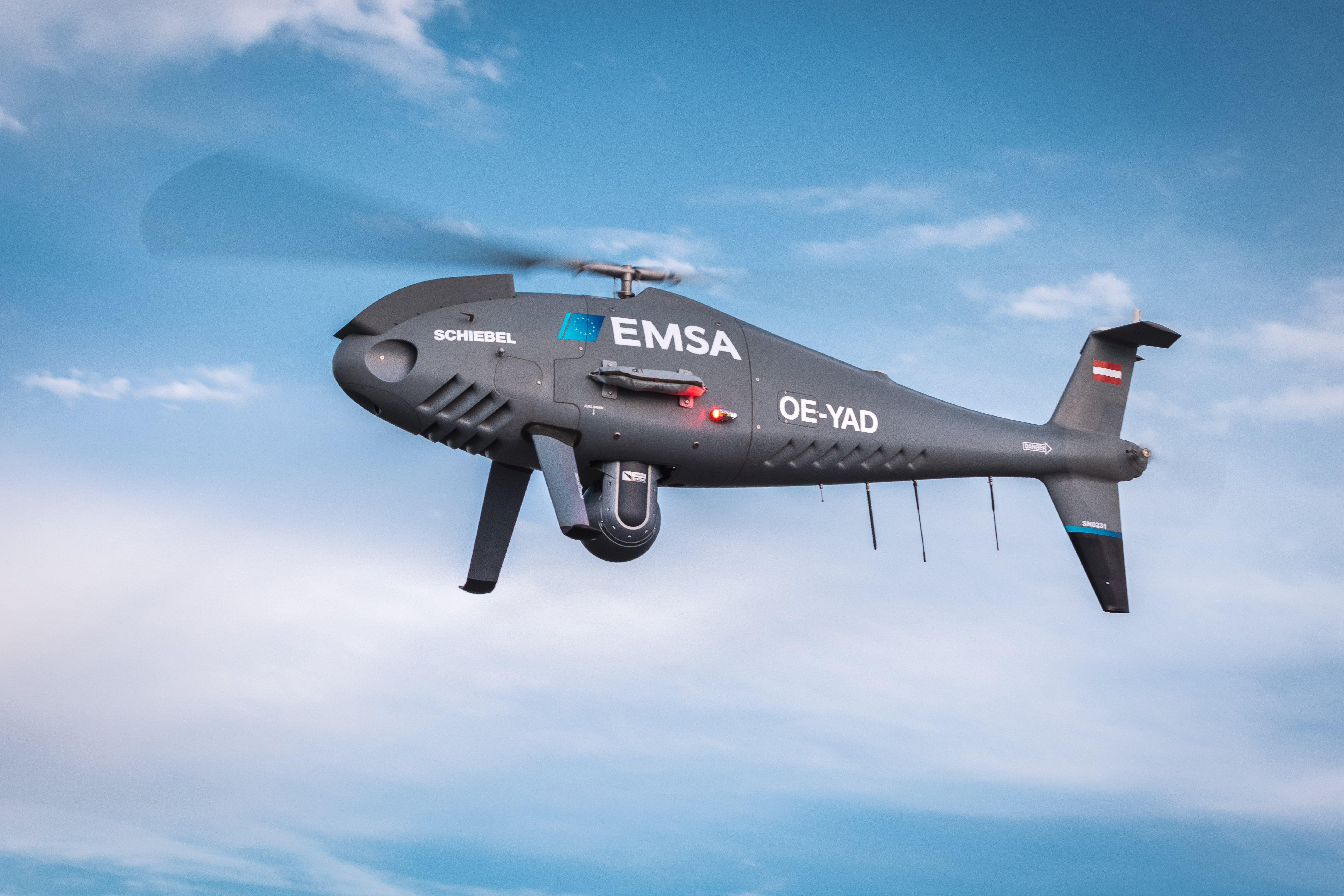
Bristow Group has secured a decade-long contract from the UK Maritime Coastguard Agency (MCA) to deliver the Second-Generation Search and Rescue (UKSAR2G) programme, marking a significant expansion of its operational portfolio. Central to this new phase is the deployment of Schiebel’s CAMCOPTER S-100 Unmanned Air System (UAS), an established vertical takeoff and landing platform designed for demanding maritime and land-based missions.

This agreement builds on Bristow’s track record with the MCA since 2015, when it began providing helicopter-based search and rescue (SAR) services for HM Coastguard. The introduction of unmanned capability began in January 2019, when Bristow received its first CAMCOPTER S-100 system. That initial package included two aircraft, a ground control station, and comprehensive engineering and logistics support. It was conceived as a proof-of-concept initiative to evaluate how unmanned systems could complement manned SAR assets, enhancing both efficiency and operational reach.
By 2022, Bristow had expanded its fleet with a second S-100 system positioned along England’s south coast. This unit supported MCA and HM Coastguard missions in the English Channel, an area characterized by high traffic density and challenging weather conditions. To ensure sustained readiness, Bristow invested in training additional pilots and engineers, strengthening its in-house capability to operate and maintain the unmanned fleet.
The CAMCOPTER S-100’s design offers notable operational flexibility. As a VTOL UAS, it requires no prepared surface or auxiliary launch and recovery gear, enabling rapid deployment from a variety of locations. The aircraft can operate continuously in day or night conditions, withstand adverse weather, and carry diverse payloads over distances up to 200 km. Hans Georg Schiebel, Chairman of the Schiebel Group, stated, “We are immensely proud that the S-100 is the UAS of choice to support SAR activities in the UK. The unrivalled maritime experience of the S-100 and the countless operations all over the world make the Schiebel UAS ideally suited for the UKSAR2G programme.”
Constructed from carbon fibre and titanium, the S-100 combines structural strength with reduced weight, enabling endurance and payload flexibility. Its service ceiling reaches 5,500 m, or 18,000 ft, allowing operations above most weather systems. In a typical SAR configuration, the aircraft carries a payload of up to 34 kg for as long as 10 hours, powered by either AVGas or JP-5 heavy fuel. Real-time high-definition imagery from onboard sensors is transmitted directly to the control station, providing immediate situational awareness to mission coordinators.
Navigation options include GPS waypoint programming and manual control, but the S-100 also features the capability to operate effectively in GPS-denied environments. Mission planning and control are managed through an intuitive point-and-click graphical interface, reducing operator workload and streamlining deployment. This resilience is critical for SAR missions, where operations may occur in areas with compromised navigation signals.
The integration of unmanned systems into SAR frameworks reflects a broader trend in aerospace and maritime operations. By combining manned and unmanned assets, agencies can extend coverage, reduce response times, and improve safety for both rescuers and those in distress. The S-100’s endurance and sensor suite make it particularly well-suited to persistent surveillance, rapid reconnaissance, and coordination with helicopters or surface vessels.
Schiebel’s customer support and training infrastructure further reinforce operational reliability. For Bristow, these capabilities align with its commitment to delivering high-availability SAR services under demanding conditions. The UKSAR2G programme’s adoption of the CAMCOPTER S-100 underscores the growing role of advanced unmanned systems in national rescue strategies, particularly in complex maritime environments where rapid, flexible response is essential.