Eindhoven Campus Trials Autonomous Drone Operations
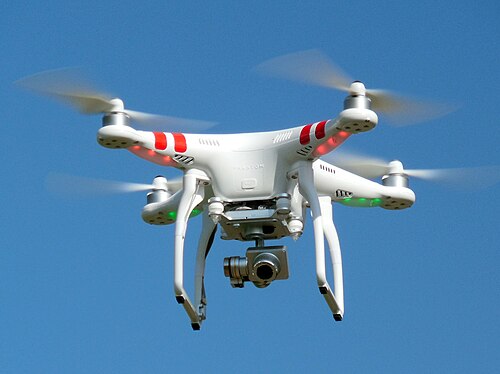
Flying Forward 2020, a European Union–funded research initiative dedicated to advancing urban air mobility, has begun preparations for a series of autonomous drone demonstrations at High Tech Campus Eindhoven (HTCE) in the Netherlands. This marks the first in a sequence of five living lab trials planned across Europe, with subsequent sites in Milan, Zaragoza, Tartu, and Oulu.

The three-year project is designed to integrate drone operations into city infrastructure, creating a functional ecosystem where aerial systems can operate alongside existing urban services. Over the past year, the consortium has developed a suite of technologies and operational frameworks that will now be tested in real-world conditions. The Eindhoven demonstrations are scheduled to run from late March through September 2022.
HTCE, often referred to as the “smartest square kilometer in Europe,” hosts more than 250 high-tech companies and over 12,000 innovators, researchers, and engineers. Its dense concentration of technology-driven enterprises provides an ideal environment for testing advanced drone applications. Paul van Son, Innovation Manager at High Tech Campus Eindhoven, stated: “As a campus, we create the perfect environment for innovation for both our residents and our suppliers. With the Flying Forward 2020 project, we develop both: a living lab for high-tech companies related to the drone industry, and a pilot environment for our suppliers to experiment with the use of drones for the services they provide on campus. Besides this, it helps us create the digital infrastructure needed for the development of spacial web applications, an enabler for future Metaverse developments.”
The Eindhoven trials will focus on five distinct use cases. The first involves security, deploying drones for surveillance across the campus to enhance situational awareness and rapid incident response. The second targets building monitoring, where drones will scan and inspect structures to assess their condition, potentially reducing the need for scaffolding or manual inspection in hard-to-reach areas. The remaining three use cases address last-mile delivery challenges, including the transport of meals, packages, and automated external defibrillators to the rural sections of the campus.
Urban air mobility specialists note that these applications represent both operational and regulatory milestones. Autonomous multi-drone operations in populated environments require robust communication links, precise navigation, and compliance with evolving European Union Aviation Safety Agency (EASA) frameworks. The HTCE environment allows for controlled experimentation while exposing systems to the complexities of real-world variables such as weather, electromagnetic interference, and pedestrian activity.
Ted van Hoof, Urban Air Mobility Project Manager at High Tech Campus Eindhoven, emphasized the pioneering nature of the effort: “HTCE is the first living lab in this research and innovation project to perform tests and demonstrations. It is also one of the first sites in Europe that is experimenting with Urban Air Mobility and experiencing multiple drones flying autonomously while performing specific tasks. At this point, any knowledge we gain from these tests will contribute to making a step forward that will benefit others in this field as well. I hope that the use cases on campus will help improve Urban Air Mobility solutions so that European citizens can see drones flying above them safely and the added value of these advancements to their everyday lives within the next decade or so.”
The project’s scope extends beyond flight operations. By embedding drones into the campus’s digital infrastructure, Flying Forward 2020 is also exploring integration with spatial web technologies, which could enable seamless interaction between physical assets and digital platforms. This aligns with broader trends in smart city development, where connected sensors, autonomous systems, and data-driven services converge to enhance efficiency and safety.
In June 2022, the initiative will host an event in Eindhoven to present the outcomes of the living lab’s first phase. Attendees will have the opportunity to observe the tested solutions and assess their potential for deployment in other urban environments.