Advancing Electrocatalysts with Nonthermal Plasma Engineering
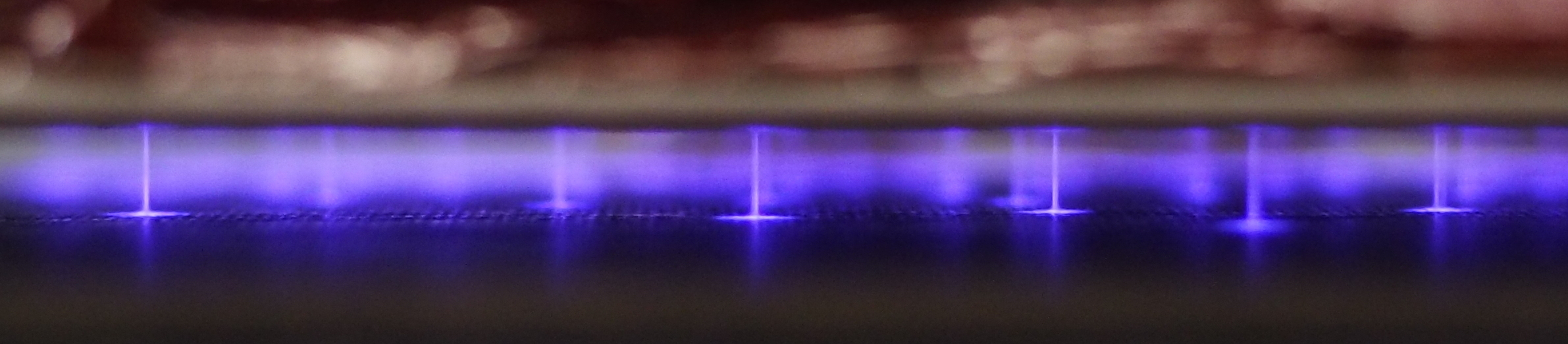
Electrocatalyst performance is closely tied to surface properties, and nonthermal plasma has emerged as a precise tool for engineering these surfaces without altering bulk structures. Plasma, an ionized gas generated by energy sources such as radio frequency (RF) or dielectric barrier discharge (DBD), produces highly energetic ions and radicals capable of driving chemical and physical modifications. RF plasma offers low gas temperatures with high electron temperatures, while DBD plasma maintains discharge stability through dielectric barriers.

Reactive species generated in plasma—such as atomic O, N, S, and P radicals, or molecular ions like O₂⁺ and NH₂⁻—can reorganize surface atoms, introduce defects, incorporate heteroatoms, and adjust oxidation states. Unlike traditional chemical modification, plasma avoids harsh conditions and minimizes environmental impact, enabling controllable surface functionalization with short processing times.
Chemical doping via plasma involves electron impact ionization, producing radicals that react with surfaces to form functional groups. Oxygen plasma, for example, can break C–C and C–H bonds on carbon surfaces, creating hydroxyl, carboxyl, and carbonyl groups. Hydrogen plasma can reduce oxide surfaces under mild conditions, while nitrogen plasma introduces N atoms into carbon lattices. Sulfur and phosphorus doping are also possible, though precursor gases like H₂S and PH₃ pose environmental hazards.
Physical modification exploits plasma’s etching ability to increase surface roughness and porosity. Ar plasma has been used to create edge-rich graphene for oxygen reduction reaction (ORR) without dopants, enhancing charge density at active sites. In situ engraving of carbon cloth with Ar plasma yields porous, defect-rich graphene functionalized with oxygen groups, improving mass transport and electrolyte affinity. Similar approaches have been applied to Co(OH)₂ nanosheets, converting them to porous Co₃O₄ electrodes with favorable oxygen evolution reaction (OER) kinetics.
Partial oxidation or reduction of surfaces can tune electronic properties. Synergistic O₂ and H₂ plasma treatments on copper create Cu⁺-rich oxide layers beneficial for CO₂ reduction. Carbon plasma can reduce NiMoO₄ nanowires to expose Ni–Mo active sites while depositing protective carbon shells.
Plasma effects depend on operating parameters. Gas composition determines radical types; mixed-gas plasmas can introduce defects or reconfigure surfaces without doping. Partial pressure influences electron density and collision energy, affecting radical generation and defect formation. Treatment time and generator power must be balanced to achieve desired modifications without structural degradation.
For metal-free carbon catalysts, plasma enables heteroatom doping—N, O, B, S, F—into sp² lattices or edge sites, altering charge distribution and facilitating ORR. Nitrogen plasma introduces pyridinic, pyrrolic, and graphitic N groups, while oxygen plasma adds hydroxyl and carbonyl functionalities, increasing hydrophilicity and dispersion stability. Dual doping, such as B and F, can promote four-electron ORR pathways. Sulfur doping via thioanisole plasma produces supports with strong affinity for Pt nanoparticles.
Transition metal compounds benefit from plasma-induced vacancy formation, oxidation state tuning, and surface restructuring. Oxygen vacancies in LaCoO₃ perovskites enhance OER activity, while Ar plasma adjusts Co ion states in Co₃O₄ to improve redox reversibility. Plasma engraving of MnCo₂O₄ spinel oxides increases conductivity and optimizes intermediate adsorption. N and P co-doping of NiCo alloys via N₂/PH₃ plasma yields low-overpotential HER and OER catalysts with stable active sites.
Plasma treatment also advances organometallic electrocatalysts by dispersing metal–N₄ centers onto carbon supports without sintering. N₂ plasma modification of Fe–N–C catalysts boosts capacitance, hydrophilicity, and ORR activity, while maintaining stability over extensive cycling. Dielectric barrier discharge plasma in water can etch metal–organic frameworks, introducing heteroatom defects and hydroxyl groups to improve water-splitting performance.
By enabling targeted chemical and physical modifications, nonthermal plasma offers a versatile, rapid, and environmentally conscious approach to tailoring electrocatalyst surfaces for enhanced performance across reactions from ORR to CO₂ reduction and water splitting.