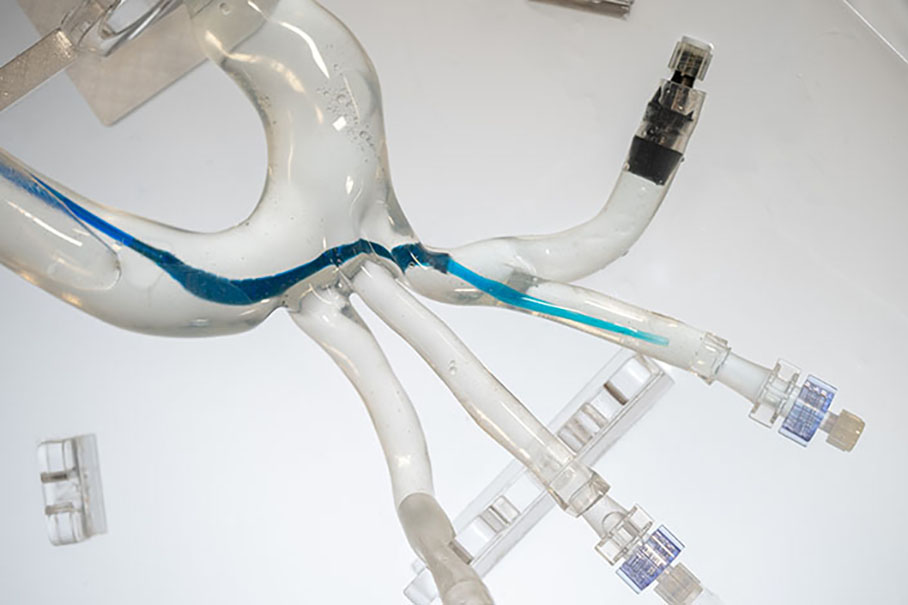
Soft Robotics Advancing Infrastructure Protection
Soft robotics is redefining the capabilities of autonomous systems, enabling operations in environments where unpredictability and physical interaction are unavoidable. This adaptability is particularly relevant to safeguarding critical infrastructures during disruptions caused by natural disasters or deliberate attacks. In such conditions, autonomous agents must navigate unforeseen hazards, leveraging mechanical interaction not as a liability but as an asset.

The resilience of infrastructure is essential for societal stability, ensuring uninterrupted delivery of vital goods and services. Autonomous systems—ranging from mobile robots to aerial drones—are increasingly deployed for both routine monitoring and emergency intervention. Their appeal lies in rapid deployment, reduced operational costs, and digitized workflows, but above all, in their ability to protect human lives by minimizing exposure to dangerous conditions.
Traditional industrial robots, built from rigid links and metals, excel in structured environments like assembly lines but pose safety risks in human-shared spaces. Their stiffness and precision are advantageous for repetitive tasks but limit adaptability in unstructured settings such as disaster zones. Soft robotics addresses this limitation by introducing elasticity into robot bodies, either localized in joints or distributed throughout using materials like elastomers and gels. This design philosophy embraces mechanical interaction, aligning with the concept of embodied intelligence, which recognizes that an agent’s physical form contributes to its problem-solving capabilities.
Pipeline inspection exemplifies the benefits of soft robotics. Pipelines transport essential resources, and failures can be catastrophic. Soft robots inspired by inchworms employ peristaltic crawling, anchoring to pipe walls with flexible or inflatable components. Designs such as radially expanding actuators made from fabric or rubber allow navigation through varying diameters and complex geometries. Liu et al. demonstrated a crawler capable of moving in dry, wet, and oily conditions, carrying loads, and even operating underwater. Some designs integrate cameras for direct inspection, enhancing situational awareness without halting pipeline operations.
In rubble search and rescue, soft growing robots—or “vine robots”—offer unique advantages. These systems extend from a fixed base, housing power and control units, while the tip steers and carries sensors. Growth can be achieved via continuous 3D printing or inflation of inverted tubes. Hawkes et al. and Tsukagoshi et al. developed vine robots equipped with cameras, microphones, and environmental sensors. ETH Zurich’s RoBoa navigated a debris training site to locate a trapped individual 10 meters from its starting point, underscoring the potential for delicate, low-force exploration in unstable environments.
Soft aerial manipulation merges the speed and mobility of drones with compliant grasping. Soft grippers, often tendon-driven or based on bag actuators, conform to diverse object shapes with minimal control complexity. This compliance reduces computational load and risk of damage. Fishman et al. attached four soft fingers to a quadrotor, enabling dynamic grasping during flight. RAPTOR, equipped with a Fin Ray® gripper, achieved grasping speeds up to 1 m/s, demonstrating rapid intervention capabilities.
Beyond these, soft robotics shows promise in radioactive environments, underwater monitoring, and space exploration. Yirmibeşoğlu et al. found polydimethylsiloxane retained functional properties under gamma radiation up to 20 kGy, supporting nuclear applications. In marine contexts, bioinspired designs mimic fish and cephalopod locomotion, offering adaptability to high pressures and turbulent flows. Zhang et al. highlighted soft robots’ potential to address challenges in space, including microgravity and extreme temperatures.
Despite progress, challenges remain. Many soft robots rely on tethers for power and control, limiting operational range. Components like pumps and batteries are still rigid, constraining overall flexibility. Research into soft pumps, embedded computing, and flexible batteries aims to address these issues. Sensor integration is another hurdle; while compliant grippers excel at passive adaptation, they lack tactile feedback. Innovations such as stretchable strain sensors, optical waveguides, and GelSight technology are advancing touch sensitivity without sacrificing compliance.
Autonomy in complex, unstructured environments is not yet fully realized. While lab demonstrations show promise, field deployments often require teleoperation, as with RoBoa in rescue scenarios. Energy efficiency is also a concern, with current robots falling short of biological systems’ endurance. Efforts to design multifunctional hardware, inspired by nature’s integrated energy use, may extend operational duration.
Soft robotics’ low-cost materials and simple assembly make large-scale or disposable deployment feasible. As embodied intelligence principles guide development, future systems may achieve longer autonomy and greater adaptability, expanding their role in infrastructure protection and other demanding environments.