Rethinking the Human Form in Robotics
Science fiction has long populated its universes with humanoid machines, from Cylons to Gort, often without addressing why such beings would mimic human appearance or ergonomics. The narrative convenience is clear: human-like robots allow actors to portray them with minimal prosthetics, and audiences more readily connect with familiar forms. Yet in practical engineering, robots rarely resemble humans, and those that do often sacrifice efficiency for aesthetics.

Industrial robots, such as articulated factory arms or autonomous vacuum cleaners, bear no resemblance to people but excel in their specialized tasks. Their designs are optimized for performance rather than anthropomorphic appeal. Despite this, research institutions continue to develop human-like machines, such as IHMC Robotics’ Nadia, which stands as a testament to ongoing fascination with replicating human form.
The assumption that the human body represents an optimal design for all functions overlooks the diversity of nature’s solutions. Animals evolve forms tailored to their ecological niches—some similar to humans, many radically different. Engineers can adopt the same principle, designing machines to fly, swim, crawl, or remain stationary depending on their operational needs. Ceiling-mounted robotic fry cooks, for example, demonstrate how unconventional configurations can outperform humanoid designs in specific contexts.
Public perception plays a significant role in shaping attitudes toward robotic systems, particularly those equipped with weapons. Calls to “not arm robots” often ignore the fact that many autonomous systems are already weaponized. Cruise missiles and armed drones are, by definition, robots with lethal capabilities. Even self-driving cars possess the potential for harm; a collision with a vehicle weighing several thousand kilograms can be as deadly as traditional munitions. Nevertheless, humanoid robots carrying weapons tend to provoke stronger unease than non-anthropomorphic autonomous weapons.
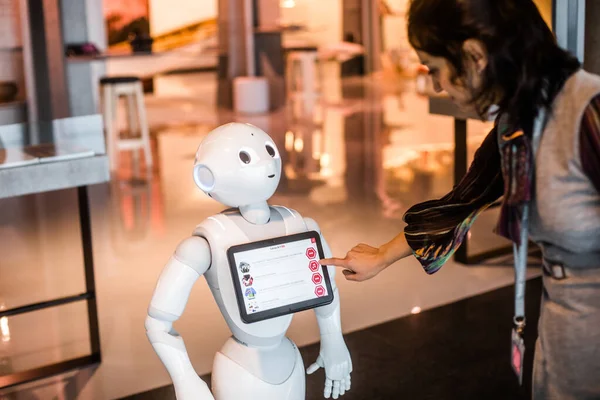
There are, however, domains where human-like appearance can be functionally advantageous. In roles requiring direct human interaction—such as healthcare assistance, translation, or customer service—a humanoid form may facilitate communication and trust. A robot nurse or interpreter could benefit from facial expressions, gestures, and body language that humans intuitively understand. The fictional C-3PO exemplifies this approach, blending human-like features with specialized capabilities.
Media coverage often amplifies the allure of humanoid robots. Platforms highlight machines like Sophia, Honda’s ASIMO, or NASA’s RoboNaut and Russia’s FEDOR, emphasizing their anthropomorphic traits. These projects capture public imagination but may have limited practical deployment compared to task-specific systems like Flippy ROAR, a robotic kitchen assistant designed for efficiency rather than spectacle.
For those interested in building humanoid robots, open-source projects offer accessible entry points. The Poppy platform, for instance, provides modular designs for partial or complete humanoid systems, enabling experimentation without prohibitive costs. Such initiatives encourage exploration of mechanical design, control systems, and human-robot interaction, even if the resulting machines are not destined for widespread industrial use.
The engineering challenge lies in balancing form and function. While the human body offers certain mechanical advantages—bipedal mobility, dexterous hands, binocular vision—it also imposes constraints. Replicating human locomotion demands complex actuation and control, often at the expense of energy efficiency and mechanical simplicity. In contrast, purpose-built robots can adopt configurations that maximize stability, payload capacity, or environmental adaptability without conforming to human proportions.
As robotics advances, the decision to adopt a humanoid form will remain context-dependent. The choice hinges on operational requirements, environmental constraints, and the intended level of human interaction. Whether the future holds more Nadia-like androids or ceiling-mounted fry chefs, the underlying principle endures: design should serve function, not merely familiarity.