Turning Plastic Waste into High-Value Nanomaterials
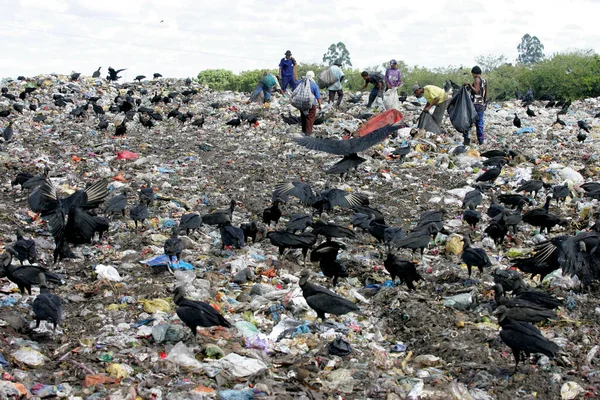
Global plastic waste has surged dramatically, doubling in the past two decades, with projections from the Organization for Economic Cooperation and Development indicating production could triple by 2050. Despite the proliferation of recycling bins, only about 5% of plastic is actually recycled, with the majority consigned to landfills, incineration, or mismanagement. The economic barriers are significant: conventional recycling demands extensive washing, sorting, and remelting, processes that are both costly and energy-intensive.

Researchers at Rice University, led by chemist James Tour, have developed a method that bypasses these inefficiencies by transforming unsorted, unwashed plastic waste directly into high-value nanomaterials. Graduate student Kevin Wyss, lead author of a study in *Advanced Materials*, explained, “Waste plastic is rarely recycled because it costs a lot of money to do all the washing, sorting and melting down of the plastics to turn it into a material that can be used by a factory.” Their approach leverages flash Joule heating, a technique capable of reaching temperatures above 3,100 Kelvin (about 5,120 degrees Fahrenheit) in less than a second.
The process is straightforward in preparation: plastic is ground into confetti-sized fragments, combined with a small amount of iron, and mixed with a conductive carbon source such as charcoal. Once subjected to flash Joule heating, the feedstock is converted into a hybrid carbon nanomaterial consisting of carbon nanotubes capped with graphene fragments. Wyss noted, “We were able to make a hybrid carbon nanomaterial that outperformed both graphene and commercially available carbon nanotubes.”
The resulting morphology is unusual and functionally advantageous. Wyss described the structure as resembling “bean sprouts or lollipops,” with graphene platelets attached to the ends of the nanotubes. This architecture enhances mechanical interlocking in composite matrices. “Let’s say I was trying to pull a string of yarn out of a sweater. If the string is straight and smooth, it can come out quite easily sometimes and ruin the weave. It’s the same with the carbon nanotubes; having these masses of graphene attached at the ends helps make them much harder to remove, thereby strengthening the composite,” he said. He likened the effect to the difficulty of extracting a fishing hook compared to a straight splinter.
Carbon nanotubes and graphene are valued for their exceptional strength-to-weight ratio, high electrical and thermal conductivity, chemical stability, and large surface area. These properties make them integral to aerospace composites, conductive coatings, energy storage devices, and electromagnetic shielding. The hybrid form produced from waste plastic offers performance advantages in these domains, potentially broadening their application scope.
The economic rationale is equally compelling. “Recycling plastic costs more than just producing new plastic,” Wyss said. “There’s very little economic incentive to recycle plastic. That’s why we turned to upcycling, or turning low-value waste materials into something with a higher monetary or use value. If we can turn waste plastic into something more valuable, then people can make money off of being responsible in how they deal with discarded plastics.” By producing materials that command premium prices in advanced manufacturing, the process could shift the financial calculus in favor of responsible waste handling.
A life cycle analysis underscored the environmental benefits. Compared to conventional industrial methods for carbon nanotube synthesis, flash Joule heating consumes about 90% less energy and emits 90%–94% less carbon dioxide. This efficiency stems from the rapid, localized heating, which eliminates the need for prolonged high-temperature furnace operation and extensive feedstock purification.
The research team’s findings point toward a dual benefit: mitigating the environmental burden of plastic waste while supplying high-performance materials for sectors that demand them. In aerospace engineering, for example, lighter and stronger composites can improve fuel efficiency and payload capacity. In electronics, enhanced conductive networks can boost device performance and durability. The ability to derive such materials from discarded consumer plastics introduces a new dimension to sustainable manufacturing strategies.