Microbial Technologies Pave the Way for Sustainable Space Habitats
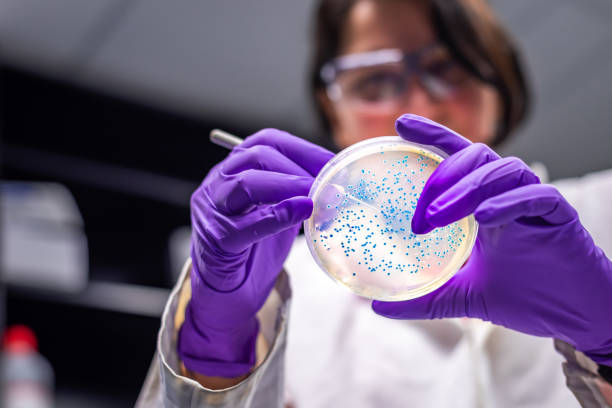
Efforts to address climate change, pollution, and dwindling resources on Earth are increasingly intersecting with the challenges of sustaining human life beyond the planet. A growing body of research suggests that some of the most promising solutions for both domains may be microscopic. In a recent Nature Communications report, scientists from five continents outlined how microbial technologies could underpin a more economical and self-sustaining model for space exploration.

The authors propose that cultivating microbial colonies in space could yield a suite of critical capabilities: manufacturing pharmaceuticals, recycling air, and producing nutrient-rich biomass for food—potentially by processing human waste. “We wanted to tell the scientific community … that microorganisms can really support human space exploration, and particularly that they can support it in a sustainable way,” said Rosa Santomartino, lead author and researcher at the UK Centre for Astrobiology in Edinburgh. She emphasized their versatility: “Microbes are really amazing and perform a lot of tasks for us on Earth, often with us not even realizing it.”
On Earth, microbial processes already underpin industrial-scale production of insulin, antibiotics, and bioleaching of metals from ore. In recent years, research has expanded into using microbes to fabricate structural materials. The report identifies nine distinct microbial applications that could make space missions more “circular,” reducing dependence on resupply from Earth.
One such application is biomining. Certain microbes can extract valuable elements such as copper, gold, and nickel from rock more efficiently than mechanical methods. Biomining is already commercially viable on Earth, and its low-energy requirements could be advantageous in extraterrestrial environments where mining equipment is costly to deploy and operate.
Another avenue is biogeochemical production of binding agents for structural repair. In space habitats or on planetary surfaces, this could reduce the need for imported construction materials. Microbially produced binders could be used to repair habitat walls, seal microcracks, or even fabricate new components from in-situ resources.
Plastic recycling is another challenge where microbes excel. Conventional recycling methods degrade polymer quality after a few cycles, limiting reuse. Certain plastic-degrading microbes, however, can break polymers down to their constituent monomers, which can then be re-polymerized into high-quality material. This capability could close the loop on polymer use in closed habitats.
Microbial metabolism also offers a route to energy generation from waste. Anaerobic bacteria that consume human waste can produce electric charges via electroactive processes. These electricigens could power lighting or small appliances while simultaneously reducing organic waste volumes.
Toxic soil remediation is a further benefit. Microbes can remove heavy metals, radioactive isotopes, acids, and other pollutants from regolith or contaminated substrates, potentially enabling safe agriculture or construction in otherwise hazardous environments.
Air quality management in space habitats is another domain where microbial systems could outperform current methods. Existing carbon dioxide scrubbers often result in the loss of hydrogen and carbon, which must then be replaced. Microbial air bioremediation can capture carbon dioxide while preserving carbon for conversion into food or nutritional supplements, enhancing resource efficiency.
These microbial strategies, the authors argue, could transform space exploration from a resource-draining endeavor into a largely self-sustaining operation. The report notes, “The debate about the public benefits of space travel and exploration is healthy and necessary, but in the field of sustainability, space advocates may now have an opportunity to win this debate for a generation.”
The implications extend beyond spaceflight. Many of these microbial technologies could be refined on Earth before deployment, with terrestrial applications in mining, waste management, materials production, and environmental remediation. The cross-pollination of space and Earth-based research could accelerate innovations in closed-loop life support systems, vital for both planetary habitats and sustainable industries at home.