SpaceX’s Low-Cost Launch Engine Driving Starlink’s Ascent
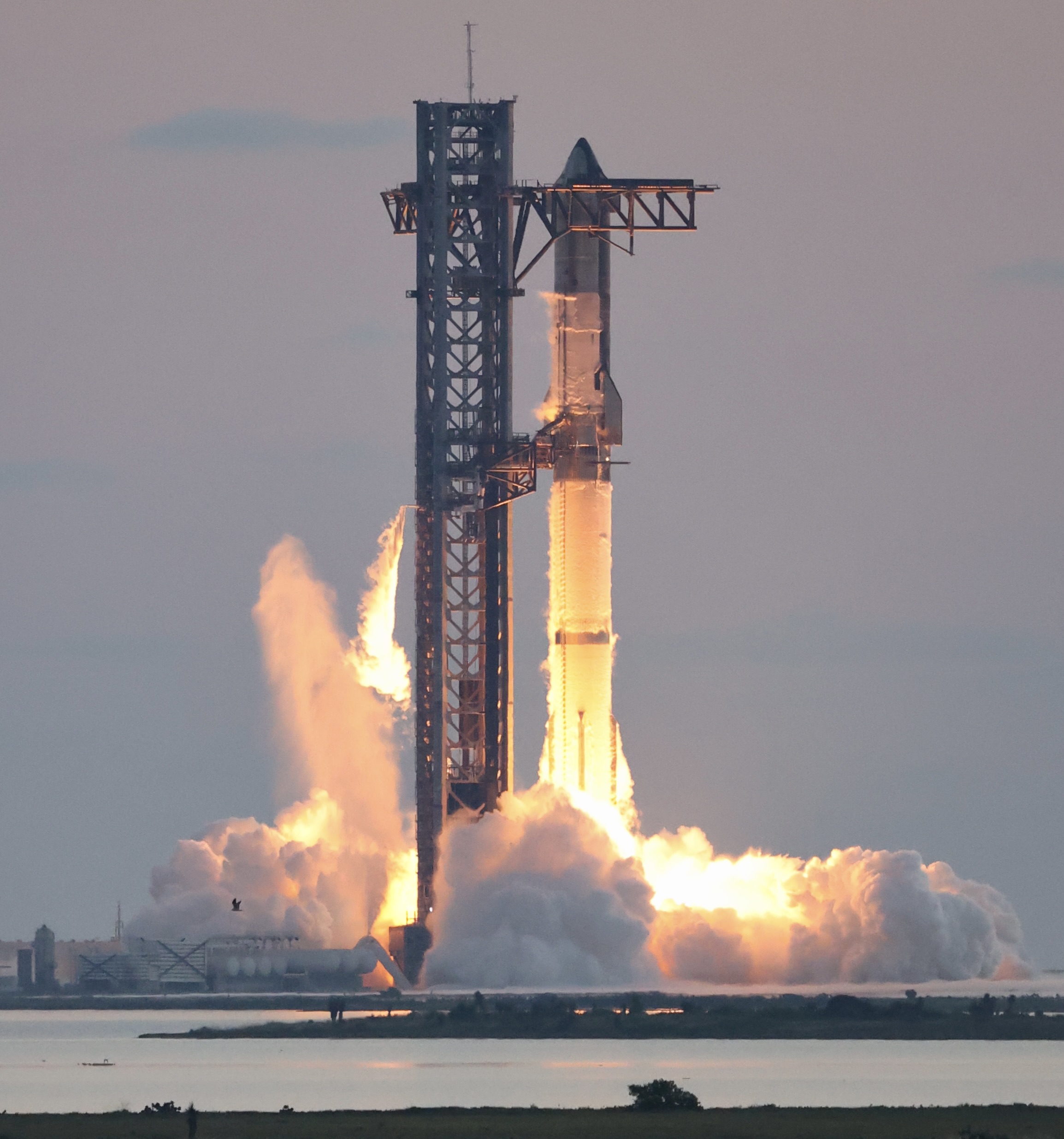
Since its founding in 2002, SpaceX has transformed from a disruptive newcomer into the most closely watched launch provider in the global space industry. Initially dismissed by incumbents, the company’s rapid technical progress and relentless operational tempo have forced competitors to reassess their strategies. Elon Musk’s early critique—that space access was prohibitively expensive—has been the guiding rationale behind SpaceX’s engineering and business model. With the partially reusable Falcon 9, the company has demonstrably lowered the cost of putting payloads into orbit.

Yet, as industry analysts note, those savings are not broadly passed on to customers. Instead, the efficiencies are tightly coupled to SpaceX’s own strategic priorities, most notably the deployment of its Starlink broadband constellation. The launch business serves three primary segments: internal Starlink missions, U.S. government contracts for NASA and the Department of Defense, and commercial or export customers such as SES, OneWeb, and ESA. Starlink accounts for roughly 80% of launches, priced internally at cost, while external missions generate substantial margins. In 2024, total launch revenues, including Dragon cargo and crew flights, are estimated at $3.5 billion from 20–25 launches.
Starlink itself has grown into the largest satellite broadband provider in the United States, with more than 3 million subscribers and global reach through a fleet of approximately 6,000 satellites. Analysts estimate $4.5 billion in 2024 revenue, with 80% from service fees and the remainder from terminal sales. SpaceX announced that Starlink achieved “breakeven cash flow” in Q1 2023, and that the company turned a profit that year. For those claims to hold, capital expenditure per Starlink launch—including satellites and launch services—must remain under $50 million. Given Musk’s stated $1,000/kg cost for Starlink satellites, that implies Falcon 9 launch costs charged internally are below $28 million.
Eurospace’s financial modeling supports this conclusion. In 2021, the group found that reusability economics yield significant profits after the seventh paid external launch of the year. By 2024, with boosters flying 20 or more times, rapid refurbishment, and reused fairings, the model suggests full Falcon 9 costs—including labor, refurbishment, facilities, and amortization—are plausibly around $28 million per flight. Some analysts suggest figures as low as $20 million, though Eurospace favors the conservative end.
This low internal cost is critical to Starlink’s viability. If launch costs were even $10 million higher per mission, total constellation Capex by the end of 2024 could exceed $24 billion, producing unsustainable depreciation and negative operating margins. The reverse logic—working backward from reported profitability—indicates that Starlink’s capital efficiency depends heavily on Falcon 9’s low cost structure. Roughly 70% of that efficiency stems from launch savings.
For external customers, the pricing gap between cost and sale price is substantial. Commercial launches may yield $30 million in gross profit, while U.S. government missions can produce $50–60 million or more. In 2023, SpaceX flew 33 external missions, likely generating over $1 billion in gross profit—revenue that can subsidize 40–50 Starlink launches annually.
This dynamic raises competitive and policy questions. SpaceX’s pricing undercuts rivals such as Rocket Lab, whose per-kilogram rates are more than triple Falcon 9’s yet still unprofitable. Some competitors have alleged predatory pricing, though such claims would imply SpaceX is sustaining massive losses—an assertion inconsistent with the company’s launch cadence and Starlink’s reported financial performance.
The competitive gap is stark when compared to Amazon’s Kuiper project, which has contracted up to 83 launches from Arianespace, Blue Origin, and ULA. At prevailing market rates, Kuiper’s launch Capex could reach $6–10 billion for fewer than half the satellites Starlink had in orbit by mid-2024. If Kuiper could access Falcon 9 at Starlink’s internal rates, its costs could be cut by more than half, potentially altering its business case.
U.S. government customers may also take interest. NASA and the DoD pay high prices for Falcon launches, despite having played a pivotal role in SpaceX’s growth. Whether those prices reflect fair market value or an excessive markup could become a subject for scrutiny. The broader tension remains: advocates of the “new space economy” hail low-cost access as transformative, yet the benefits of those cost reductions have so far accrued primarily to SpaceX itself.