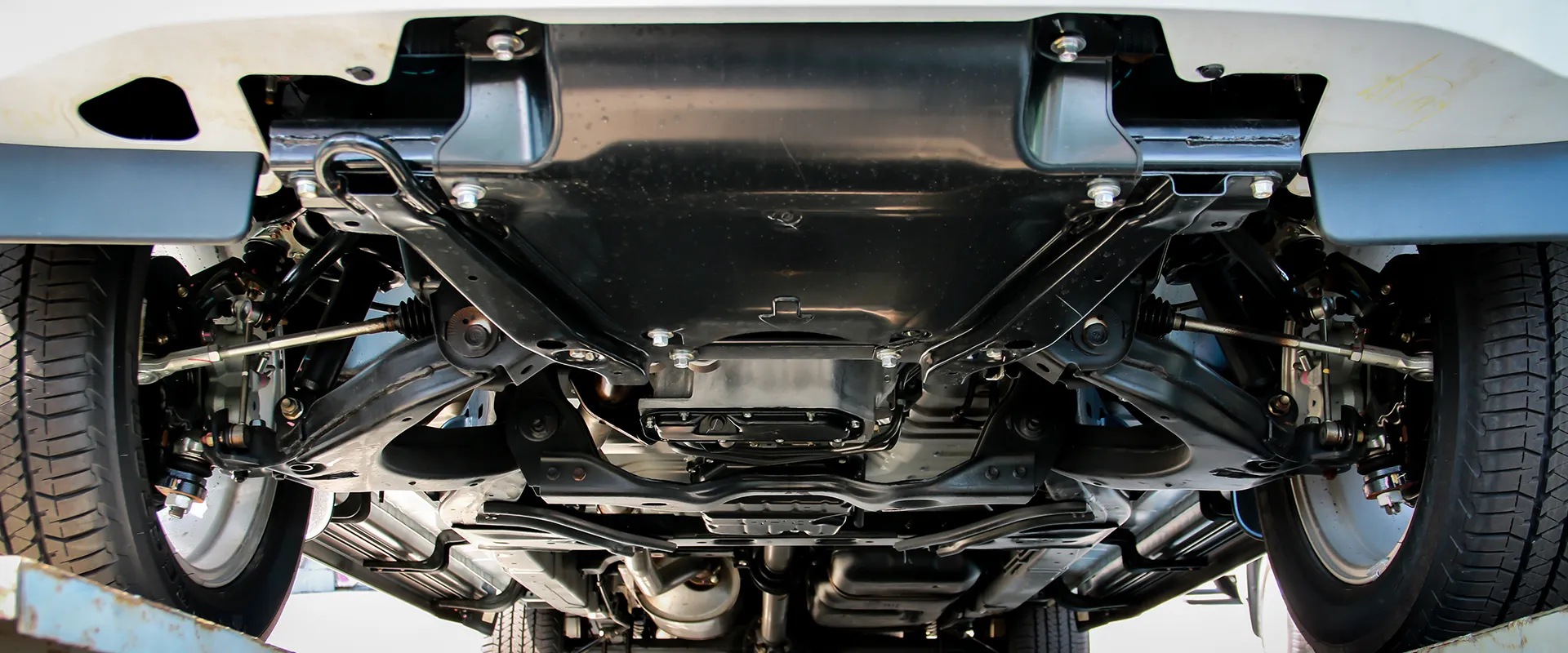
Electrification and Innovation Drive Suspension Market Growth
The global automotive suspension systems market is entering a phase of notable expansion, propelled by technological innovation, shifting consumer preferences, and regulatory pressures. Market size is projected to grow from $65.04 billion in 2024 to $67.78 billion in 2025, representing a compound annual growth rate of 4.2%. By 2029, forecasts indicate a value of $82.4 billion, with growth accelerating to a 5% CAGR. Historic gains have been linked to rising demand for comfort and safety, economic conditions supporting vehicle sales, and environmental regulations aimed at improving fuel efficiency.

Demand for electric and autonomous vehicles is a major driver in the forecast period, aligning with a broader focus on sustainability and emissions reduction. Consumers are increasingly drawn to versatile, adaptable vehicles, prompting manufacturers to rethink suspension architectures. Regulatory frameworks, particularly those tied to autonomous vehicle safety, are also influencing design and development priorities.
Key trends shaping the sector include electrification of suspension systems, the emergence of adaptive and semi-active designs, integration of smart sensors for predictive maintenance, adoption of lightweight materials to boost efficiency, and customization for distinct driving modes. These innovations aim to balance ride comfort, handling precision, and energy efficiency.
Rising global vehicle demand is reinforcing market momentum. In August 2024, the European Automobile Manufacturers’ Association reported a 3.9% increase in new car registrations over the first seven months of the year, surpassing 6.5 million units. Growth was recorded across major markets, including Spain (+5.6%), Italy (+5.2%), Germany (+4.3%), and France (+2.2%). This expansion in vehicle sales translates directly into higher demand for suspension systems, which are critical for maintaining tire-road friction, steering stability, and structural protection.
Luxury and high-performance vehicles are another catalyst. These segments require suspension systems capable of delivering superior comfort without compromising handling or stability. In the U.S., luxury vehicles rose to 18% of total new vehicle sales in Q2 2023, up from 14% in 2020. India saw a 38% surge in luxury sales between January and June 2023, reaching approximately 20,000 units compared to 14,500 in the same period of 2022. The engineering demands of these vehicles—premium materials, advanced control systems, and precision tuning—drive adoption of advanced suspension technologies.
Manufacturers are responding with targeted product development. Hendrickson, for example, introduced the TA 14 heavy-duty air suspension and MS 16 heavy-duty mechanical suspension in July 2023. The TA 14 is tailored for Indian conditions, available in Top and Low Mount variants to suit diverse applications. The MS 16, rated for 16 tonnes, supports both on-road and off-road use, featuring robust leaf spring assemblies, thicker side plates for equalisers, and durable polyurethane bushes in torque arms. These design choices aim to reduce maintenance costs, minimize downtime, and improve operational efficiency.
Active suspension systems are gaining traction, leveraging sensors and cameras to adjust damping in real time. Mercedes-Benz’s E-ACTIVE BODY CONTROL, introduced in December 2022, exemplifies this approach. The electrohydraulic system offers variable damping, adapting to road conditions, vehicle load, and driving program. At higher speeds, it automatically lowers the vehicle to enhance safety and reduce energy consumption, underscoring the role of intelligent control in modern suspension design.
Strategic acquisitions are also shaping the competitive landscape. In January 2023, RENK Group acquired General Kinetics, expanding its portfolio of suspension and vibration mitigation products. This move strengthens RENK’s presence across the U.S., Europe, and global markets, enabling broader mobility solutions.
The market spans passive, semi-active, and active suspension systems, with components ranging from coil springs and leaf springs to air springs and shock absorbers. Applications cover both passenger and commercial vehicles, and subsegments include magnetorheological systems, electronically controlled damping, pneumatic, and hydraulic designs. Major players include Continental AG, ZF Friedrichshafen AG, Tenneco Inc., Magneti Marelli SpA, ThyssenKrupp Automotive Systems, and KYB Corporation, among others, each contributing to a rapidly evolving field defined by precision engineering and adaptive technology.