UK EV Charging Network Expands at Record Pace
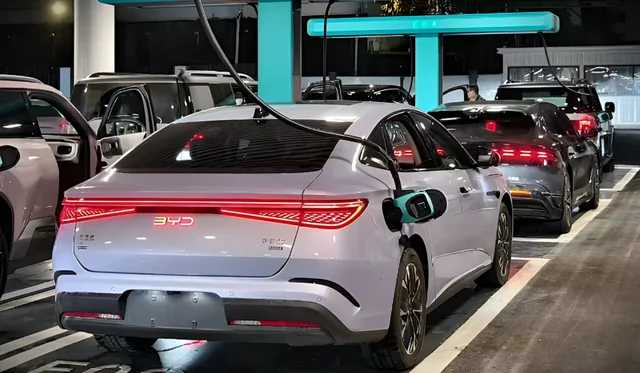
The United Kingdom’s public electric vehicle charging infrastructure has experienced a significant expansion over the past year, with more than 17,000 new chargepoints added since July 2024. This growth brings the total number of public chargepoints to over 82,000 nationwide, marking a 27% increase in just twelve months. The expansion is particularly pronounced in regions such as the north-east, East of England, and the West Midlands, where accessibility to charging facilities has improved markedly.

Future of Roads Minister Lilian Greenwood underscored the importance of this progress, stating, “Just last week, we announced record discounts to help make EV ownership a reality for thousands more people, alongside making it easier to charge at home so more drivers can run their EV for as little as 2p a mile – that’s London to Birmingham for £2.50. Today’s chargepoint figures show that alongside lowering upfront costs, we’re also making fantastic progress towards expanding our charging network across the UK. With a new chargepoint added to the network every half an hour, we’re helping put range anxiety firmly in the rear-view mirror.”
This infrastructure growth coincides with a suite of government measures aimed at accelerating electric vehicle adoption. Among these is a new scheme offering discounts of up to £3,750 on zero-emission cars, available once manufacturers successfully apply. The funding window for these incentives extends until the 2028–2029 financial year. Additionally, a £25 million allocation is set to help more drivers install home charging equipment, enabling annual savings of up to £1,500 when switching from petrol or diesel to electric.
The broader initiative, known as the Plan for Change, involves a £4.5 billion investment to make EV ownership more affordable and practical. This strategy also supports British carmakers, aiming to stimulate domestic manufacturing, create jobs, and attract further investment. The UK’s position as Europe’s largest EV market in 2024, with sales up 20% from the previous year, reflects the combined impact of infrastructure development and policy incentives.
From an engineering perspective, the pace of deployment—one new public chargepoint every 30 minutes—demonstrates the logistical coordination and supply chain efficiency now underpinning the UK’s EV ecosystem. Rapid installation requires standardized hardware interfaces, streamlined permitting processes, and robust grid integration strategies to ensure that charging stations can deliver reliable power without overloading local distribution networks.
The geographic spread of new installations also points to an emphasis on equitable access. By prioritizing regions beyond the densely populated urban centers, planners are addressing a key barrier to EV adoption: the availability of charging in rural and semi-rural areas. This approach reduces the likelihood of regional disparities in EV usage and supports nationwide mobility.
Government support for infrastructure is complemented by continued investment in road maintenance and fuel cost stability. Greenwood highlighted that the charging network expansion comes “on top of a record £1.6 billion to tackle potholes and keeping the 5p fuel duty freeze until spring 2026, saving the average motorist between £50 and £60 a year.” Such measures help maintain public confidence during the transition period, when many drivers still rely on internal combustion vehicles.
For engineers and technology enthusiasts, the UK’s charging network growth offers a case study in scaling complex systems. Each installation integrates multiple disciplines: civil engineering for site preparation, electrical engineering for grid connection, and software systems for payment processing and network monitoring. The sustained rollout suggests that these disciplines are increasingly working in concert, supported by clear policy frameworks and market demand.
The combination of financial incentives, infrastructure expansion, and manufacturing support positions the UK as a leading environment for electric mobility innovation. As the network continues to grow, the interplay between public policy, engineering execution, and consumer adoption will remain central to the country’s transport transformation.