Crash Tests Reveal EV Challenges for Highway Safety
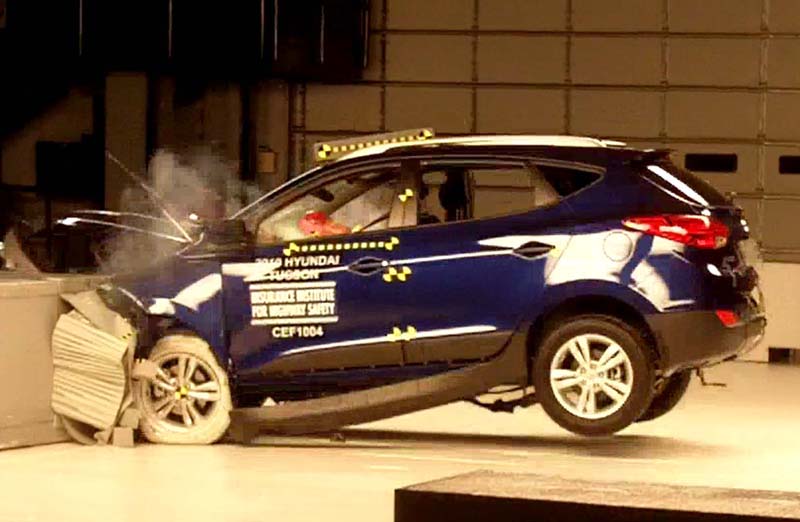
A recent series of crash tests conducted at the Midwest Roadside Safety Facility at the University of Nebraska–Lincoln has underscored the growing concerns about how U.S. highway infrastructure will handle the rapid increase in electric vehicles. On July 1, researchers staged their fourth electric vehicle crash test since September 2023, using a 2022 Rivian R1T pickup truck. The goal was to assess whether portable concrete barriers—common in construction zones and freeway medians—can safely contain and redirect heavier EVs.

The Rivian, weighing over 7,000 pounds, struck a 16-segment portable concrete barrier at 62 mph and a 25-degree angle. This setup followed the Manual for Assessing Safety Hardware guidelines, substituting the Rivian for the 5,000-pound Dodge Quadcab typically prescribed. According to Ronald Faller, director of the facility, the test aimed to “investigate the ability of the portable concrete barrier system, commonly used in highway construction zones, to safely contain and redirect the heavier EV with controlled lateral barrier displacements.” Non-instrumented crash dummies were placed inside to gauge occupant risk.
The results were mixed. Cody Stolle, lead investigator for the EV crash tests, reported that the vehicle was contained and redirected, with occupant compartment integrity maintained and acceleration forces within acceptable limits. “The occupants likely would have survived and been OK,” Stolle said. Yet the barrier itself suffered catastrophic damage: chunks of concrete flew, steel reinforcing bars ruptured, and several 5,000-pound segments were pushed back more than 10 feet—50% farther than typical displacement. Stolle noted, “Anybody on the back side of that barrier could have been pushed off the side of a bridge. It’s not safe for workers and work zones and not very practical for departments of transportation.”
These findings add to a growing body of evidence from earlier tests. In October 2023, a Rivian R1T tore through a 31-inch-high guardrail made of 12-gauge corrugated steel with little reduction in speed. In September 2023, a Tesla Model 3 lifted a similar barrier and passed beneath it. In March 2024, a high-performance concrete barrier did contain a Tesla Model 3, but vehicle accelerations exceeded federal roadside hardware standards, and the rear of the car struck the barrier with over 50% greater force than comparable gasoline vehicles. Tesla engineers, reviewing the data, concluded that side curtain airbags—disabled during the test—would likely have reduced injury risk.
The Nebraska facility is one of only three public highway safety research laboratories in the U.S., and the first to test EVs against guardrails. Stolle emphasized that “historically, there has not been any testing of electric vehicles with roadside barriers—what works, how the vehicles behave and how the barrier systems interact with the vehicle.”
The stakes are high. According to early National Highway Traffic Safety Administration estimates, more than 19,000 people died in 2023 in crashes where vehicles left the roadway. Guardrails and barriers are designed to prevent such tragedies by keeping vehicles from crossing medians, entering oncoming traffic, or plunging off elevated roadways. Yet these systems were engineered for lighter internal combustion vehicles. EVs, with large battery packs, are heavier and have lower centers of gravity, altering crash dynamics and increasing kinetic energy.
During a roundtable at UNL’s Kiewit Hall, National Transportation Safety Board chair Jennifer Homendy warned, “This is all in the midst of aging infrastructure, in which each state is trying to keep up and figure out how they invest in infrastructure improvements just based on what they currently know—and not keeping up with what’s in the future. I just feel like it’s going to be a catch-up on everything and we’re going to be investigating what happens after the tragedy occurs.” U.S. Sen. Deb Fischer praised the Nebraska team’s work, noting, “There’s huge ramifications across the board. It’s very important that we take it seriously and continue to try to find solutions.”
EV adoption is accelerating, with U.S. sales reaching 1.6 million in 2023—a 60% jump from 2022. The Environmental Protection Agency projects that by 2032, over half of new cars sold annually will be electric. Researchers at the Nebraska facility are collaborating with state Departments of Transportation, safety organizations, equipment manufacturers, and EV makers to address the infrastructure challenges. As Bob Bielenberg, a research engineer at the facility, explained, “Our research is an aspect of safety that the auto industry might not be super cognizant of. They know guardrails are out there, but they don’t necessarily understand how their vehicles interact with them. Making them aware is the first step, in my mind.”