Kansas City Lumberyard Inferno Spurs Robotic Firefighting and Safety Debate
A lumber yard within the Kansas City area erupted within the early morning hours of a devastating fire as puffs of smoke escaped the morning traffic flow within the Jackson Curve. By the time the initial crews of the Kansas City Fire Department arrived at Central Missouri Reload Inc. within the East 14th Terrace establishing themselves within the contexts of the lumber yard installments in the area, the gigantic outdoor structure stacked high together with the lumber was already well incorporated. Battalion Chief Michael Hopkins identified the need to establish an immediate strategy of defensive attack as aerial units had unleashed powerful water jets.

The firefight was also made more difficult by its location and volume of lumber, Addie Hopkins reported. When a fire is nice and clean, isolated to a small area, it’s easy to put out, Hopkins explained. But when it’s down deep in a lumber pile, it’s hard to get it all out. The water had to be pumped through three different fire hydrants,-one right in front of the business, another three blocks away, and a water source over four blocks away. More pumpers needed to be called to provide additional water pressure to push the water that far.
Owner Keith Fletcher, a witness to the event, believed this was the third fire in the last 12 months and stated that it is a result of the homeless citizens in the neighborhood. “Prosecutors and judges need to prosecute the small crimes so we don’t have big ones,” Fletcher appealed, stating the losses to be close to $5 million. The type of goods Fletcher’s company trans-loans to meet the demands of the rail customers is flammable.
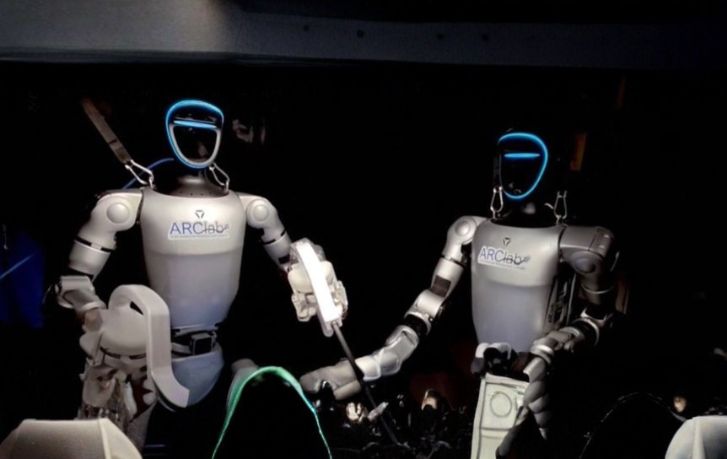
With the main fire mostly under control, the battle to extinguish it began to focus on overhaul operations. This required risk analysis and mitigation associated with structural damage. Significantly, this represented the first incident in departmental history in which a firefighting robot purchased as a tool of overhaul operations had been utilized. Functioning much like the Thermite® ground units machines used by departments nationwide, these robots have the capacity to endure tough environments and deliver thousands of gallons of water per minute. Specifically utilized in Kansas City operations was a model intended for use in environments with considerable smoke and structural instability, restricting access by real firefighters.
Wood storage yards have been found to be prone to risk by industrial fire protection experts. With a bulky quantity of flammable materials available in high piles sometimes reaching heights in excess of 20 feet, the potential was obvious that even a minor ignition source may quickly go out of control. NFPA guidelines dictate sound stacking practices, adequate access roads to the property, and wood piles to buildings to aid in firefighting. Wood pile location arrangements and wood density in this incident hindered firefighting efforts.
The issue also raises a concern about safety in urban settings, particularly regarding homeless camp fires. It is a reality in the country that the growing number of homeless individuals is a danger factor, particularly regarding the probability of fire occurrence in vacant structures, roadside camps, and in car habitats. The danger in such locations is the presence of propane tanks, home-made electrical connections, and possibly inflammable garbage that may trigger fire breakouts. More than half of structural fire incidents in large cities may actually be traced to fire occurrences associated with homeless individuals.
The fire department personnel could also encounter dangers such as law enforcement and home-made changes to firefighting systems, among others. Concerning woodworks and urban fire safety, among the methods in this new model of prevention integrated with risk prevention comes in the early detection or management of risks. Heat monitoring on a constant basis in some wood processing plants has made it possible to determine accumulations of heat in areas where dust could ignite. Storage in outdoor storage yards relies on constant monitoring, on correct storage principles, and on distances.
In the urban environment, this includes training people in homeless shelters in correct principles of heating and cooking, such as maintaining distances from sources of fires or unattended fires, in order to reduce their number. The Kansas City fire was quickly doused with significant costs in terms of just twelve fire trucks and three ambulances. Besides significant advances in fire department technology with the incorporation of robots into this fight, this incident has made it abundantly clear that even the latest technology cannot treat underlying societal ailments perpetuating frequent cases involving this threat.