Artificial Hydrogel Tendons Supercharge Muscle-Powered Robots
It’s not every day that a robot receives an upgrade like a soft, gummy cable, but MIT just made it possible. They did so by adding some artificial tendons made from a tough, flexible hydrogel that together can catapult the speed, strength and durability of muscle-powered robots turning engineering issues with lab-grown tissue into a much more potent actuator.
Disgusting yet Instructive Biohybrid robots, composed of soft living tissues whose changes in length are powered by embedded synthetic skeletons(1), used to suffer from low force transmission via their biological parts. The new tendon system (made by the gene) that Ritu Raman’s group at MIT came up with, which makes a muscle to skeleton connection that’s way more efficient. “We are introducing artificial tendons as interchangeable connectors between muscle actuators and robotic skeletons,” says Raman. “Such modularity could make it easier to design a wide range of robotic applications.”
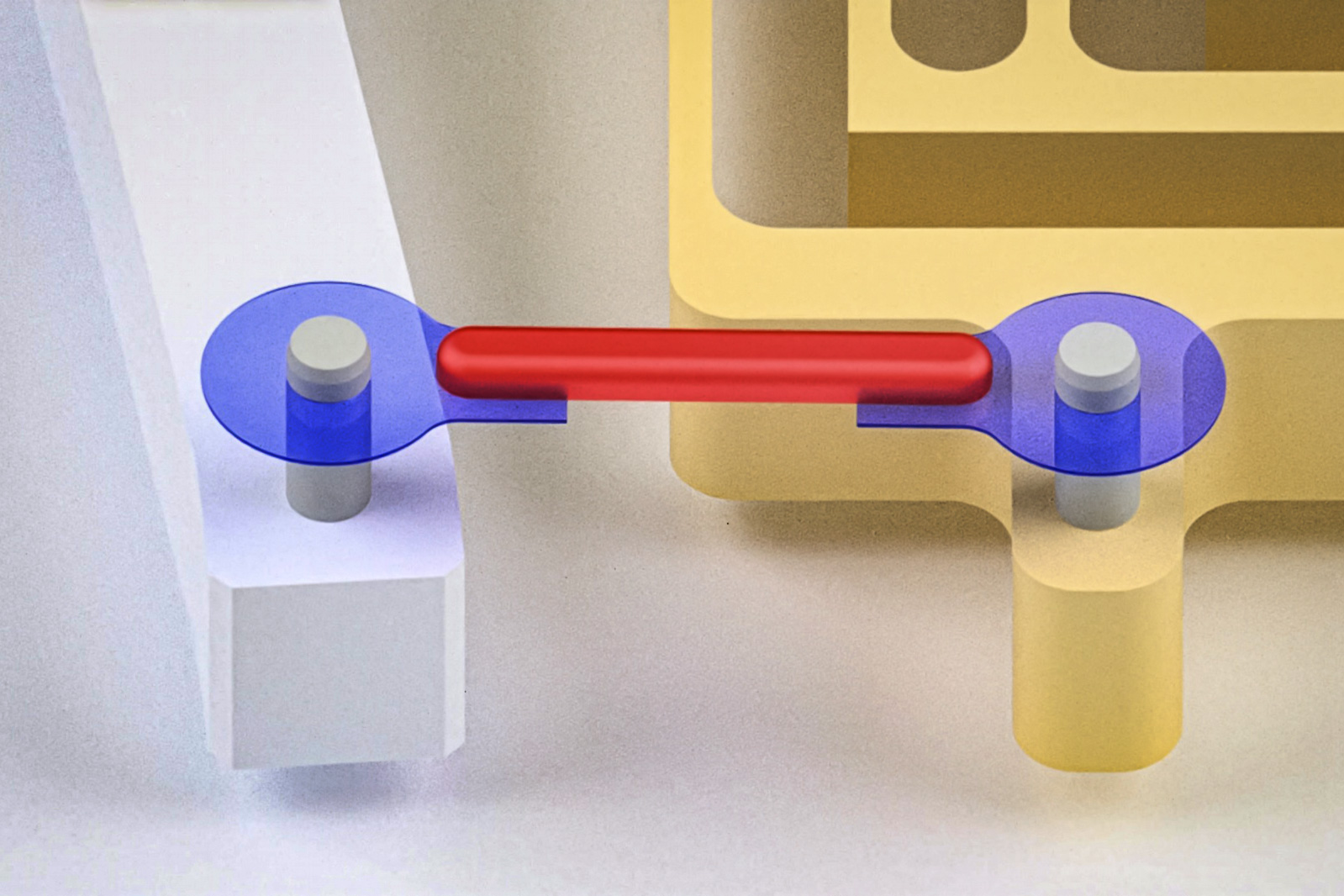
The tendons are constructed of hydrogels that originated in Xuanhe Zhao’s lab materials that are tough, stretchy and adhesive to human tissue as well as synthetic material. Tendons are the mechanical intermediaries between soft muscle and hard bone in animal physiology, a role played by the MIT design in robotics. The muscle–tendon–skeleton system was modeled as three springs in series and the optimal stiffness for maximum displacement and force transmission were estimated. The engineered hydrogel tendons laser-cut into thin strips and supported with a thin film of polyurethane were then sewn to each end of a small strip of lab-grown muscle.
When the muscle was activated, it contracted and the tendons transmitted force much more efficiently than did muscle alone. The results were dramatic: The tendon-enhanced robotic gripper not only moved three times faster and exerted 30 times as much force as a tendonless version, but the power-to-weight ratio was improved by an average of 11x. The durability of the biohybrid actuator to over 7000 contraction cycles is among the highest reported in biohybrid actuators.
This quantum leap of functionality results from the absence of tearing and avulsion risk inherent in direct muscle-to-skeleton attachments. Historical designs used muscle only as structural anchor sites, thus the usable actuation power was limited by their size. By offloading the function of bearing body loads to a hydrogel tendon, the muscle now serves solely as an actuation mechanism, thus facilitating its connection with significantly stiffer and more capable robotic components. Indeed, the modular tendon design can be interfaced with skeletons that are 50× stiffer than previous biohybrid robots, resulting in a force transmission of ~37% and a specific force which is nearly 29× higher than compliant designs.
The physics of material is important to this hydrogel. Hydrogels can be designed to replicate the mechanical properties of soft tissues, however the MIT tendons take it a step further by being both highly stiff and compatible with body ingredients. This work is in line with the rapidly growing area of mechanobiology-driven hydrogel engineering where control over stiffness (37) and covalently cross-linking mechanism augments transfer of mechanical stress to cells. These characteristics are also essential for supporting the actuator performance in biohybrid systems, where the actuator has to operate under repetitive and high load cycles.
The tendon idea also fits in with trends for design of biohybrid actuators, in which modularity is a desired feature93. The capability to exchange or rearrange muscle–tendon units without reconstructing the muscles themselves facilitates prototyping, and enables adaptation to various robotic designs from microscale surgical instruments to self\-organized exploratory vehicles. The modularity is similar to what has been their development for skeletal muscle actuators which allow scalability and easy integration with different mechanical linkages.
Simone Schürle-Finke, a biomedical engineer at ETH Zürich who was not involved in the work, highlights just how much this could affect: “The tough-hydrogel tendons create a more physiological muscle–tendon–bone architecture, which greatly improves force transmission, durability, and modularity.” And that biological emulation isn’t just for looks it makes the actuator more mechanically efficient and prolongs its life, too.
In the future, Raman’s team is working on skin-like protective casings to protect those muscle–tendons units in efforts to move biohybrid robots another step closer to real-world use. Together with developing control strategies including optogenetic activation and bioelectronic feedback these tendon-enhanced actuators could lead to robots that grab, walk or swim with unheard-of speed and durability.
For mechanical engineers, robotics researchers and materials scientists, however, these advances are an unequivocal signal: the incorporation of even more advanced hydrogel tendons is not just another incremental step. It is a shift in the paradigm of how living tissue can be used to perform mechanical work, which set to raise limits for performance and extend operation range of biohybrid machine.