Arizona’s AI-Managed Flex Lanes Join Nationwide Push for Smarter, Safer Highways

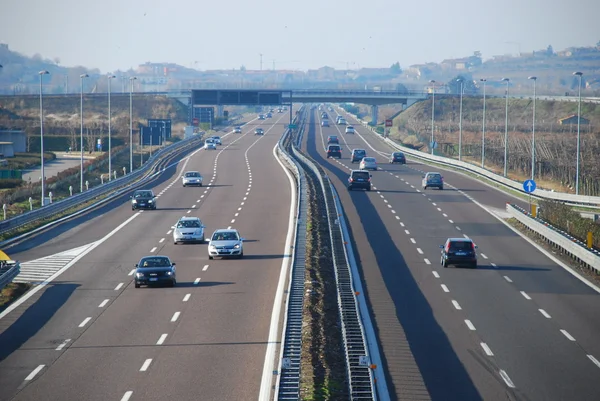
“It begins with a provocative question: If the road has the capability to think on its own, can traffic control even hope to compete?” While that may be true, across the US, the next generation of ‘live’ freeways designed by dynamic lane management, traffic management through AI algorithms, and multimodal transport integration has rolled out. The recent introduction of ‘flex’ lanes on Interstate 17 in Arizona has put the state on the shortlist of only six states – Pennsylvania, Georgia, Texas, Utah, and Florida – that are revolutionizing the way roads operate.
1. The $522 Million Leap of Arizona’s Flex Lane Technology
In fact, it is known for being congested with traffic during holidays. But thanks to a $522 million reconstruction effort led by the Arizona Department of Transportation, ADOT, there is now a two-lane reversible highway built to double capacity without having to widen the existing infrastructure. Operating in a northbound capacity towards Flagstaff during peak hours on weekdays and in a southbound capacity towards Phoenix during Sundays, its two lanes use AI to control direction change, speed restrictions, as well as barrier signals to avoid collisions coming from opposite directions.
2. Pennsylvania’s Smart Corridor and Shoulder Flex Lanes
“Adaptive reuse of existing assets” is best exemplified in PennDOT’s I-76 Schuylkill Expressway project, according to Crowley, Miller, and McNally. To accommodate traffic in areas that lack expansion space, shoulders function as flex lanes during peak hours, indicated by 72 digital signs that monitor traffic conditions, adjusting speed limits in real-time. Such a system is in line with European variable speed limit designs that aim to provide a smooth traffic flow by reducing overall difference in traffic speeds, thus preventing accidents by reducing traffic velocity before reaching a potential site of a collision, thus avoiding what is called the “accordion effect.”
3. Georgia’s Dynamic Pricing and Transit Integration
The express lanes on the “Top End” of the I-285 in Atlanta use dynamic pricing to ensure speed. Tolling costs increase with congestion, pushing traffic to general lanes. Georgia’s BRT express lanes mirror success in San Diego on the I-15 express lanes; in San Diego, tolling funds expanded transit services. With the integration of BRT and express lanes on managed lanes, the resultant creation is a “virtual busway” that carries a greater number of users per lane.
4. HOV Priority and Urban Park Caps in Texas
I-35 Capital Express Project in Austin involves the replacement of old elevated decks with below-grade managed lanes specifically designed to give priority to High-Occupancy Vehicles. Texas combines the two aspects mentioned above—mobility and placemaking—through the capping of some roadways with urban parks. This moves in tandem with the integrated corridor management principles that consider the usage of the transport facility for more than just smoothing the flow of traffic. The non-tolled managed lanes in Texas utilize intelligent transport systems.
5. Utah’s Reversible Lanes and Rail Connectivity
The I-15 improvement in the Utah corridor between Farmington and Salt Lake City includes reversible center lanes to serve geographic constraints between mountains and lake. Connecting the lanes to “FrontRunner” commuter rail service embodies ICM’s holistic view of transportation, considering freeways and transit as an integrated network.
The I-15 improvement in Utah from Farmington to Salt Lake City features reversible center lanes to serve geographic conditions between mountains and lake.
Connecting the lanes to “FrontRunner” commuter rail embodies ICM’s holistic view of transportation
6. Express Network with Barrier-Based Separation
In the State of Florida’s “Beyond the Ultimate” phase on I-4, express lanes are accompanied with direct connectors that provide expressway travel without entering the congested general lanes. High frequency variable pricing ensures expressway travel remains uncongested, with the resulting cost of $63 million annually on I-95/I-395 seen within transit improvements. Florida’s solution combines several design elements with the ultimate vision, ensuring maximum safety for freight and passenger movements.
7. The AI & Sensor Framework for Smart Highways
A common thread through examples in Arizona’s Flex Lanes to Pennsylvania’s Smart Shoulders involves high levels of sensing and AI analysis. Radars and infrared sensors provide data to algorithms to forecast congestion events before they happen. Overhead gantries transmit information on lane conditions, speed limits, and closures in real time. These approaches are in line with global best practices, including the VSL systems in Germany, where collisions dropped 30%, and traffic flow improved by 5%.
8. Benefits Économiques et Écol
Smart lanes help to cut idling, reduce pollution, and conserve fuel, leading to noticeable economic advantages. Smart lanes in the state of Georgia raked in revenues to the tune of $52 million in FY 2022, used to improve corridors. Smart lanes make Utah’s reliability appealing to tech companies to invest. In the state of Arizona, flex lanes improve tourist routes to northern recreation zones. Smart roads market size will grow from $1.84 billion in 2024 to $140.5 billion by 2030, signifying huge growth opportunities.
9. Safety as the Primary Driver
Variable speed limit systems, physical barriers, and dynamic lane management are proven to reduce the potential of collisions through the effective management of speed changes and conflict points. The UK’s VSL schemes experience a reduction of 10% in injury crashes. The express lanes in Florida are controlled through strict access to prevent adverse merges. AI-controlled reversals in Arizona are operated in controlled environments to avoid head-on collisions.
10. Integrated Corridor Management: The Future Framework
ICM approaches link highways, transit, and pricing in terms of a single operating perspective. For example, by coordinating the assets across multiple agencies, states can dynamically allocate capacity across modes, mitigate incidents, or maximize throughput. The key, or rather the problem, in ICM integration, lies in connecting the revenue strategies for managed lane operators with broader corridor mobility strategies. Successful ICM approaches, such as Virginia’s SMART SCALE, prove that using a single perspective emphasizing ROI across modes can yield substantial investment, such as Amazon’s HQ in Arlington with a price tag of $2.5 billion.
The “dumb” highway is being replaced. In its stead are sensor-dense and AI-driven roads that can do the opposite of reversing lanes, managing demand pricing, and integrating public transit in real-time. Arizona’s flex roads are more than just a regional improvement; they also form national plans for smarter, safer, and more powerful highways.