Japan’s Breakthrough 3D-Printed Aluminum Alloy Combines Heat Resistance and Full Recyclability

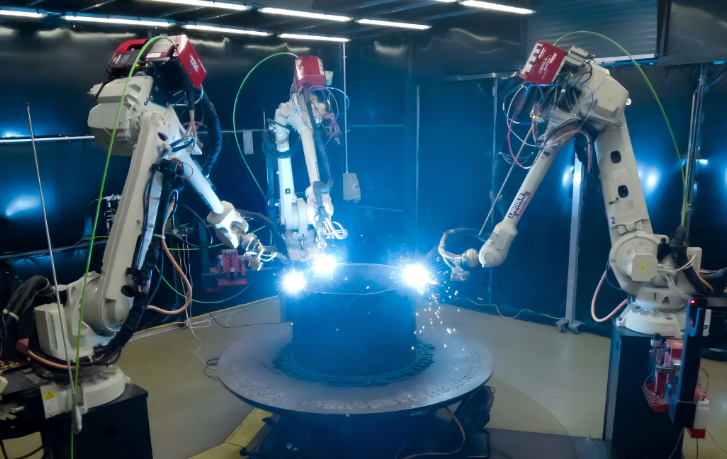
Few discoveries in the field of high-performance metals have been able to rewrite the rules of metallurgy established decades ago. However, a team of researchers from Nagoya University has done just that by developing a family of aluminum alloys that exhibit outstanding strength and ductility at 300 °C, with fully recyclable properties enabled by laser powder bed fusion PBF-LB additive manufacturing.
1. Overcoming the Weakness of Aluminum at High Temperature
Its low density and resistance to corrosion have long made aluminum attractive for both mobility and energy applications. However, its precipitous loss of strength above 200 °C has excluded it from critical engine and turbine components. The Nagoya team’s work directly addresses this limitation, enabling aluminum to perform where only heavier, costlier metals once could.
2. Iron as a Strengthening Element
Whereas traditionally, iron was avoided in aluminum due to brittleness and corrosion, under rapid solidification, it becomes a key strengthening agent. “The design centers on iron, which metallurgists usually don’t add to aluminum because it makes the metal brittle and vulnerable to corrosion,” said Professor Naoki Takata. In PBF-LB, molten metal cools at rates exceeding 10⁴ K/s, forming metastable Al₆Fe phases instead of coarse, brittle Al₁₃Fe₄, unlocking new mechanical properties.
3. Role of Manganese, Copper, and Titanium
Based on the Al-Fe alloy system, alloying with Mn, Cu, and Ti was explored. Mn partitions to the Al₆Fe phase, increasing its fraction and stabilizing it to high temperatures. Cu introduces nanoscale precipitates (∼10 nm) between the (Al,Cu)₆Fe particles, enhancing strain hardening. Ti, highly soluble and of low diffusivity, partitions into the α-Al matrix, refines the grains via heterogeneous nucleation on Al₃Ti particles, and improves the ductility.
4. Microstructural Engineering through Rapid Cooling
PBF-LB’s extreme cooling traps alloying elements in non-equilibrium positions, enabling finely controlled partitioning between the solid and liquid phases. This allows the elaboration of refined α-Al/Al₆Fe two-phase microstructures with tailored nanoscale features. Electron microscopy confirmed Mn and Cu enrichment in Al₆Fe while Ti remained in α-Al, each contributing distinct strengthening mechanisms.
5. Mechanical Performance Across Temperatures
Accordingly, it was reported that both Mn- and Cu-containing alloys exhibited yield strength greater than 350 MPa at room temperature; in particular, it was indicated that Al-Fe-Mn alloy maintained its yield strength of more than 220 MPa at 300 °C. The Al-Fe-Mn-Ti quaternary alloy demonstrated ~390 MPa at ambient temperature and sustained >250 MPa at 300 °C, combining high-temperature strength with 14–17% elongation. Notably, mechanical properties remained stable after 100 h at 300 °C, suggesting exceptional thermal stability.
6. Processing Advantages and Sustainability
Contrary to the hot cracking tendency of conventional high-strength aluminums, these alloys could be processed by PBF-LB without hot cracking, with >99% relative density under optimized laser parameters. Their composition is based on abundant, low-cost elements supporting recycling-friendly manufacturing, following the strategy of sustainable material flow and allowing the application of mixed aluminum scrap without performance loss.
7. Industrial Applications in Mobility and Energy
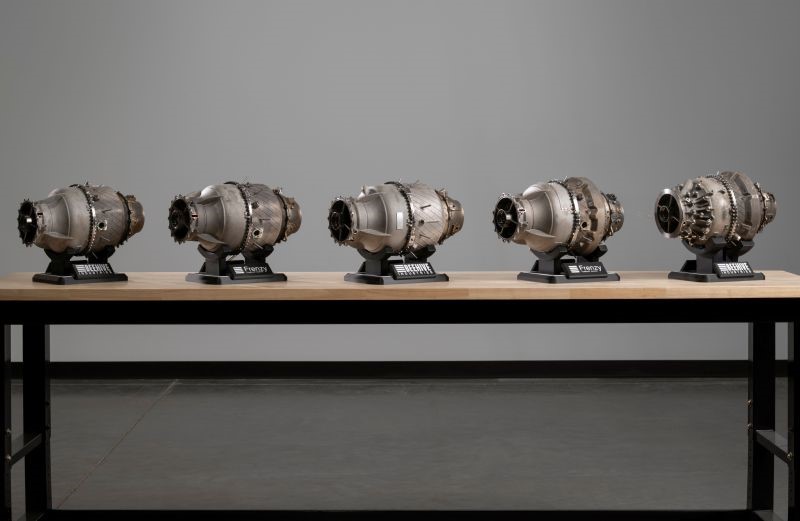
The combination of low density, high temperature strength, and recyclability in these alloys creates a pathway to lightweight compressor rotors, turbine blades, and structural components in automotive, aerospace, and energy systems. For vehicle applications, reduced mass means less fuel consumption and lower emissions. For aircraft engines, this enables operation at hotter temperatures with higher efficiency, without adding weight. Energy systems benefit from durable turbine and hybrid components that have extended life service.
8. A New Design Framework for Additive Manufacturing
Beyond the composition of a specific Al-Fe-Mn-Ti alloy, this work provides a roadmap to the design from scratch of alloys for additive manufacturing. Such methods enable designers to fine-tune microstructures through controlled elemental partitioning during rapid solidification in order to achieve targeted mechanical and thermal properties. The principle of designed metal can be extended further to other metals such as steels, titanium, and nickel-based alloys, making this discovery far-reaching. The success of the Nagoya University team represents a strategic leap in those industries where weight, heat resistance, and sustainability meet. They have created materials capable of meeting and even exceeding the demands for next-generation mobility and energy systems by redefining aluminum alloy design through additive manufacturing.